
You don't need to live near a world-class training facility to get expert eyes on your climbing technique. Remote video analysis has matured into a legitimate coaching format, with professional coaches and AI-powered platforms offering asynchronous and live feedback to climbers worldwide. This guide walks you through exactly how to find, evaluate, and start working with a remote climbing coach who specializes in video-based form correction.
Why Remote Video Analysis Works for Climbing
Climbing is a visually complex sport where small inefficiencies—a dropped heel, a mistimed hip shift—are nearly impossible to self-diagnose in real time. Video analysis solves this by letting a coach freeze, annotate, and compare your movement frame by frame.
As climbing coaching has shifted online, many coaches have found the asynchronous format surprisingly effective. Platforms like TrueCoach allow clients to upload videos directly into their workout results, enabling coaches to provide detailed form feedback within one to two days of each session. This means every climbing and training session gets reviewed, not just the ones that happen to coincide with a scheduled appointment.
Step 1: Clarify What You Actually Need
Before searching for a coach, define the scope of help you want. Remote coaching services generally fall into three tiers:
- One-off video review or consultation: A single session where a coach reviews your footage and provides actionable notes. Good for climbers who want a technique audit without an ongoing commitment.
- Monthly coaching with video feedback: A structured training plan delivered through an app, with regular video submissions and form corrections. This is the most common format.
- Live Zoom-based sessions: Real-time observation and coaching over video call, where you climb while the coach watches and provides cues.
Step 2: Know Where to Search
Professional remote climbing coaches can be found through several channels:
Established coaching companies
Organizations like Lattice Training, TrainingBeta, Climb Strong, and ROAP Coaching all offer remote programs with video analysis components. Lattice Training, for example, provides a remote climbing assessment where coaches analyse your results using specially developed statistical models to pinpoint strengths and weaknesses. TrainingBeta's coaches create four- to eight-week custom plans using the TrueCoach app and offer video review as part of their consultation calls.
Independent coaches
Many experienced coaches operate independently. Parfenov Training, for instance, specializes in individualized programs with a focus on strength training and form analysis through video feedback, and has worked with hundreds of clients remotely over the past decade. Be Climbing offers dedicated remote sessions where the coach analyses videos sent in advance and then walks through findings on a Zoom call, covering techniques like footwork scanning processes and pyramid movement theory.
Social media and climbing communities
Instagram, YouTube, and climbing forums (such as r/climbharder on Reddit) are rich sources for discovering coaches. Look for coaches who post detailed technique breakdowns—this gives you a preview of their analytical style and communication approach.
Step 3: Evaluate Coach Credentials and Approach
Not all coaches are created equal. Here is what to look for:
- Climbing experience: Look for coaches who have significant personal climbing achievement and, ideally, formal coaching credentials such as the AMGA Climbing Wall Instructor (CWI) certification or the UK's Mountain Training Development Coach qualification.
- Coaching track record: Client testimonials that specifically mention video analysis and technique improvement are a strong signal. For example, ROAP Coaching's Robin O'Leary and Alex Puccio provide remote video analysis for hundreds of climbers worldwide, combining over 30 years of collective experience.
- Communication style: A good remote coach is responsive and clear. During an initial call, assess whether they listen carefully and ask detailed questions about your goals, injury history, and available equipment.
- Platform and tools: Coaches who use dedicated platforms—TrueCoach, Trainerize, or Google Meet—tend to provide a more structured experience than those relying solely on Instagram DMs. Climb Strong, for example, connects with athletes through video conferencing and uses the Trainerize platform for strength and conditioning tracking.
Step 4: Prepare Your Videos Properly
The quality of your coaching feedback depends heavily on the quality of the footage you provide. Here are filming best practices:
- Capture full body plus wall: Your climbing area must be in full view so the coach can see foot placements, body angle, and hand positions simultaneously.
- Film multiple attempts: Send footage of both successful sends and failed attempts. The comparison reveals where form breaks down under fatigue or difficulty.
- Include different angles: A straight-on shot shows lateral movement and flagging; a side angle reveals hip position relative to the wall and extension through the arms.
- Record at your limit: Warm-up laps on easy terrain won't reveal much. Film yourself on routes or problems near your project grade where technique flaws become most visible.
- Add context: Note the grade, hold types, what felt hard, and any specific questions. This helps the coach prioritize their analysis.
Step 5: Try a Low-Commitment Entry Point First
Most reputable coaches offer a way to test the waters before committing to a full package. TrainingBeta offers a free 15-minute Zoom call to get to know the coach and ask questions. Climb Strong charges a $65 initial consultation fee that goes toward understanding your background and matching you with the right coach. These initial touchpoints help you gauge compatibility before investing in a multi-month program.
Step 6: Consider AI-Assisted Analysis as a Supplement
A growing category of AI-powered tools can augment human coaching. Climbah, for example, is an AI climbing coach app that provides personalized training plans and video analysis across six key metrics: technique, power, endurance, balance, problem-solving, and flexibility. Climbalyzer is another platform built by experienced climbing coaches that uses AI to assist with the frame-by-frame analysis that coaches traditionally do in their heads.
These tools are best used as supplements to human coaching rather than replacements. An AI tool can flag that your center of gravity is off or that your feet are cutting loose, but it cannot understand that you are recovering from a finger injury and need a modified approach, or that your mental game is holding you back on a crux sequence.
What to Expect From Your First Coaching Cycle
A typical first month of remote video coaching looks like this:
- Intake call (30–60 minutes): The coach discusses your current abilities, strengths, areas for growth, equipment available, injury status, and your long- and short-term goals.
- Baseline video submission: You film yourself on a variety of climbs and submit through the coaching platform.
- Plan delivery: The coach sends a personalized training plan that includes climbing drills, strength work, and specific assignments designed to address your weak points.
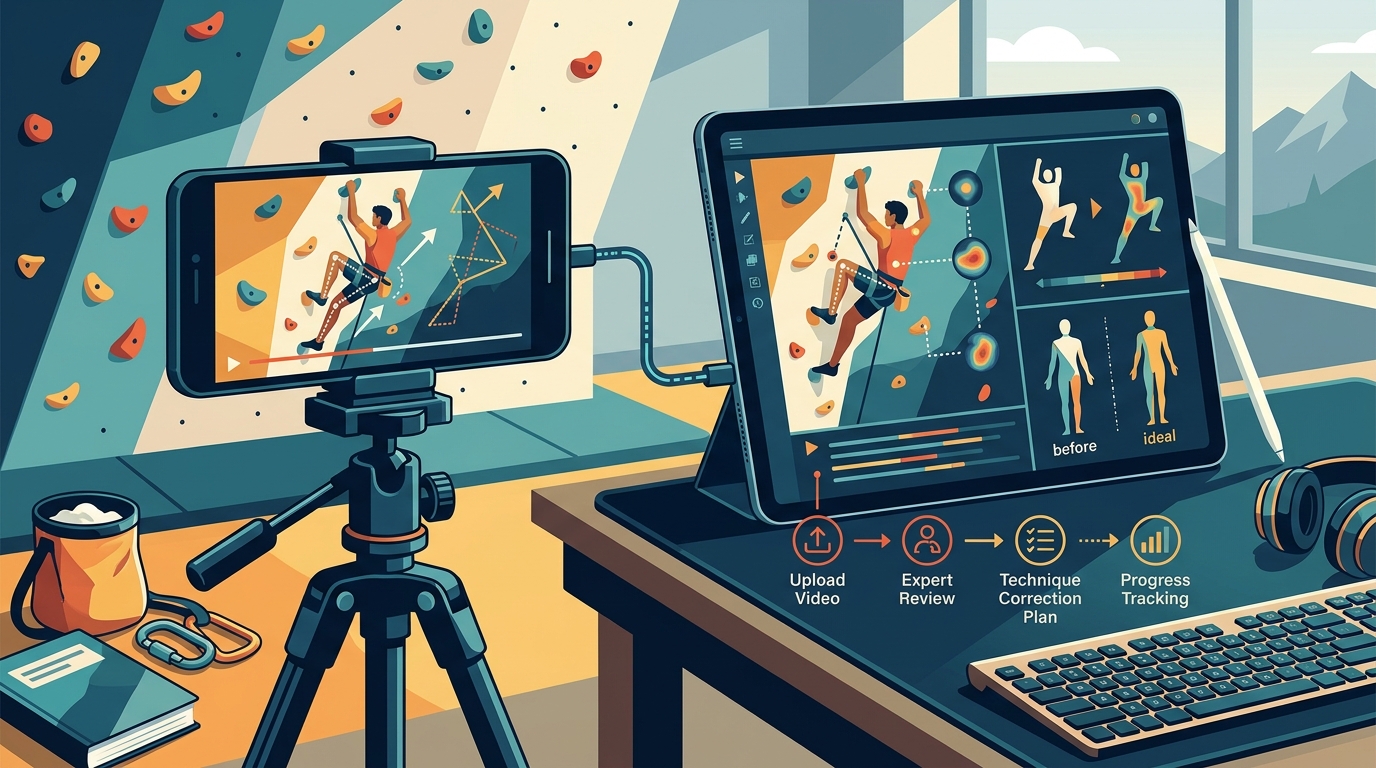
- Ongoing video exchange: You submit videos of training sessions and project attempts; the coach responds with annotated feedback and adjusted cues.
- Monthly check-in: A live call to review progress, adjust the plan, and set goals for the next cycle.
Key Takeaways
- Remote video analysis is a proven format for improving climbing technique—coaches can review every session, not just the ones you attend in person.
- Start by clarifying whether you need a one-off review, ongoing monthly coaching, or live session feedback.
- Search established companies (Lattice Training, TrainingBeta, ROAP Coaching, Climb Strong) and independent coaches (Parfenov Training, Be Climbing) for options at various price points.
- Evaluate credentials, communication style, client results, and the platforms coaches use for delivering feedback.
- Film properly: full body in frame, multiple angles, at your limit grade, with context notes.
- Use free or low-cost introductory calls to test compatibility before committing.
- AI tools like Climbah and Climbalyzer are useful supplements but should not replace the nuanced feedback of a qualified human coach.
Frequently Asked Questions
Can remote video coaching really improve my climbing technique?
Yes. Many coaches have found that online programming can actually be more effective than weekly in-person sessions because every training and climbing session can be reviewed rather than just one. Coaches use slow-motion playback, drawing annotation tools, and side-by-side comparisons to deliver precise, actionable feedback on body positioning, footwork, and movement patterns.
What equipment do I need to film climbing videos for remote analysis?
A modern smartphone is almost always sufficient. Use a small tripod or have a partner hold the phone steady. Film in landscape orientation with your entire body and the climbing wall visible in the frame. Good lighting matters—most indoor gyms are bright enough, but avoid backlighting from windows.
How much does remote climbing coaching typically cost?
Costs vary significantly. One-off consultations typically run $65–$100. Monthly coaching packages with ongoing video feedback and a custom training plan generally range from $150 to $300 or more per month, depending on the frequency of communication and the coach's experience level. Some coaches offer discounted rates for longer commitments—for instance, 12-week packages that save you $10 per month compared to rolling monthly subscriptions.
Should I choose a human coach or an AI-powered analysis tool?
Ideally, both. AI tools provide quick, affordable feedback on general movement metrics and are available around the clock. A human coach brings contextual understanding, emotional support, injury-aware programming, and long-term periodization. Using an AI tool for daily self-review while working with a human coach on a monthly basis is a cost-effective hybrid approach that many climbers are adopting.
How do I know if a remote climbing coach is qualified?
Look for a combination of personal climbing achievement, formal certifications (AMGA CWI, Mountain Training qualifications, or equivalent), years of coaching experience, and specific client testimonials about technique improvement. Coaches affiliated with established organizations typically have been vetted for knowledge and methodology.