
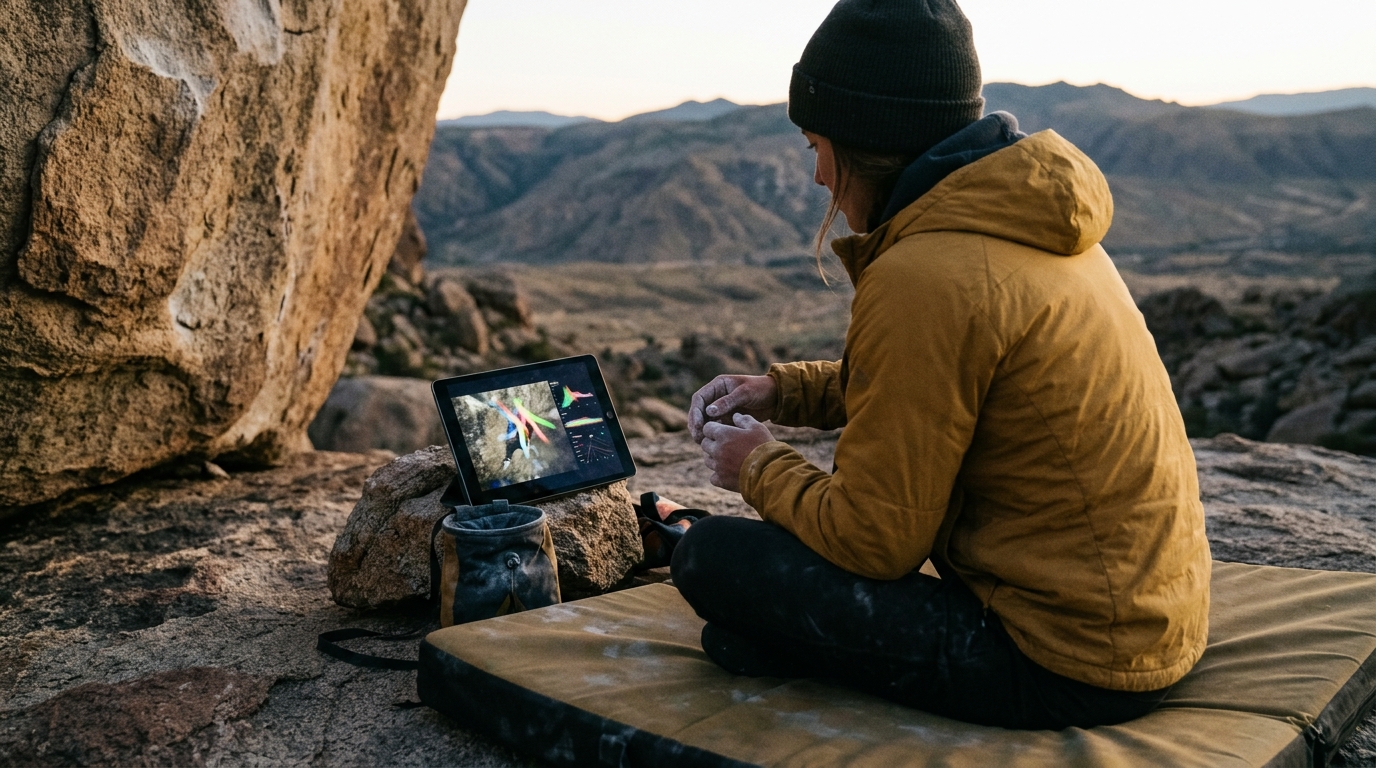
Whether you climb in a small-town gym or on boulders miles from any coaching hub, remote video analysis can transform your movement on the wall. The challenge is knowing where to look, what to expect from each option, and how to tell a great remote coach from a mediocre one. Below are five distinct paths—from boutique one-on-one coaching to AI-driven platforms—so you can pick the approach that matches your budget, goals, and learning style.
1. Dedicated Climbing Coaching Companies
The most established route to remote coaching is through companies that were built around it. Organizations such as Lattice Training, Climb Strong, and TrainingBeta have refined remote workflows over many years.
Lattice Training, for example, offers a structured remote climbing assessment where trained coaches analyse results using proprietary statistical models to identify specific strengths and weaknesses. Climb Strong emphasizes video as a core communication tool—their coaches note that videos from climbing and training sessions are “extremely helpful” for providing detailed feedback during remote coaching, helping them understand each athlete’s unique style and approach.
TrainingBeta’s Matt Pincus begins every coaching relationship with an intake questionnaire, a video sample, and an initial 90-minute Zoom call, followed by a 4-week training plan delivered through the TrueCoach app. These companies typically offer tiered pricing: short trial blocks (4 weeks), quarterly plans, and ongoing subscriptions.
What to look for
- A structured onboarding process (questionnaire → video review → call → plan)
- A dedicated training app such as TrueCoach for plan delivery and messaging
- Coaches with verifiable credentials and long-term client retention
2. Independent Coaches Who Specialize in Remote Video Feedback
Many elite-level climbers and experienced trainers run independent remote practices. These coaches often provide a more personal, high-touch experience than larger organizations.
Parfenov Training is a good example: founded by Galina Parfenov, it specializes in individualized training programs with a focus on strength training and form analysis through video feedback. Clients receive daily form feedback for climbing and training sessions based on submitted videos, along with 24/7 messaging access.
ROAP Coaching—a collaboration between world-renowned climber Alex Puccio and professional coach Robin O’Leary—offers detailed video analysis as part of their remote plans. Clients have reported that Robin’s attention to detail with video analysis and planning directly contributed to rapid grade progression.
Reach Coaching takes a video-conference-first approach, providing detailed movement analysis where clients submit climbing videos prior to the session for comprehensive review.
How to find independents
- Search Instagram hashtags like
#climbingcoachand#remotecoaching - Check podcast guest lists on shows like the TrainingBeta Podcast or Training for Climbing
- Ask in climbing-specific Reddit communities (r/climbharder) and Mountain Project forums
- Look for coaches who post annotated video breakdowns of client movement
3. Movement-Focused Course Platforms With Coaching Add-Ons
If you want to combine self-paced learning with occasional expert feedback, membership platforms are an excellent middle ground. Movement For Climbers, for instance, lets annual members submit a video for analysis, with the coach reviewing footage and giving actionable cues to improve climbing technique. The platform also includes a curated video library, custom training-board boulders for boards like Kilter and Tension Board 2, and monthly content updates.
This model works well for climbers who are motivated self-learners but want periodic expert eyes on their technique. The cost is typically lower than full one-on-one coaching, and you get an educational library to supplement the feedback.
Pros and cons
| Advantage | Limitation |
|---|---|
| Lower monthly cost | Less frequent personalized feedback |
| Self-paced learning library | Coach may have limited spots for video reviews |
| Good for technique-focused goals | Less suited for periodized training plans |
4. AI-Powered Video Analysis Tools
A newer category is emerging: AI apps that analyze your climbing footage automatically. These tools offer instant feedback at a fraction of the cost of human coaching.
Climbah is a climbing app that combines AI video analysis, personalized training plans, and real-time AI coaching in one platform. It evaluates climbing footage across six key metrics—technique, power, endurance, balance, problem-solving, and flexibility—and generates training plans ranging from 1 to 12 weeks.
ClimbAI takes a research-driven approach, using computer vision trained on thousands of hours of real climbing footage annotated by professional coaches. It analyzes body positioning and footwork to give coach-level feedback tailored to your specific movement patterns.
Climbalyzer focuses on 3D body-position and movement analysis, aiming to assist the analytical process that human coaches perform mentally during video review.
When AI makes sense
- You want immediate, low-cost feedback between sessions with a human coach
- You climb frequently and want analysis on every session rather than one video per month
- You are budget-constrained but still want objective, data-driven feedback
When to stick with a human coach
- You need help with tactics, route-reading, and mental game—areas AI struggles with
- You want periodized programming that accounts for injury history and life stressors
- You value the accountability and relationship a human coach provides
5. Climbing Gyms and Local Coaches Offering Remote Sessions
Do not overlook coaches at climbing gyms who have expanded into remote offerings. Many qualified coaches added remote video consultations during the pandemic era and continue to offer them.
Climb Devon, a UK-based coaching service, provides remote memberships that include email support, video analysis, and a 30-minute video or phone coaching consultation at the start of each month. Progression Clinic in Canada blends climbing coaching with dietetics, physiotherapy, and mental-performance consulting—all available remotely.
Your local gym’s head coach or routesetter may also do remote sessions informally. It is worth asking directly, as these arrangements are rarely advertised.
How to Film Climbing Video That Your Coach Can Actually Use
No matter which path you choose, the quality of your video determines the quality of the feedback. Follow these guidelines:
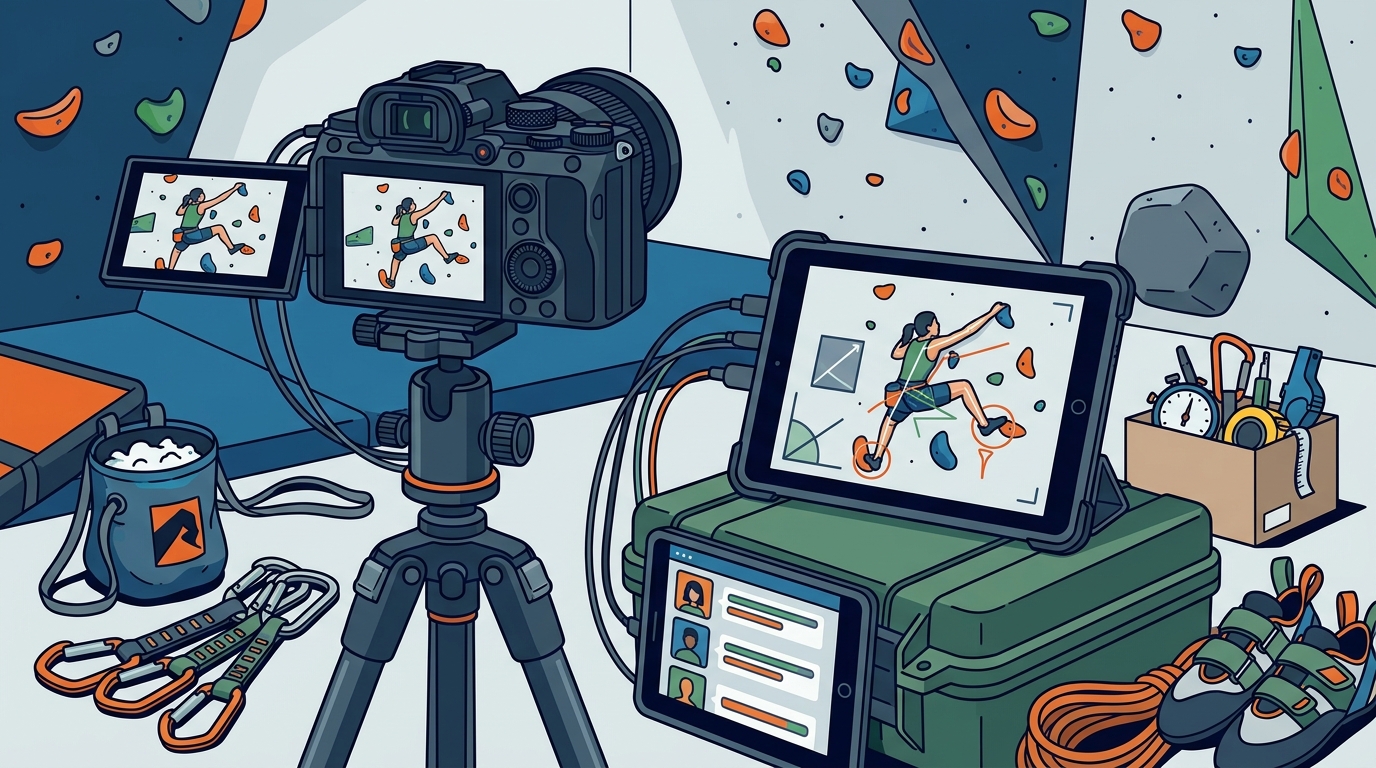
- Shoot from the side or at a 45-degree angle. Head-on footage hides hip position and weight distribution.
- Capture the full body in frame for the entire attempt. Cropped feet or hands make movement analysis impossible.
- Film at normal speed. Your coach can slow it down; they cannot speed up a slo-mo-only clip.
- Include at least one attempt on a route near your limit. Easy sends rarely reveal bad habits.
- Use a tripod or prop your phone against a wall. Shaky handheld footage causes eye fatigue and misses detail.
- Send multiple angles if possible. One from the side and one slightly below gives the most information.
Red Flags and Green Flags When Evaluating a Remote Climbing Coach
Green flags
- They ask detailed questions about your goals, injury history, and training history before creating a plan
- They request video of your climbing before the first paid session
- They use a structured delivery platform (TrueCoach, TrainHeroic, Google Sheets with clear formatting)
- They have long-term clients willing to share testimonials
- They communicate on a regular cadence—weekly check-ins at minimum
Red flags
- They send a generic template plan after a five-minute intake
- No video review is part of the process at all
- They cannot articulate their coaching philosophy or methodology
- Zero verifiable testimonials or client results
- They require a long-term contract with no trial period
Key Takeaways
- Established coaching companies (Lattice, Climb Strong, TrainingBeta) offer the most structured remote workflows with proven track records.
- Independent coaches like Parfenov Training and ROAP Coaching can deliver highly personalized daily video feedback.
- Course platforms such as Movement For Climbers provide a budget-friendly hybrid of self-study and periodic expert review.
- AI tools (Climbah, ClimbAI, Climbalyzer) give instant, low-cost technique analysis but lack the human nuance needed for tactics and mental coaching.
- Always start with a short trial block—most reputable coaches offer 4-week starter packages.
- The quality of your submitted video directly determines the quality of your coaching feedback.
Frequently Asked Questions
How much does remote climbing coaching typically cost?
Prices vary widely. Short trial blocks (4 weeks) with established coaches like TrainingBeta start around $200–$300. Longer commitments (12 weeks) can run $700–$900. AI platforms are considerably cheaper, often under $15 per month, but provide less personalized guidance.
Do I need special equipment to do remote video analysis?
A smartphone camera is sufficient for most coaches. A small tripod or phone mount helps keep footage stable and ensures your full body stays in frame. Some coaches also work with training-board footage from Kilter or Tension boards.
Can a remote coach really fix my technique without being in the gym with me?
Yes. High-quality video reveals foot placement, hip positioning, and momentum issues clearly. Many coaches find that asynchronous video review actually allows more careful analysis than real-time observation, because they can pause, rewind, and annotate. Coaches like Robin O’Leary at ROAP Coaching have helped athletes make significant grade jumps entirely through remote video analysis and structured plans.
What is the difference between AI video analysis and human coaching?
AI tools excel at detecting biomechanical patterns—body position, footwork precision, and balance metrics—quickly and cheaply. Human coaches bring contextual understanding: they can interpret your movement in the context of your goals, injury history, fear responses, and the specific demands of your project. The best approach for many climbers is to use both.
How often should I send videos to my coach?
Most coaches recommend sending clips weekly or bi-weekly. Some coaches, such as those at Parfenov Training, offer daily form feedback on submitted videos. At minimum, send footage whenever you are working a project or notice a recurring problem.