

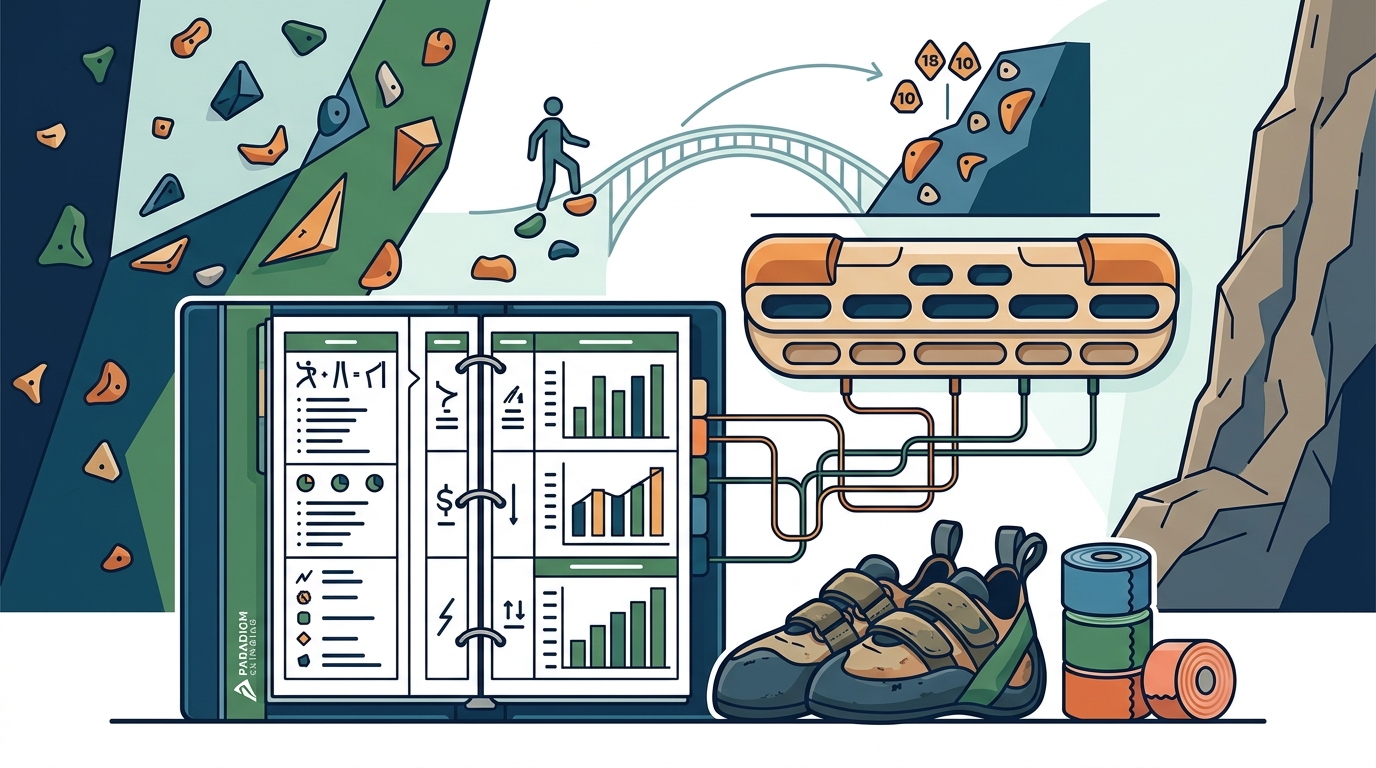
Whether you are pulling on plastic for the first time or projecting double-digit boulders outdoors, progress in climbing rarely happens by accident. A well-designed training plan is the bridge between where you are now and the grades you want to climb. But what actually makes a plan effective, and how do you find coaching that meets you at your current level? This guide breaks down the science of structured climbing training, explains why personalized coaching outperforms generic programs, and shows you how Paradigm Climbing's customized training plans help climbers across every discipline reach their goals faster and more safely.
Why Structured Training Beats "Just Climbing"
Most climbers eventually hit a plateau where simply logging more gym sessions stops producing results. According to research cited by Climbing Magazine, a well-designed training plan can improve performance by 1.5 to 2.3 percent compared to training with no plan at all. That margin can be the difference between sticking on a crux and sending your project.
Structured training is a systematic approach that organizes climbing sessions, strength work, and rest into purposeful cycles. It replaces guesswork with intention, ensuring every session moves you closer to a specific goal rather than just accumulating fatigue.
The Science of Periodization for Climbers
Periodization is the systematic division of a training plan into distinct phases, each with a targeted objective such as building endurance, developing maximum strength, or peaking for performance. This concept is rooted in Hans Selye's General Adaptation Syndrome, which describes how the body responds to stress through alarm, resistance, and exhaustion stages.
How Periodized Cycles Work
A typical periodized plan uses three to four weeks of progressively increasing training load followed by a deload week of reduced intensity. This cycle allows for supercompensation, the physiological process where your body rebuilds to a slightly higher performance level after targeted stress and adequate rest.
Why It Prevents Injury
Tendons and ligaments adapt more slowly than muscles. Unplanned intensity spikes often lead to tendonitis or joint strain. Periodized plans integrate rest, active recovery, and deload weeks so connective tissue can keep pace with muscular gains. This is why coaches who understand periodization produce athletes who stay healthy over the long term.
Custom Plans vs. Generic Programs
A generic plan provides a useful starting framework, but it cannot account for your unique strengths, weaknesses, schedule, or injury history. A customized training plan is a program built around an individual climber's goals, available training days, equipment access, and physical profile.
Paradigm Climbing's Full Spectrum Improvement Series offers a pre-written option drawing on insights from working with nearly 1,000 climbers. For athletes who want deeper support, the Elite and Plus custom plans include one-on-one coach communication, video analysis, and fully individualized programming organized in 9-week cycles.
What to Look for in a Climbing Coach
Credentials and Experience
Look for coaches with certified strength and conditioning backgrounds, competition-level climbing experience, and a proven track record of developing athletes across a wide range of abilities. A coach who has worked with both beginners and elite competitors understands how to scale training appropriately.
Communication and Accountability
The best coaching relationships include consistent check-ins, accessible communication channels, and the ability to adjust plans in real time. Video analysis, for example, lets a coach provide movement feedback even when training remotely.
Holistic Approach
Effective coaching addresses more than just physical output. Mental resilience, nutrition awareness, and life-schedule management all influence on-wall performance. A coach who considers these factors delivers better long-term results.
The Paradigm Climbing Approach
Paradigm Climbing was founded by Coach Charlie Schreiber, a professional climbing coach with over 16 years of coaching experience and a Certified Strength and Conditioning Specialist (CSCS) credential. Charlie has personally trained over 1,000 climbers and mentored athletes from day-one beginners to the V16 and V17 level.
The coaching team also includes Mattias Braach-Maksvytis, a V14 boulderer with 22 years of climbing experience and a background in physical therapy. Together they prescribe periodized training protocols that control volume, duration, and load to optimize performance and prevent overtraining.
Every Paradigm Elite plan includes video analysis and feedback, giving athletes up to 10 video reviews per 9-week cycle. Athletes can text or email climbing footage and receive personalized movement breakdowns. It functions like having a personal coach in your pocket, available whenever you need tactical guidance on a project or competition preparation.
Paradigm serves climbers worldwide across bouldering, sport climbing, and competition disciplines. Explore the free training eBook for an introduction to their coaching philosophy, or visit the Paradigm blog for ongoing training insights.
Comparing Plan Types at a Glance
| Feature | Generic Free Plan | Pre-Written Plan (Full Spectrum) | Custom Elite Plan |
|---|---|---|---|
| Personalization | None | Moderate (curated from 1,000+ athlete insights) | Fully individualized |
| Coach Communication | None | Limited | 24/7 access |
| Video Analysis | No | No | Yes (10 per cycle) |
| Periodized Structure | Sometimes | Yes | Yes (9-week cycles) |
| Schedule Flexibility | Self-managed | Self-managed | Coach-adjusted |
| Best For | Casual exploration | Self-motivated intermediates | Goal-driven climbers at any level |
Key Takeaways
- Structured, periodized training improves climbing performance by up to 2.3% over unstructured sessions, a meaningful margin at any grade.
- Periodization organizes training into phases of progressive overload and recovery, reducing injury risk and preventing plateaus.
- Custom coaching accounts for your unique goals, schedule, and weaknesses in ways generic plans cannot.
- Coach credentials matter: look for CSCS certification, competition experience, and a history of developing athletes across all levels.
- Video analysis bridges the gap between remote coaching and in-person feedback, accelerating technique refinement.
- Paradigm Climbing offers plans from pre-written programs to fully custom Elite coaching, serving beginners through V17 boulderers.
- Consistency over months and years, not intensity in a single week, drives lasting improvement.
Frequently Asked Questions
What is a customized climbing training plan?
A customized climbing training plan is a periodized program designed by a professional coach to match your specific goals, current ability, available training time, and physical profile. Unlike one-size-fits-all templates, it adapts as you progress.
How long does it take to see results from a structured training plan?
Most climbers notice measurable improvements within one 9-week training cycle. Significant grade breakthroughs typically emerge after two to three cycles of consistent, periodized training.
Do I need to be an advanced climber to benefit from coaching?
No. Paradigm Climbing works with athletes ranging from absolute beginners to World Cup competitors. Coaching is especially valuable for newer climbers because it builds correct movement patterns and prevents early-stage injuries.
What does video analysis involve?
You record yourself climbing and send the footage to your coach. They respond with detailed movement analysis, identifying technique inefficiencies and providing actionable drills. Paradigm Elite plans include 10 video reviews per 9-week cycle.
How is periodization different from just following a workout routine?
Periodization is the strategic organization of training into phases that cycle through different goals like strength, power, and endurance. A static workout routine repeats the same stimulus indefinitely, which leads to plateaus and increases overtraining risk.
Can I train with Paradigm Climbing if I live outside the USA?
Yes. Paradigm trains climbers around the world through remote coaching, digital plan delivery, and asynchronous video feedback. Location is not a barrier to effective coaching.
What credentials should a climbing coach have?
Look for certifications like the CSCS (Certified Strength and Conditioning Specialist), relevant competition experience, and a demonstrated history of coaching athletes across multiple skill levels. Coach Charlie Schreiber holds a CSCS and has over 16 years of professional coaching experience.
Start Training With Purpose
If you are ready to stop guessing and start progressing, explore Paradigm Climbing's training plans to find the right fit for your goals and schedule. From the Full Spectrum pre-written series to fully custom Elite coaching, there is a path designed for your level. Take the first step today.