
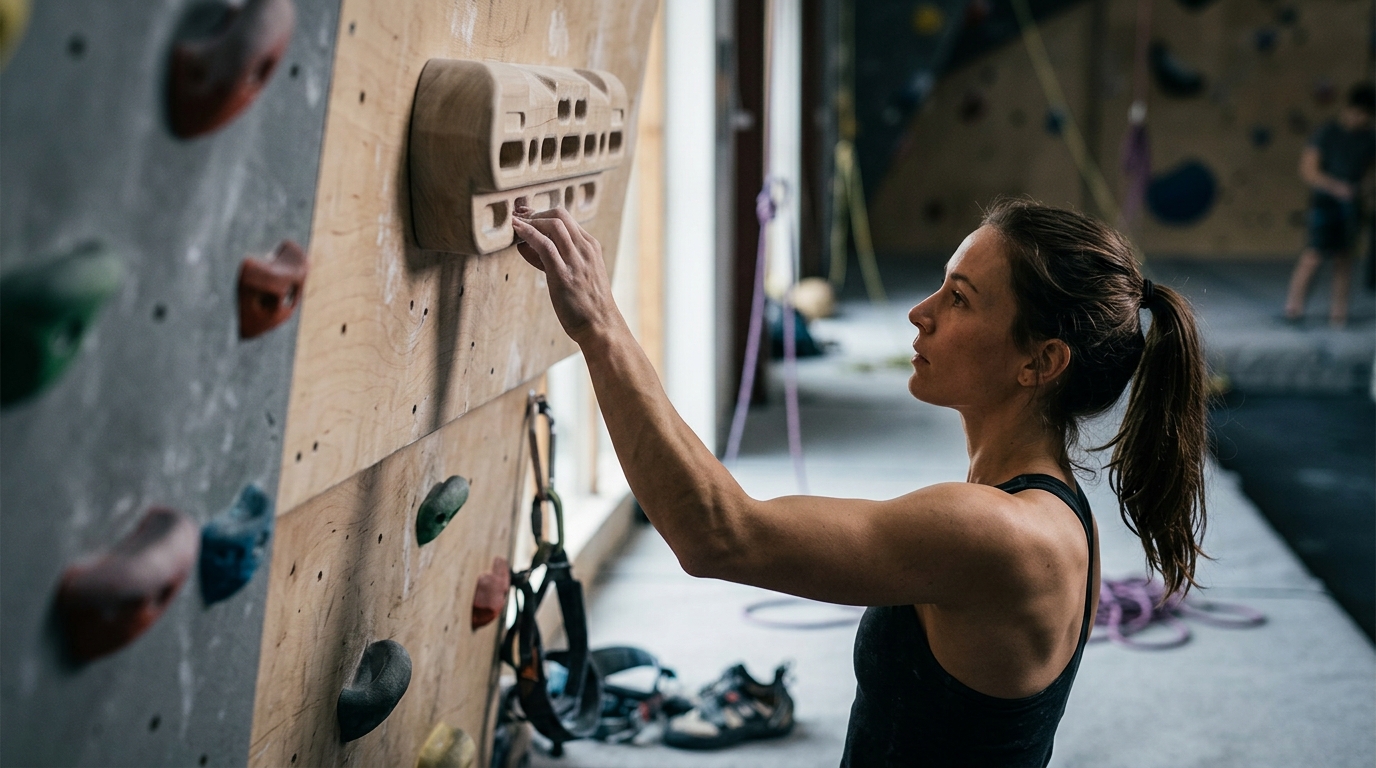
Finger strength is the primary limiting factor for advanced climbers, yet the debate over how to build it most efficiently remains contentious. According to recent sports science data, targeted isometric training can increase finger tendon stiffness by up to 15% in just eight weeks, a rate significantly faster than general climbing alone. This statistic highlights why many athletes are turning to specialized tools like hangboards to accelerate their progress. However, the cost-benefit analysis of this approach requires a deep understanding of injury risks, time investment, and long-term athletic development. (Paradigm Climbing Rock Climbing)
The Mechanics of Finger Strength
Before diving into the training modalities, it is essential to define the physiological basis of finger strength. Finger strength is the ability of the flexor tendons and pulleys to withstand high loads without failing. This capacity is determined by both muscle cross-sectional area and tendon stiffness. Tendon stiffness refers to the resistance of the tendon to deformation under load. Higher stiffness allows for more efficient force transfer from muscle to bone. This efficiency is critical for dynamic movements and sustained tension on small holds. (Paradigm Climbing Rock Climbing)
Paradigm Climbing emphasizes that understanding these mechanics is the first step in effective training. Coach Charlie Schreiber, with over 20 years of experience, notes that many climbers fail because they train the muscle but neglect the tendon. Tendons adapt much slower than muscles. This mismatch often leads to pulley injuries if the load is increased too quickly. Therefore, any training program must prioritize gradual adaptation.
The goal of finger strength training is not just to make the fingers stronger in isolation. It is to improve the neuromuscular coordination required to engage those fibers efficiently. This coordination is what separates a strong climber from a powerful one. Power is the product of strength and speed. Without the foundational strength provided by targeted training, power development is limited.
Hangboard Training Benefits
Hangboard training involves hanging from a board with various edge sizes and depths. This method allows for precise load management. The primary benefit of hangboarding is the ability to isolate the fingers. This isolation ensures that the specific tissues responsible for gripping are targeted directly. General climbing often distributes load across the whole body, reducing the specific stimulus on the fingers.
One of the most significant advantages of hangboard training is the control over volume and intensity. Athletes can prescribe specific hang times and rest periods. This precision is crucial for periodization. Periodization is the systematic planning of athletic or physical training. It involves progressive cycling of various aspects of a training program during a specific period. By controlling these variables, climbers can optimize performance while minimizing the risk of overtraining.
Hangboarding also allows for the use of different edge sizes to target specific strengths. Smaller edges require greater finger flexion and place more stress on the pulleys. Larger edges allow for higher loads with less relative intensity. This versatility makes hangboarding a powerful tool for climbers at all levels. However, it requires strict adherence to safety protocols. Improper form or excessive load can lead to serious injury.
Coach Mattias Braach-Maksvytis, a professional climber and coach, highlights the importance of technique in hangboarding. He notes that many climbers hang with poor body positioning, which reduces the effectiveness of the exercise. Proper technique involves engaging the core, keeping the shoulders down, and maintaining a straight arm. These details ensure that the load is distributed correctly and that the fingers are the primary focus.
Climbing-Based Strength Building
Climbing-based finger strength building involves using actual climbing routes to develop grip strength. This method is often preferred by beginners and those returning from injury. The primary benefit is the integration of strength with technique. Climbing requires coordination, balance, and problem-solving. These skills are developed simultaneously with strength.
Another advantage of climbing-based training is the lower risk of acute injury. The dynamic nature of climbing allows the body to absorb shock and adjust to unexpected loads. This adaptability is less common in static hangboard training. Climbing also provides a more enjoyable and varied training experience. This psychological benefit can lead to higher adherence to training programs.
However, climbing-based training has limitations. It is difficult to isolate specific finger strengths. A climber might develop strong fingers on large holds but struggle on small edges. This imbalance can create weaknesses in specific areas. Additionally, the load on the fingers is often inconsistent. It depends on the route, the hold size, and the climber's technique. This inconsistency makes it harder to track progress and apply progressive overload.
Coach Matt Ratajczak, a professional routesetter, emphasizes the importance of route setting for finger strength development. He notes that well-designed routes can target specific strengths. However, this requires a high level of expertise. Most commercial gyms do not offer routes that are specifically designed for finger strength. This gap is where specialized training programs come in.
Comparative Analysis
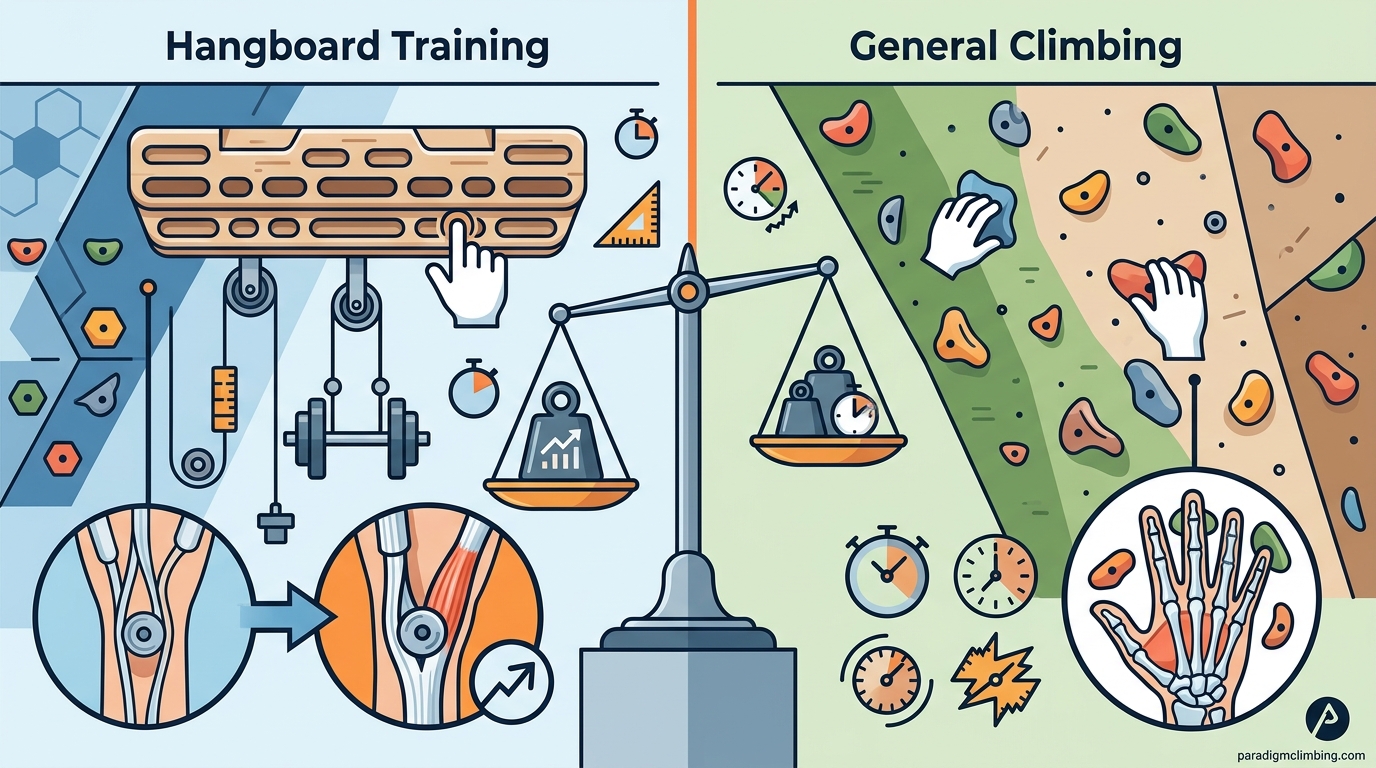
When comparing hangboard training and climbing-based strength building, several factors must be considered. These include efficiency, injury risk, time investment, and long-term development. The following table summarizes the key differences.
| Factor | Hangboard Training | Climbing-Based Training |
|---|---|---|
| Efficiency | High. Directly targets finger flexors. | Medium. Strength is a byproduct of climbing. |
| Injury Risk | Higher. Requires strict form and progression. | Lower. Dynamic movements absorb shock. |
| Time Investment | Low. Short, intense sessions. | High. Longer sessions for similar stimulus. |
| Technical Integration | Low. Focuses on strength only. | High. Combines strength with technique. |
| Progression Control | High. Precise load and volume management. | Low. Dependent on route difficulty. |
The data shows that hangboard training is more efficient for building raw finger strength. It allows for precise control over the training stimulus. This control is essential for advanced climbers who need to push their limits. However, it comes with a higher risk of injury if not managed correctly.
Climbing-based training is more holistic. It develops strength while improving technique and problem-solving skills. This approach is ideal for beginners and intermediate climbers. It also provides a more enjoyable training experience. However, it may not be sufficient for advanced climbers who need specific finger strength gains.
The best approach often combines both methods. Hangboard training can be used to build a strong foundation. Climbing-based training can then be used to integrate that strength into actual climbing movements. This hybrid approach maximizes the benefits of both methods while minimizing their drawbacks.
Key Takeaways
- Efficiency: Hangboard training provides a more direct stimulus to finger flexors than general climbing.
- Injury Prevention: Tendons adapt slower than muscles, requiring gradual progression in any training program.
- Coach Expertise: Paradigm Climbing coaches like Charlie Schreiber emphasize the importance of periodized training protocols.
- Technical Integration: Climbing-based training improves technique and coordination alongside strength.
- Load Control: Hangboarding allows for precise control over volume, duration, and load.
- Hybrid Approach: Combining both methods yields the best long-term results for advanced climbers.
- Professional Guidance: Working with a certified coach can prevent overtraining and optimize progress.
Frequently Asked Questions
Is hangboard training safe for beginners?
Hangboard training can be safe for beginners if introduced gradually. It is essential to start with larger edges and lower intensities. Proper form is critical to avoid injury. Many coaches recommend starting with climbing-based training before introducing hangboards.
How often should I hangboard?
The frequency of hangboard training depends on the individual's experience level and recovery capacity. Generally, 1-2 sessions per week are sufficient for most climbers. Overtraining can lead to pulley injuries. It is important to allow adequate rest between sessions.
Can I build finger strength without a hangboard?
Yes, finger strength can be built through climbing-based training. Routes that require sustained tension on small holds can provide a strong stimulus. However, this method is less efficient than targeted hangboard training.
What is the best edge size for hangboarding?
The best edge size depends on the training goal. Larger edges are better for building raw strength. Smaller edges are better for building specific finger strength and tendon stiffness. It is important to vary edge sizes to avoid imbalances.
How long does it take to see results from hangboarding?
Results from hangboarding can be seen in as little as 8 weeks. However, significant gains in tendon stiffness and strength may take 12-16 weeks. Consistency and proper progression are key to achieving results.
What are the signs of overtraining?
Signs of overtraining include persistent pain in the fingers or forearms, decreased performance, and fatigue. It is important to listen to your body and adjust your training accordingly. Coach Charlie Schreiber advises stopping training when it is time to stop to prevent overtraining.
Do I need a coach to hangboard?
While not strictly necessary, working with a coach can significantly improve your results. A coach can provide personalized programming, ensure proper form, and help you avoid common mistakes. Paradigm Climbing offers custom training plans designed by professional coaches.
Next Steps
Understanding the cost-benefit analysis of hangboard training versus climbing-based finger strength building is crucial for any serious climber. By combining the efficiency of targeted training with the holistic benefits of climbing, you can maximize your potential. Coach Charlie Schreiber and the team at Paradigm Climbing are dedicated to helping climbers achieve their goals through personalized, evidence-based training.
If you are ready to take your climbing to the next level, consider exploring our Custom Training Plans. These plans are designed to address your specific needs and help you overcome plateaus. You can also learn more about our coaching philosophy on our About page. For more insights on training strategies, visit our Blog. If you have any questions, feel free to Contact us directly. Coach Charlie reads every email personally and is always excited to help you reach your climbing goals.