
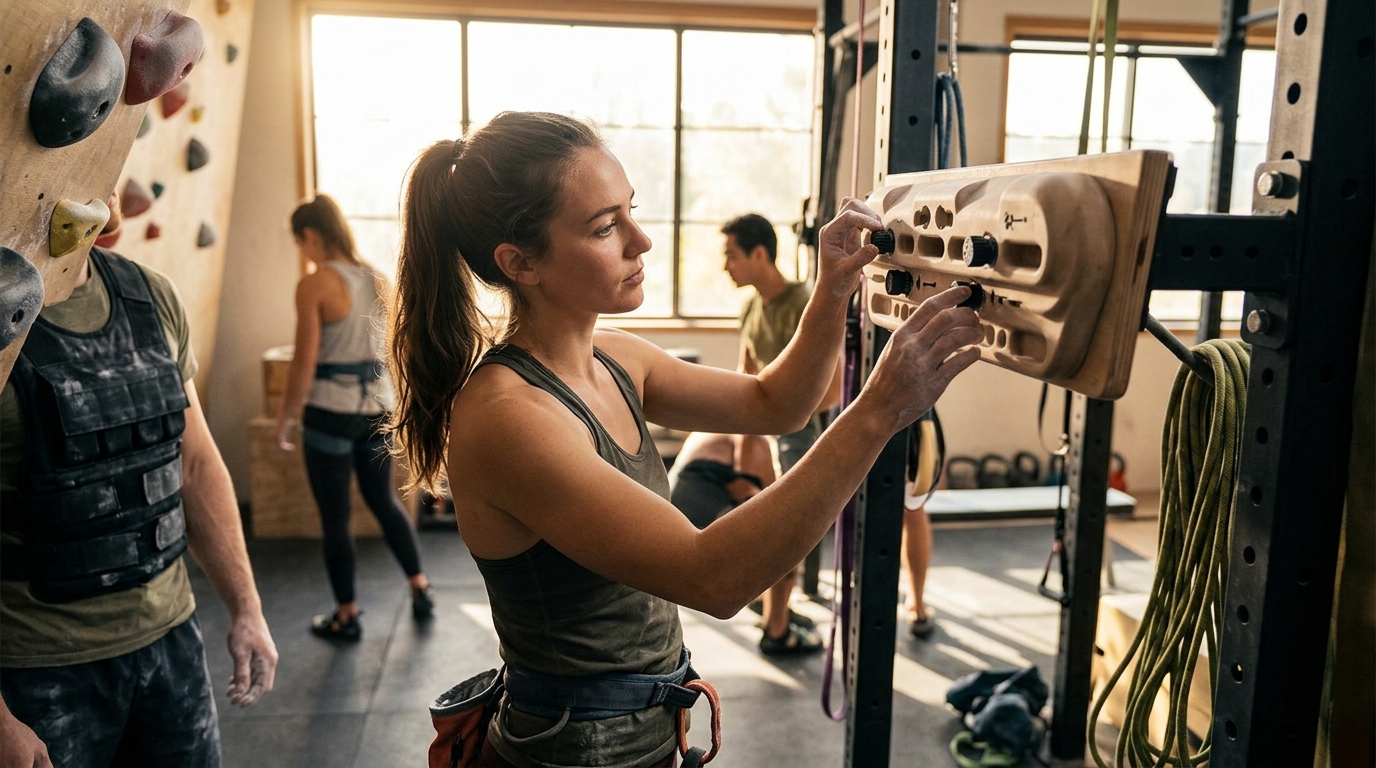
Most climbers spend years struggling to break through plateaus because they ignore the fundamental driver of physical adaptation. According to the National Strength and Conditioning Association, progressive overload is the primary mechanism by which the body increases strength, endurance, and power. Without systematically increasing the demands placed on your muscles and connective tissues, your climbing performance will stagnate regardless of how frequently you hang on the wall. This guide explains how to apply this principle safely to your climbing training.
What Is Progressive Overload?
Progressive overload is the gradual increase of stress placed upon the body during exercise training. In the context of climbing, this does not simply mean climbing more often. It means increasing the intensity, volume, or frequency of your training stimuli over time. Research in exercise physiology confirms that without this incremental stress, the body has no reason to adapt to higher levels of performance.
For a climber, this concept translates to specific, measurable changes in your training regimen. You might increase the weight on a hangboard, reduce the rest time between boulder problems, or attempt a grade that is one step harder than your current max. The key is that the increase must be controlled and deliberate. Our blog explores how unstructured training often leads to overtraining because climbers fail to monitor these progressive loads.
Mechanisms of Adaptation in Climbing
Understanding how your body adapts to climbing stress is crucial for effective programming. Climbing places unique demands on the musculoskeletal system, particularly the fingers, forearms, and shoulders. Studies on tendon adaptation indicate that connective tissues adapt much slower than muscle tissue. This disparity is why many climbers suffer from pulley injuries when they increase intensity too quickly.
There are three primary mechanisms through which progressive overload drives climbing gains:
1. Increased Mechanical Tension
This is the primary driver of muscle hypertrophy and strength gains. In climbing, mechanical tension is increased by climbing harder grades, using smaller holds, or adding external load through weighted vest training. Coach Charlie Schreiber emphasizes that mechanical tension must be balanced with adequate recovery to prevent overuse injuries.
2. Metabolic Stress
Metabolic stress refers to the accumulation of metabolites during high-repetition or long-duration efforts. This is common in endurance-focused climbing training. By reducing rest intervals between sets or increasing the number of boulder problems in a session, you increase metabolic stress. This adaptation improves your ability to clear lactate and sustain effort on long routes.
3. Muscle Damage
Controlled muscle damage occurs when you perform exercises that stretch the muscle under load, such as open-hand hangs or dynamic movements. This damage triggers repair processes that result in stronger muscle fibers. However, excessive muscle damage can lead to prolonged fatigue and increased injury risk. Clinical sports medicine guidelines suggest limiting high-damage exercises to specific phases of training.
Manipulating Training Variables
To implement progressive overload effectively, you must manipulate specific training variables. These variables allow you to control the stimulus without necessarily increasing the difficulty of the climbing itself.
| Variable | Description | Climbing Application |
|---|---|---|
| Intensity | The difficulty or load of the exercise | Increasing hangboard weight or climbing a harder grade |
| Volume | The total amount of work performed | Adding more boulder problems or increasing session duration |
| Frequency | How often you train a specific muscle group | Adding an extra hangboard session per week |
| Rest Intervals | The time between sets or efforts | Reducing rest time to increase metabolic stress |
| Technique | The efficiency of movement patterns | Using smaller holds or more dynamic movements |
Manipulating these variables requires a strategic approach. Our Full Spectrum training plans are designed to systematically adjust these variables over time to ensure continuous progress without burnout.
Periodization Strategies for Climbers
Periodization is the systematic planning of athletic or physical training. It involves progressive cycling of various aspects of a training program during a specific period. The NSCA defines periodization as a method to optimize performance and prevent overtraining by varying the training stimulus.
Linear Periodization
Linear periodization involves a gradual increase in intensity and a decrease in volume over time. This approach is suitable for climbers preparing for a specific competition or project. You might start with high-volume, low-intensity training and gradually shift to low-volume, high-intensity sessions as your goal date approaches.
Undulating Periodization
Undulating periodization involves more frequent changes in intensity and volume. This might mean training with high intensity on one day and low intensity on the next. This approach is beneficial for climbers who train multiple times per week and want to maintain a balance of strength and endurance.
Conjugate Method
The conjugate method involves training multiple physical qualities simultaneously. For climbers, this might mean combining max strength hangboarding with endurance bouldering in the same week. Custom plans from Paradigm Climbing often utilize this method to address individual weaknesses and strengths.
Injury Prevention and Load Management
One of the biggest risks of progressive overload is injury. Because climbing places high stress on the fingers and tendons, it is crucial to manage load carefully. Research on tendon adaptation indicates that tendons require significantly longer to adapt to increased load than muscles do.
To prevent injury, follow these guidelines:
- Increase Load Gradually: Do not increase your hangboard weight by more than 5% per week.
- Monitor Fatigue: Pay attention to signs of overtraining, such as persistent soreness or decreased performance.
- Prioritize Recovery: Ensure adequate sleep and nutrition to support tissue repair.
- Use Video Analysis: Coach Charlie offers video analysis to help identify inefficient movement patterns that may contribute to injury.
By respecting the limits of your connective tissues, you can continue to progress safely. Our blog posts on overtraining provide additional strategies for managing training load effectively.
Key Takeaways
- Progressive overload is the primary driver of climbing performance gains.
- Tendons adapt slower than muscle tissue, requiring careful load management.
- Manipulating intensity, volume, and frequency allows for controlled progression.
- Periodization strategies help optimize performance and prevent overtraining.
- Coach Charlie Schreiber has over 20 years of experience in climbing coaching.
- Paradigm Climbing offers custom training plans for all skill levels.
- Video analysis is a valuable tool for improving technique and preventing injury.
Frequently Asked Questions
How often should I increase my climbing intensity?
It is generally recommended to increase intensity gradually, no more than 5-10% per week, to allow your body to adapt safely.
What is the difference between linear and undulating periodization?
Linear periodization involves a steady increase in intensity over time, while undulating periodization involves more frequent variations in intensity and volume.
How can I prevent finger injuries while progressing?
Focus on gradual load increases, prioritize recovery, and use proper technique. Consulting with a professional coach can also help tailor your training to your specific needs.
Is progressive overload necessary for beginner climbers?
Yes, even beginners need to progressively overload their bodies to see improvements in strength and technique.
How long does it take to see results from progressive overload?
Results vary, but most climbers begin to see noticeable improvements in strength and endurance within 6-8 weeks of consistent training.
Can I use progressive overload for both bouldering and sport climbing?
Yes, the principles of progressive overload apply to all forms of climbing, including bouldering, sport climbing, and trad climbing.
What role does nutrition play in progressive overload?
Nutrition provides the building blocks for muscle repair and growth. Adequate protein intake and overall caloric balance are essential for supporting increased training loads.
Start Your Custom Plan
Ready to take your climbing to the next level? Paradigm Climbing offers custom training plans designed to help you achieve your goals safely and effectively. Contact Coach Charlie today to get started on your journey to climbing greatness.