
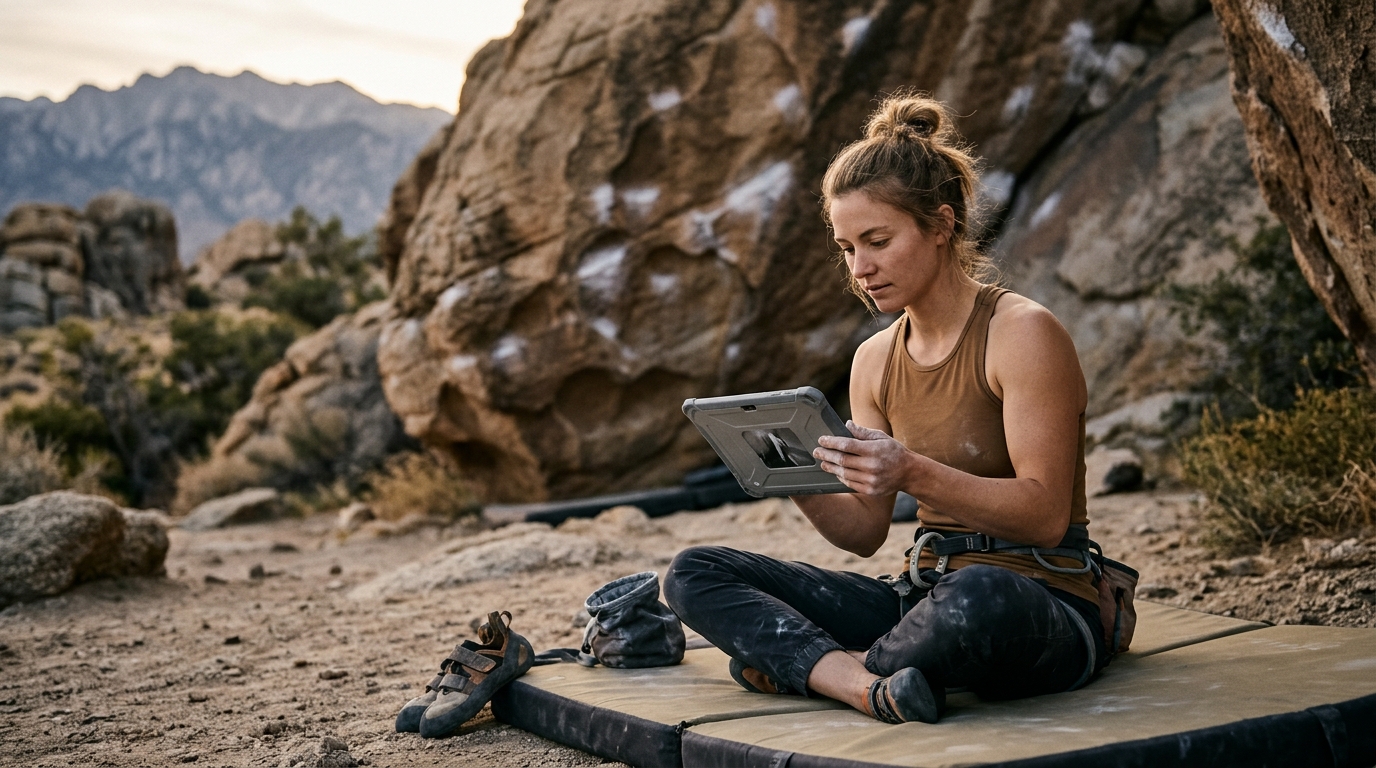
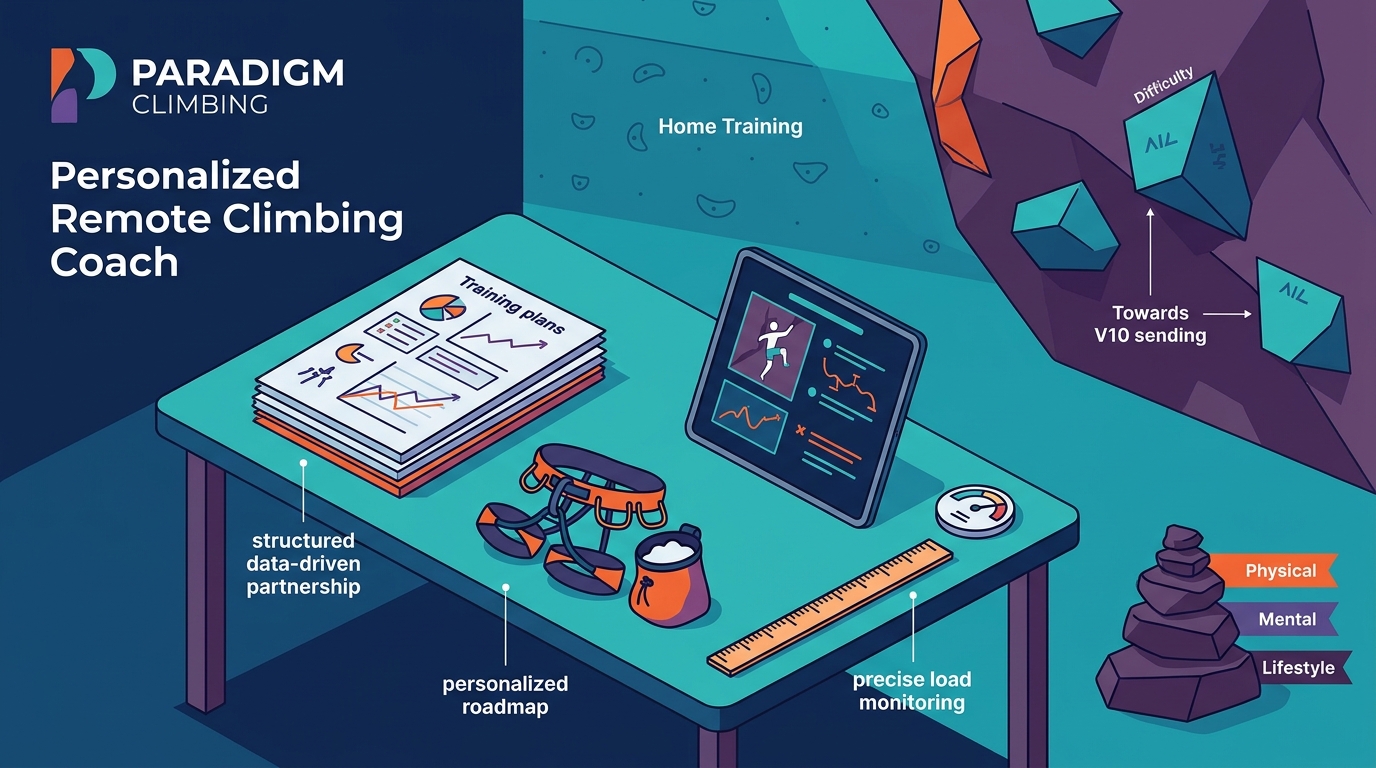
Expect a structured, data-driven partnership that replaces guesswork with periodized training. A personalized remote coach for V10 progression designs a specific roadmap, monitors your load, and provides video feedback to ensure you build the precise strength and skill required to send double-digit boulders. At Paradigm Climbing, this process is built on a holistic approach that addresses physical, mental, and lifestyle factors to break through your current plateau.
The Foundation of Remote Coaching
Remote climbing coaching is a service where a professional guides your training via digital communication, video analysis, and customized programming. Unlike generic apps or pre-written plans, a personalized remote coach creates a unique strategy based on your specific biomechanics and goals. This method allows for high-level oversight without requiring you to be in the same physical location as the coach. according to Increasing accuracy of
The core of this service is the initial consultation. Your coach will assess your current movement patterns, injury history, and training history. They will identify your specific weaknesses, whether that is finger strength, power endurance, or technical efficiency. By understanding your baseline, the coach can prescribe the right type of training to move you from your current grade to V10.
Periodized Training and Load Management
Periodization is the systematic planning of athletic training to achieve peak performance at a specific time. For a climber targeting V10, this means breaking your year into distinct phases, such as general preparation, specific strength, and peaking. A remote coach manages this by controlling your training volume and intensity. They ensure you are not overtraining, which is a common cause of injury and stalled progress.
Load management is critical when moving into double-digit bouldering. The forces placed on your fingers and elbows increase significantly at this level. A coach will use metrics like Acute:Chronic Workload Ratio (ACWR) to monitor your stress. If your data shows you are at risk of injury, the coach will adjust your schedule. This proactive approach prevents the burnout and tendon issues that often plague self-directed climbers.
Video Analysis and Technical Feedback
Video analysis is the primary tool for improving technique in a remote setting. You record your projects or training sessions and send them to your coach. They review the footage to identify inefficiencies in your movement. For example, they might notice that you are using your arms to pull when you should be using your legs to push. This feedback is specific and actionable, allowing you to make immediate corrections.
At Paradigm Climbing, coaches like Charlie Schreiber use video analysis to teach proper movement mechanics. This is essential for V10 progression because at this grade, small technical errors can be the difference between a send and a fall. By refining your beta and movement efficiency, you can climb harder routes with less physical strain. This allows you to train more effectively and recover faster.
Mental Skills and Mindset Development
Mental skills training is the practice of developing psychological strategies to improve performance and reduce anxiety. Climbing V10 boulders requires a different mental approach than climbing V5s. You must be comfortable with higher consequences and more complex problem-solving. A remote coach helps you develop the focus and confidence needed to perform under pressure. They teach you how to manage fear and maintain a positive mindset during difficult projects.
Self-consciousness is a common barrier for climbers trying to reach new grades. Many climbers worry about how they look to others, which distracts them from their performance. A coach can help you overcome this by shifting your focus to your own progress. They provide a supportive environment where you can be vulnerable and ask for help. This mental resilience is just as important as physical strength when targeting V10.
Communication and Accountability
Accountability is the commitment to a training plan and the regular check-ins that ensure you stay on track. A personalized remote coach provides a direct line of communication for questions and support. You are not left to figure things out on your own. If you are struggling with a specific drill or feeling stuck, your coach is available to help. This ongoing support keeps you motivated and consistent.
The frequency of communication varies by program. Some coaches offer weekly check-ins, while others provide on-demand support. At Paradigm Climbing, plans are organized in 9-week cycles, allowing for structured progress. Your coach will review your progress at the end of each cycle and adjust the next phase accordingly. This iterative process ensures that your training remains effective and aligned with your goals.
Key Takeaways
- Personalized remote coaching provides a customized roadmap based on your specific strengths and weaknesses.
- Periodized training ensures you build strength and power in the right order to prevent injury.
- Video analysis allows for detailed technical feedback that you cannot get from self-training.
- Mental skills training helps you overcome fear and self-consciousness when climbing harder grades.
- Regular communication and accountability keep you consistent and motivated throughout your training.
- A coach monitors your load to prevent overtraining and manage the increased stress on your body.
Frequently Asked Questions
How often should I communicate with my remote climbing coach?
Communication frequency depends on the specific program. Many coaches offer weekly check-ins or on-demand support. You should expect to send videos and progress updates regularly so your coach can adjust your plan.
Can a remote coach help me with injury prevention?
Yes, by monitoring your training load and providing proper technique feedback, a coach can help prevent common climbing injuries. They will adjust your volume and intensity to keep you safe.
What is the difference between a pre-written plan and personalized coaching?
A pre-written plan is a static document, while personalized coaching involves ongoing communication and adjustments. A coach tailors the training to your specific needs and provides feedback on your progress.
How long does it take to progress to V10 with coaching?
The timeline varies based on your starting level and consistency. With structured coaching, many climbers see significant progress within a few months to a year. Consistency and proper load management are key.
Do I need to be in the same location as my coach?
No, remote coaching is designed for climbers who are not in the same location. You can train at your local gym or outdoors and send videos to your coach for feedback.
Start Your V10 Journey
Ready to break through your plateau and reach V10? Contact Paradigm Climbing to discuss your goals and find the right coaching plan for you. Our team is dedicated to helping you maximize your climbing potential through personalized, science-based training.