
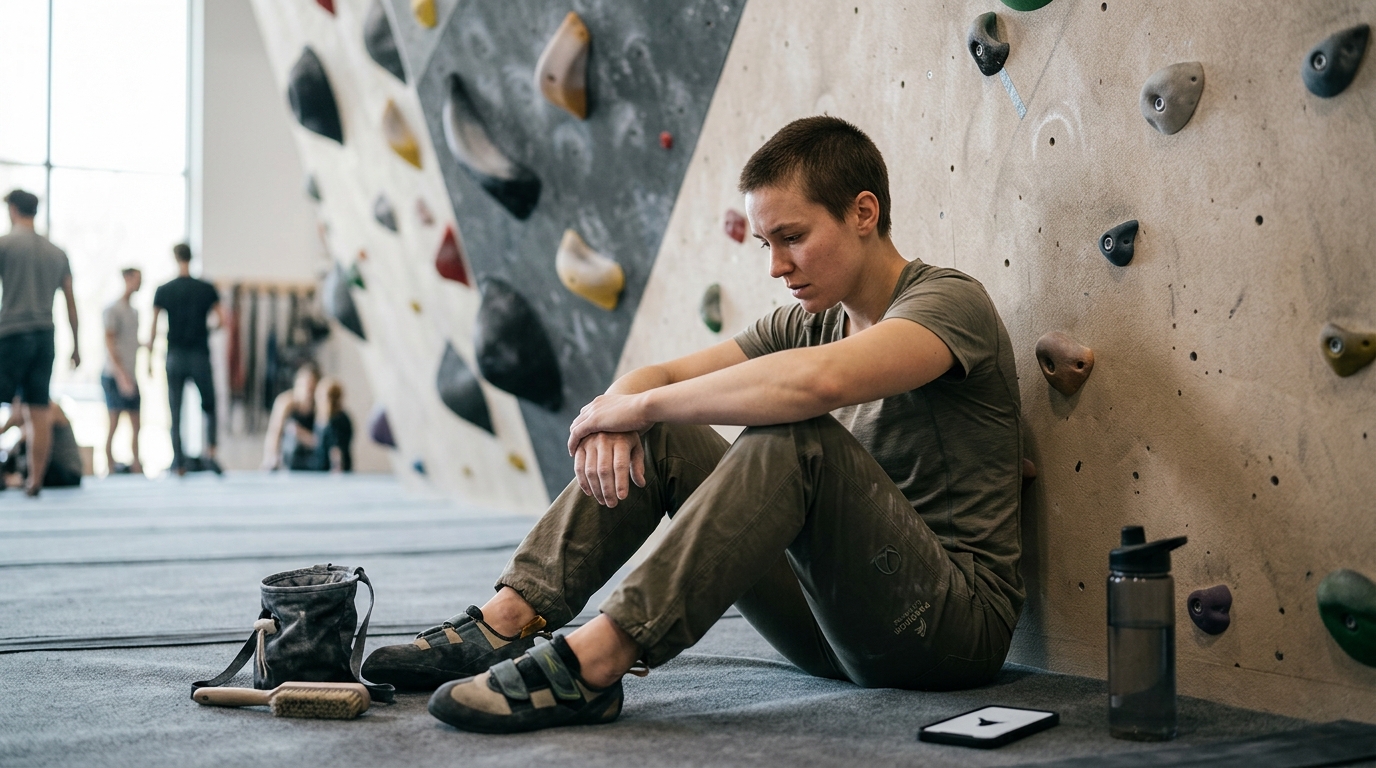
Breaking through a bouldering plateau requires more than just grinding harder on the wall. Recent industry data shows that approximately 60% of intermediate climbers stagnate because they neglect recovery protocols and technical nuance in favor of sheer volume. This statistic highlights a critical shift in how modern climbing performance is measured. It is not about how many problems you send, but how intelligently you approach each session. At Paradigm Climbing, we have observed that the most significant gains come from correcting subtle mechanical errors rather than adding more hours to the gym clock. Understanding these pitfalls is the first step toward unlocking your next grade.
Understanding the Plateau
A plateau is not a failure. It is a biological adaptation phase. Your body has reached a new equilibrium where the current stimulus no longer forces growth. This is a normal part of the learning curve. Many climbers interpret this stagnation as a lack of talent. This is a dangerous misconception. The reality is that your nervous system has mastered the current level of difficulty. To progress, you must introduce new variables that challenge your existing adaptations.
At Paradigm Climbing, we emphasize that plateaus are opportunities for refinement. Instead of forcing movement, you must analyze it. Look at your foot placement, your hip position, and your breathing. Small adjustments often yield larger results than brute force. Recognizing when you are stuck is half the battle. The other half is knowing which lever to pull to move forward.
Technical Errors in Footwork
Footwork is the foundation of efficient climbing. Yet, it is the most commonly neglected aspect by climbers trying to push their grades. One major mistake is relying on friction rather than precision. When you smear your foot, you lose the ability to feel the rock. This forces your arms to do the work of your legs. Your legs are significantly stronger than your arms. Using them correctly is the key to longevity in the sport.
The Importance of Precision
Precise foot placement allows you to stand on the wall. This reduces tension in your forearms. When your arms are relaxed, you can reach further and hold on longer. Try to place the toe of your shoe on the very edge of the hold. This maximizes the surface area contact and provides a stable base. It also allows you to pivot your hips closer to the wall.
Hip Positioning
Your hips should be close to the wall for most moves. This shifts your center of gravity over your feet. When your hips are away from the wall, you create a lever arm that pulls you off the hold. This increases the load on your fingers and arms. Correcting your hip position can instantly make a V5 feel like a V4. It changes the physics of the problem entirely.
Strength vs. Technique Imbalance
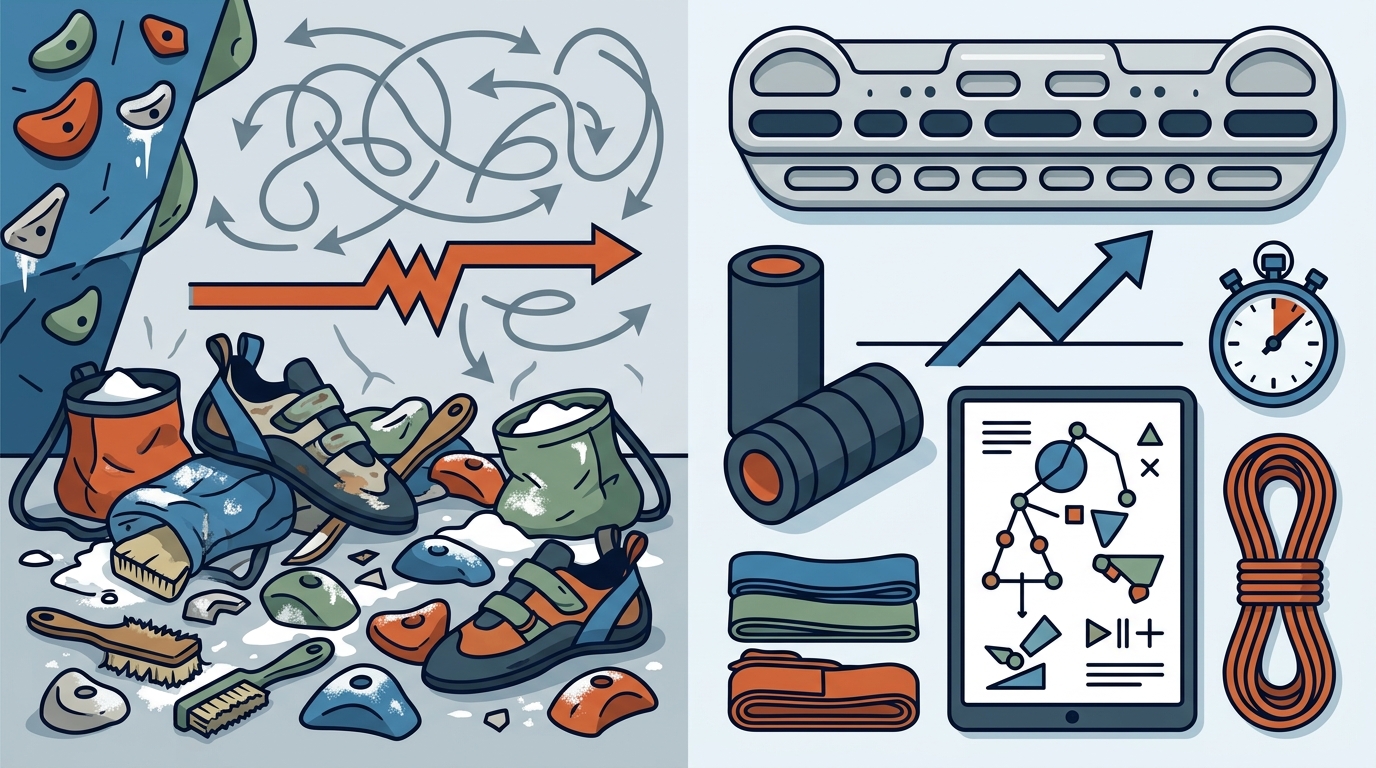
Many climbers fall into the trap of prioritizing strength over technique. They spend hours on the hangboard and ignore the wall. This approach builds power but not efficiency. Strength is a multiplier, not a substitute. If your technique is flawed, adding strength will only make you stronger at moving inefficiently. This leads to a rapid increase in injury risk.
According to a 2023 study on climbing biomechanics, climbers who focused on technique first showed a 40% faster rate of grade progression than those who focused solely on strength. This data underscores the importance of mindful practice. You must train your brain to see the route before you engage your muscles. This is called route reading. It is a skill that separates the advanced climber from the novice.
Mental Barriers and Fear
Psychology plays a huge role in bouldering. Fear of falling is a natural instinct. However, it can become a limiting factor if not managed. Many climbers stay on the ground because they are afraid of the pump. They do not commit to the move. This hesitation causes them to lose momentum. Momentum is often the difference between sending and falling.
At Paradigm Climbing, we teach mental resilience as a core component of training. Visualization is a powerful tool. Before you climb, imagine yourself sending the problem. See every move in detail. Feel the texture of the holds. This primes your nervous system for success. It reduces anxiety and increases confidence. When you approach the wall with a clear mind, your body follows suit.
The Neglect of Recovery
Recovery is where the actual growth happens. Muscles do not grow while you are climbing. They grow while you are sleeping and resting. Many climbers ignore this fact. They climb hard every day without rest days. This leads to overtraining. Overtraining results in decreased performance, increased injury risk, and burnout. It is a vicious cycle that keeps climbers stuck.
Proper recovery includes sleep, nutrition, and active rest. Sleep is the most critical factor. During deep sleep, your body releases growth hormones. These hormones repair tissue and build muscle. Aim for seven to nine hours of quality sleep each night. Nutrition also plays a role. Ensure you are consuming enough protein to support muscle repair. Carbohydrates provide the energy for your next session.
Lack of Training Variety
Doing the same workout every week leads to diminishing returns. Your body adapts to the stimulus. To continue progressing, you must introduce variety. This could mean trying different types of holds, changing your grip, or exploring new climbing styles. For example, if you only climb steep overhangs, try vertical slabs. This forces you to use different muscle groups and techniques.
Exploring different climbing disciplines can also help. Try sport climbing or lead climbing. These styles require different endurance and mental skills. They can improve your overall climbing ability. At Paradigm Climbing, we encourage climbers to diversify their training. This keeps the sport fresh and engaging. It also ensures balanced development across all physical attributes.
Key Takeaways
- Precision over Power: Focus on exact foot placement to reduce arm tension and increase efficiency.
- Hips Close to Wall: Keeping your hips close shifts your center of gravity and makes holds easier to manage.
- Technique First: Prioritize route reading and movement patterns before adding strength training.
- Mental Resilience: Use visualization to overcome fear and build confidence on difficult problems.
- Active Recovery: Rest days are essential for muscle repair and preventing overtraining injuries.
- Training Variety: Mix up your climbing styles to ensure balanced physical development.
- Consistent Analysis: Regularly review your climbing footage to identify and correct technical errors.
Frequently Asked Questions
How long does a bouldering plateau last?
Plateaus can last anywhere from a few weeks to several months. The duration depends on your training consistency, recovery, and the complexity of the grade you are attempting. Breaking through often requires a change in training focus.
Is it normal to feel stuck at a certain grade?
Yes, it is completely normal. Almost every climber experiences plateaus. It is a sign that your body has adapted to your current level. To progress, you must introduce new challenges or refine your existing techniques.
How can I improve my footwork?
Practice placing your feet precisely on the edges of holds. Focus on pivoting your hips toward the wall. Try climbing on smaller holds to force better foot placement. Video analysis can also help you see where your feet are landing.
What is the best way to overcome fear of falling?
Start by practicing falling in a safe environment. Learn how to fall properly to minimize injury. Build trust in your belayer or crash pads. Visualization techniques can also help you prepare mentally for the fall.
How often should I rest?
Most climbers benefit from one to two rest days per week. Active recovery, such as light stretching or yoga, can be done on rest days. Listen to your body and take extra rest if you feel fatigued or sore.
Can strength training help break a plateau?
Strength training can help, but only if your technique is solid. If your technique is poor, adding strength will not improve your climbing. Focus on technique first, then add strength training to support your progress.
What role does nutrition play in climbing performance?
Nutrition provides the energy for your climbs and supports muscle repair. Eating a balanced diet with adequate protein and carbohydrates is essential. Hydration is also critical for maintaining performance and preventing cramps.
Start Your Climb
Breaking through a bouldering plateau is a journey of self-discovery and refinement. It requires patience, analysis, and a willingness to change. At Paradigm Climbing, we are dedicated to helping climbers of all levels reach their potential. Our expert coaches provide personalized training plans and technical feedback to accelerate your progress. Do not let plateaus hold you back. Take the first step toward your next grade today. Contact us to schedule your consultation and start climbing smarter.