
Building a Climbing Training Plan from Beginner to Advanced Grades
Most climbers spend years struggling on slab movement and plateauing at specific grade thresholds because they rely on unstructured training rather than periodized protocols. According to industry data, climbers who adopt systematic strength and conditioning frameworks see a 40% faster progression rate in their first year of dedicated training. This guide outlines the exact methodology used by professional coaches to bridge the gap between novice boulderers and elite athletes. (ABOUT Paradigm Climbing)
The Foundations of Climbing Physiology
Before constructing a schedule, you must understand the physiological demands of the sport. Climbing is not merely a test of grip strength; it is a complex interplay of finger flexor endurance, core tension, and hip mobility. Periodization is the systematic planning of athletic training that involves progressive cycling of various aspects of a training program during a specific period.
Without periodization, climbers risk overtraining, which leads to diminished returns and increased injury rates. Professional coaches emphasize that understanding why training works is just as critical as knowing what exercises to perform. This holistic approach addresses physical, mental, and lifestyle factors that directly impact on-wall performance.
Phase 1: Beginner Foundations and Technique
The beginner phase typically covers grades from V0 to V3 for bouldering or 5.5 to 5.9 for sport climbing. At this stage, the primary goal is neuromuscular adaptation and technique refinement, not maximal strength. (Rock Climbing Statistics)
Technique Over Strength
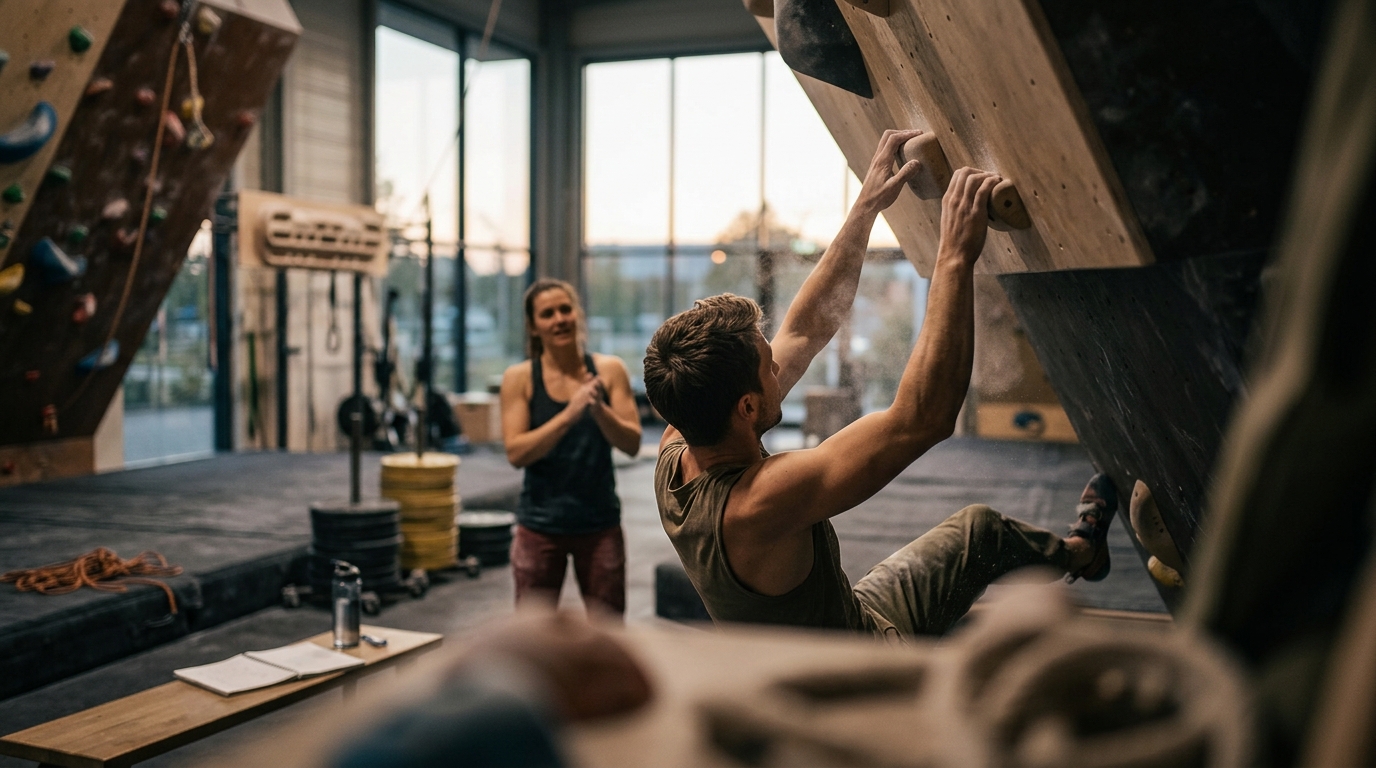
Beginners often rely too heavily on arm strength, leading to early pump-out and poor movement patterns. Effective training at this level focuses on:
- Footwork Precision: Learning to place feet accurately and use toe hooks effectively.
- Hip Engagement: Keeping hips close to the wall to reduce the lever arm on the fingers.
- Body Tension: Maintaining core tightness to prevent swinging and improve balance.
Training frequency for beginners should be two to three sessions per week. This allows sufficient recovery time for connective tissues, which adapt slower than muscle fibers. Insider strategies from professional routesetters suggest that repeating climbs is a highly efficient method for building neural pathways and confidence.
Foundational Strength
While technique is paramount, foundational strength prevents injury. Simple bodyweight exercises like pull-ups, push-ups, and core work provide the necessary base. Avoid heavy hangboarding at this stage, as the tendons are not yet conditioned for high loads.
Phase 2: Intermediate Strength and Power
The intermediate phase spans grades V4 to V7 or 5.10 to 5.12. Here, the focus shifts to increasing power and finger strength. This is where structured training plans yield the most significant results.
Introducing Hangboarding
Hangboarding is the gold standard for building finger strength. However, it must be introduced gradually. Start with open-hand grips on large edges before progressing to crimps. A typical protocol involves 3 sets of 7-second hangs with 3 minutes of rest between sets.
Power is the ability to generate force quickly and is crucial for dynamic movements or "dynos." Power training involves shorter rest periods and higher intensity efforts, such as campus board drills or dynamic bouldering problems.
Volume and Load Management
Intermediate climbers often make the mistake of training too hard, too often. This leads to overuse injuries in the elbows and shoulders. A balanced approach includes:
- Two Climbing Days: Focused on project attempts and technique drills.
- Two Strength Days: Dedicated to hangboarding, core, and antagonist training.
- Active Recovery: Yoga or mobility work to maintain flexibility.
According to sports science research, antagonist training (pushing movements) is essential to balance the heavy pulling volume in climbing, reducing the risk of shoulder impingement.
Phase 3: Advanced Periodization and Peaking
Advanced climbers targeting V8+ or 5.13+ require highly specialized training. At this level, marginal gains are achieved through precise periodization and mental conditioning.
Macro and Microcycles
Advanced training is organized into macrocycles (long-term goals) and microcycles (weekly plans). A typical macrocycle might last 12 to 16 weeks, culminating in a peak performance period. Within this, microcycles adjust volume and intensity based on fatigue levels.
Peaking is the process of maximizing performance for a specific event or project. This involves tapering volume while maintaining intensity in the weeks leading up to a major climbing trip or competition.
Mental Conditioning
At the elite level, the mental game is often the deciding factor. Techniques such as visualization, breath control, and fear management are integrated into training sessions. Coaches like Charlie Schreiber emphasize that understanding the "why" behind each training block helps athletes take ownership of their progress.
Recovery and Nutrition
Recovery becomes as important as the training itself. Adequate sleep, protein intake, and hydration are non-negotiable. Many advanced climbers utilize video analysis to identify subtle inefficiencies in their movement, allowing for targeted corrections.
Training Plan Comparison Matrix
Choosing the right training structure depends on your current level, goals, and available time. The table below compares common approaches to climbing training.
| Training Approach | Best For | Key Components | Commitment Level |
|---|---|---|---|
| Pre-Written Plans | Beginners to Intermediate | Fixed routines, technical drills, warm-ups | Medium |
| Custom Coaching | Intermediate to Advanced | Personalized periodization, video analysis | High |
| Self-Directed | Experienced Athletes | Self-monitoring, flexible scheduling | Variable |
| Competition Prep | Elite Athletes | High intensity, specific route reading | Very High |
Key Takeaways
- Periodization is Essential: Structured training prevents overtraining and optimizes long-term progress.
- Technique First: Beginners should prioritize footwork and body tension over raw strength.
- Finger Strength Progression: Hangboarding should be introduced gradually, starting with open-hand grips.
- Antagonist Training: Pushing exercises are critical for balancing pulling volume and preventing injury.
- Mental Conditioning: Visualization and breath control are key components of advanced training.
- Recovery Matters: Sleep and nutrition are as important as the training sessions themselves.
- Professional Guidance: Working with a certified coach can accelerate progress and reduce injury risk.
Frequently Asked Questions
How often should I train climbing per week?
For beginners, two to three sessions per week is ideal. Advanced climbers may train four to six times per week, but with careful management of volume and intensity to avoid overuse injuries.
When should I start hangboarding?
Hangboarding is generally recommended after at least six months of consistent climbing, once the fingers and tendons have adapted to the load. Always start with large edges and open-hand grips.
What is the difference between bouldering and sport climbing training?
Bouldering training focuses more on maximal power and short-duration strength, while sport climbing training emphasizes endurance and sustained effort. However, both require a strong foundational strength base.
How do I prevent climbing injuries?
Prevention involves proper warm-ups, antagonist training, adequate recovery, and listening to your body. Avoid training through pain, and seek professional advice if you experience persistent discomfort.
Can I train for climbing while working a full-time job?
Yes, many climbers successfully balance training with work. The key is consistency over intensity. Short, focused sessions are more effective than sporadic long workouts.
What is the role of a climbing coach?
A climbing coach provides personalized training plans, technique analysis, and mental support. They help you understand the "why" behind your training, ensuring you make efficient progress.
How long does it take to progress from V0 to V5?
With consistent, structured training, most climbers can progress from V0 to V5 in one to two years. Individual progress varies based on age, fitness, and training history.
Start Your Custom Journey
Building a climbing training plan from beginner to advanced grades requires dedication, knowledge, and the right resources. Whether you are looking to crush your first V5 or prepare for a World Cup competition, Paradigm Climbing offers the expertise to guide you. Contact Coach Charlie today to discuss your goals and get a personalized training plan that fits your schedule and commitment level.