
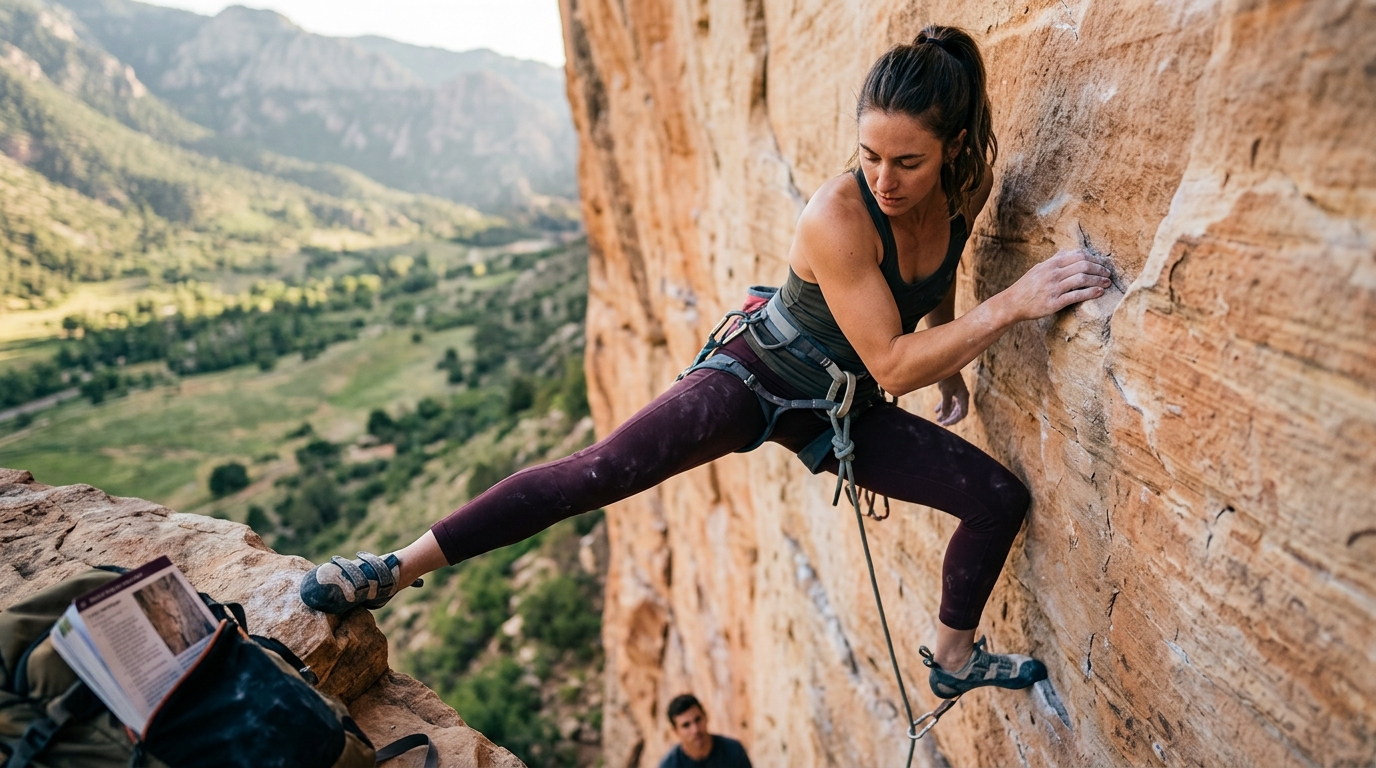
Modern sport climbing demands precision that goes beyond raw upper-body strength. According to recent performance analyses in elite climbing, athletes who prioritize technical efficiency over brute force often see a 30 percent faster progression in grade. This shift in training philosophy highlights why foot tension and body positioning are the critical differentiators between a struggling climber and a fluid, efficient athlete. Mastering these elements allows you to conserve energy, reduce finger load, and climb routes that previously seemed impossible. (ABOUT Paradigm Climbing)
Understanding Foot Tension Mechanics
Before diving into specific drills, it is essential to define the core concepts that drive efficient climbing. Foot tension is the ability to maintain precise contact with the hold using minimal muscular effort. This is achieved not by gripping with your toes, but by aligning your skeletal structure to transfer weight directly through the foot. When your bones are stacked correctly, your muscles can relax, preserving energy for the next move.
Similarly, body positioning refers to the spatial relationship between your center of gravity and the climbing wall. Proper positioning ensures that your weight is centered over your feet, allowing you to reach further with your hands without losing balance. This alignment is crucial for sport climbing, where routes often feature small holds and long, dynamic sequences.
Many climbers mistakenly believe that stronger feet are the answer to better performance. However, strength without technique leads to rapid fatigue. By focusing on the mechanical efficiency of your movements, you can achieve greater power output with less physical expenditure. This approach is supported by long-term athlete development models that emphasize technical proficiency before maximal strength loading.
Drill 1: The Silent Feet Protocol
The Silent Feet drill is a foundational exercise for developing precision and control. The goal is to place your feet on the holds without making any audible noise. This requires you to lower your body weight slowly and deliberately, ensuring that your foot lands exactly where you intend it to.
Execution Steps
- Stand on the ground and identify your next foot hold.
- Slowly lower your body weight toward the hold, keeping your eyes on the target.
- Place your foot down gently, ensuring no sound is made upon contact.
- Once the foot is placed, shift your weight onto it before moving your hands.
This drill forces you to engage your core and leg muscles to control the descent. It also trains your proprioception, which is your body's ability to sense its position in space. Over time, this leads to more confident and accurate foot placements, reducing the likelihood of slipping or wasting energy on corrections.
Drill 2: Heel Dragging and Weight Distribution
Heel dragging is a critical technique in sport climbing, particularly on steep terrain or when dealing with small footholds. It allows you to use your foot as a brake or a pivot point, extending your reach and maintaining balance. Heel dragging is the technique of using the back of your heel to maintain contact with the wall while your toes are off the hold.
Execution Steps
- Find a steep wall or a route with small footholds.
- Place one foot on a hold and lift your toes, keeping your heel in contact with the wall.
- Shift your weight onto the heel, feeling the pressure distribute along the back of your foot.
- Use this point of contact to stabilize your body while reaching for the next hold with your hands.
This drill improves your ability to manage weight distribution effectively. It also strengthens the stabilizing muscles in your ankles and knees, which are often neglected in traditional strength training. By mastering heel dragging, you can navigate complex sequences with greater ease and confidence.
Drill 3: Knee Orientation and Hip Hinging
Proper knee orientation is essential for maximizing hip flexibility and range of motion. When your knees are aligned correctly over your feet, you can hinge your hips closer to the wall, reducing the distance you need to reach with your hands. This is particularly important for sport climbing, where routes often feature small holds and long reaches.
Execution Steps
- Stand on a foothold with your knee directly above your foot.
- Rotate your hip outward, allowing your knee to point toward the wall.
- Hinge at the hip, bringing your torso closer to the wall while keeping your back straight.
- Hold this position for a few seconds, feeling the stretch in your hip flexors and the engagement in your core.
This drill enhances your hip mobility and strengthens the muscles involved in hip hinging. It also improves your overall balance and stability, allowing you to maintain control during dynamic movements. By incorporating this drill into your training, you can develop the flexibility and strength needed to tackle more challenging routes.
Drill 4: Static Movement Control
Static movement control is the ability to move slowly and deliberately without swinging or bouncing. This drill is crucial for developing the fine motor skills and balance required for precise foot placement. Static movement is the practice of moving your body in a controlled, non-dynamic manner to maintain balance and precision.
Execution Steps
- Choose a route with small, precise holds.
- Move your hands and feet slowly, ensuring that each movement is deliberate and controlled.
- Pause at each hold to assess your balance and stability before moving to the next.
- Focus on keeping your body close to the wall and your center of gravity low.
This drill trains your nervous system to process spatial information more efficiently. It also builds the muscular endurance needed to maintain control during long, sustained climbs. By practicing static movements, you can develop the patience and precision required for advanced sport climbing.
Integrating Drills into Your Routine
To maximize the benefits of these drills, it is important to integrate them into a structured training plan. Paradigm Climbing offers custom training plans that are designed to address your specific weaknesses and goals. These plans include periodized protocols that control volume, duration, and load to optimize performance and prevent injury.
Here is a sample weekly integration schedule:
| Day | Focus | Drill | Duration |
|---|---|---|---|
| Monday | Foot Precision | Silent Feet | 15 minutes |
| Wednesday | Weight Distribution | Heel Dragging | 20 minutes |
| Friday | Hip Mobility | Knee Orientation | 15 minutes |
| Saturday | Control | Static Movement | 20 minutes |
This schedule ensures that you are consistently working on all aspects of foot tension and body positioning. It also allows for adequate recovery time, which is essential for long-term progress. For more detailed guidance, you can explore the Full Spectrum training series, which provides comprehensive programming for climbers of all levels.
Key Takeaways
- Precision over Power: Foot tension relies on skeletal alignment, not just muscular strength.
- Silent Feet: This drill improves proprioception and reduces unnecessary noise and energy waste.
- Heel Dragging: Essential for steep terrain, it extends reach and stabilizes the body.
- Hip Hinging: Proper knee orientation allows for closer body positioning to the wall.
- Static Control: Slow, deliberate movements build the fine motor skills needed for advanced climbing.
- Structured Planning: Integrating drills into a periodized plan prevents overtraining and maximizes gains.
- Expert Coaching: Working with certified coaches like those at Paradigm Climbing ensures proper technique and safety.
Frequently Asked Questions
How often should I practice foot tension drills?
You should practice these drills 2 to 3 times per week, allowing for adequate recovery between sessions. Consistency is more important than intensity when developing technical skills.
Can these drills help me climb a harder grade?
Yes, improving foot tension and body positioning can significantly enhance your climbing ability. Many climbers find that technical improvements allow them to progress to harder grades more quickly than focusing solely on strength.
What is the difference between heel dragging and toe hooking?
Heel dragging involves using the back of the heel to maintain contact with the wall, while toe hooking involves using the top of the foot to hook onto an edge. Both techniques are used to extend reach and maintain balance, but they are applied in different situations.
How do I know if my knee orientation is correct?
Your knee should be directly above your foot, pointing toward the wall. If you feel strain in your ankle or knee, you may need to adjust your stance or improve your hip flexibility.
Is it necessary to use a training plan for these drills?
While you can practice these drills independently, a structured training plan ensures that you are addressing all aspects of your climbing performance. It also helps prevent overtraining and ensures balanced development.
What equipment do I need for these drills?
You only need a climbing shoe and access to a climbing wall. Some drills may benefit from a spotter or a belayer, but they can be practiced solo with proper safety measures.
How long does it take to see results?
Results vary depending on your current skill level and consistency. However, most climbers notice improvements in balance and precision within 4 to 6 weeks of regular practice.
Start Your Training Today
Ready to elevate your sport climbing performance? Contact Coach Charlie Schreiber to discuss your goals and create a custom training plan tailored to your needs. Visit the Paradigm Climbing contact page to get started. For more resources, explore the Paradigm Climbing blog for expert tips and strategies.