

Create a Personalized Rock Climbing Training Plan to Achieve Your Goals
Building a structured climbing regimen is the difference between random wall time and measurable athletic progress. According to industry data on athlete development, climbers who follow periodized training protocols see significantly faster grade progression than those relying solely on unstructured bouldering. This guide outlines the exact methodology used by professional coaches to transform raw potential into elite performance.
Understanding Your Current Level and Goals
Before writing a single workout, you must define your baseline. In climbing, grades are not linear. A V0 to V4 progression happens quickly for most people, while moving from V10 to V11 can take years. Paradigm Climbing emphasizes that understanding your current grade is only half the equation. You must also identify your specific weaknesses.
Are you strong on steep terrain but struggle with slab climbing? Do you have powerful dynos but lack endurance for long routes? Coach Charlie Schreiber, founder of Paradigm Climbing, notes that over 1000 climbers have been mentored through this exact diagnostic process. The first step is honest self-assessment. If you are a beginner, your goal might be consistency. If you are an elite climber, your goal might be a specific project grade.
Define your timeline. Are you preparing for a competition, a vacation trip, or just personal satisfaction? This determines the intensity of your plan. For example, competition climbers require a different periodization model than outdoor sport climbers. Visit the About page to learn more about the coaching philosophy that drives these decisions.
The Phases of Climbing Training
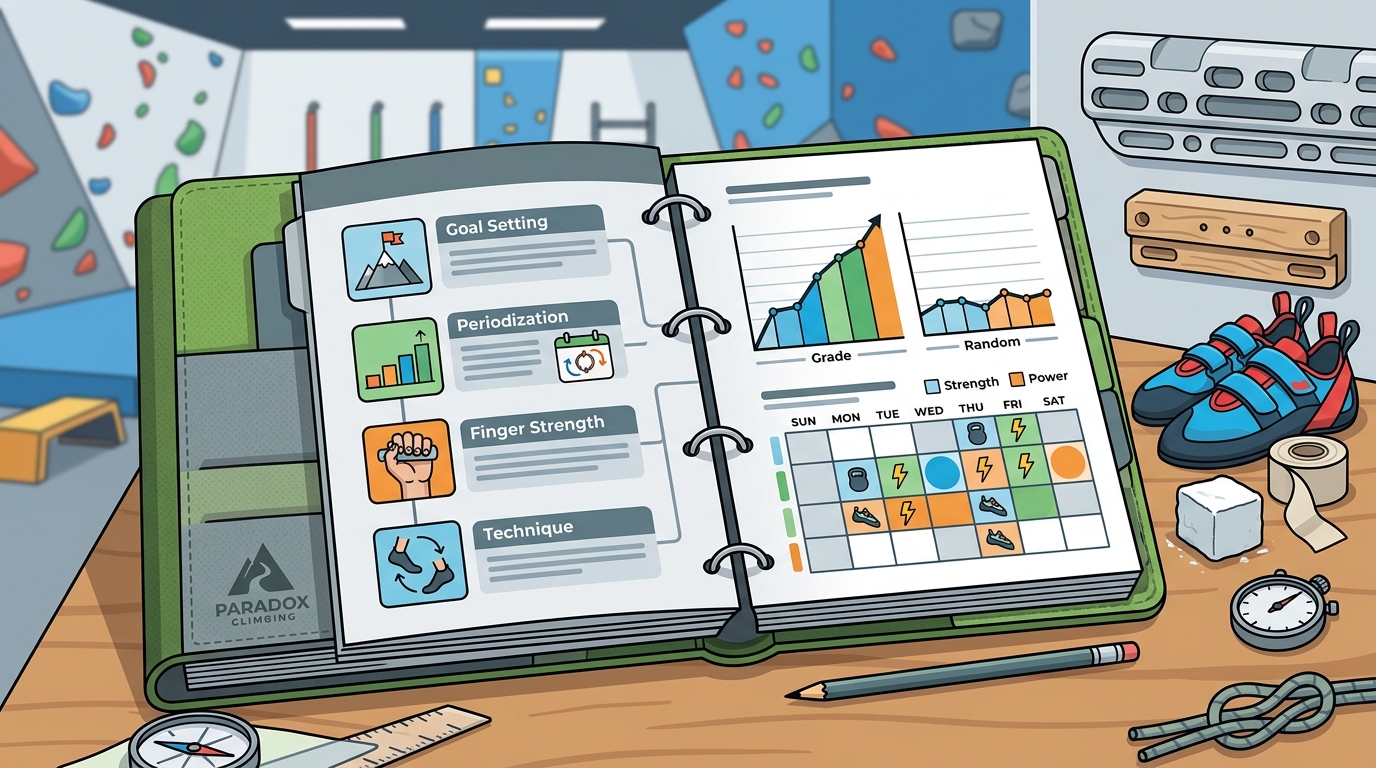
Effective training is not static. It cycles through distinct phases to prevent plateaus and manage fatigue. This concept is known as periodization. Periodization is the systematic planning of athletic or physical training. It involves varying volume and intensity over specific timeframes to optimize performance.
1. The Base Phase
This phase focuses on building aerobic capacity and connective tissue strength. It is crucial for injury prevention. During this time, you will climb more frequently but at lower intensities. The goal is to accumulate volume without causing excessive fatigue. This is the foundation upon which all other strength is built.
2. The Strength Phase
Once your base is established, you introduce higher intensity. This might include campus board work, hangboarding, or heavy resistance training. The volume decreases, but the intensity increases. This phase is critical for improving finger strength and power. However, it carries a higher risk of injury if not managed correctly.
3. The Peak Phase
Leading up to your goal event or project, you reduce volume significantly while maintaining high intensity. This allows your body to supercompensate and reach peak performance. This phase is short, typically lasting only a few weeks. It requires precise timing and excellent recovery strategies.
4. The Deload Phase
After intense training blocks, a deload week is essential. This involves reducing volume by 50% or more. It allows your body to repair micro-tears in the muscles and tendons. Ignoring deload phases is a common cause of overuse injuries among amateur climbers.
Building Your Weekly Schedule
A balanced week includes climbing days, strength days, and rest days. The exact ratio depends on your experience level. Beginners might climb three days a week, while advanced climbers might climb four to five days with specific focus areas.
Here is a sample structure for an intermediate climber:
- Monday: Bouldering (Focus on power and technique)
- Tuesday: Strength Training (Upper body and core)
- Wednesday: Rest or Active Recovery (Yoga or light cardio)
- Thursday: Endurance Climbing (Long routes or high-volume bouldering)
- Friday: Strength Training (Lower body and finger strength)
- Saturday: Outdoor Climbing or Project Day
- Sunday: Complete Rest
This structure ensures that you are not overtraining any specific muscle group. It also balances the mental demands of climbing with physical recovery. For more insights on scheduling, check out the Paradigm Climbing Blog.
Strength and Conditioning Essentials
Climbing is not just about finger strength. It requires a holistic approach to physical fitness. Holistic training is an approach that addresses all aspects of an athlete's physical and mental profile. This includes flexibility, core stability, and cardiovascular health.
Finger Strength
Finger strength is the limiting factor for many climbers. Hangboarding is the most effective way to improve it. However, it must be done with caution. Start with open-hand positions and progress to half-crimp and full-crimp only when your tendons are conditioned. Never hangboard when fatigued.
Core and Antagonist Muscles
A strong core helps you maintain body tension on the wall. Exercises like planks, hanging leg raises, and back extensions are essential. Equally important are antagonist muscles. The muscles in your shoulders and elbows must be strengthened to balance the pulling motion of climbing. This prevents common injuries like elbow tendonitis.
Flexibility and Mobility
Flexibility allows you to reach holds that others cannot. Hip mobility is particularly important for high-stepping techniques. Incorporate dynamic stretching before climbing and static stretching after. The Full Spectrum program includes a comprehensive hip mobility routine designed specifically for climbers.
Recovery and Overtraining Prevention
Recovery is where the actual adaptation happens. Without it, training is just damage. Overtraining is a serious issue in climbing. It leads to decreased performance, mood swings, and increased injury risk. According to sports medicine research, overtraining syndrome can take months to resolve if not addressed early.
Signs of overtraining include persistent soreness, lack of motivation, and decreased grip strength. If you experience these symptoms, take a break. Active recovery, such as walking or swimming, can help flush out metabolic waste products. Sleep is also critical. Aim for 7-9 hours of quality sleep per night.
Coach Charlie Schreiber emphasizes that mental health is part of physical recovery. Stress from work or life can impact your climbing performance. Managing stress through mindfulness or other techniques is a key part of the Custom Plans offered by Paradigm Climbing.
Custom vs. Pre-Written Plans
When creating your plan, you have two main options: custom coaching or pre-written programs. Each has its advantages.
| Feature | Custom Coaching | Pre-Written Plans |
|---|---|---|
| Personalization | Highly tailored to your weaknesses | Generalized for all levels |
| Accountability | Direct coach support and feedback | Self-managed |
| Flexibility | Adjustable in real-time | Fixed structure |
| Cost | Higher investment | More affordable |
| Best For | Elite athletes or those with specific goals | Beginners or budget-conscious climbers |
For most climbers, starting with a pre-written plan like the Full Spectrum Series is a great way to learn the basics. As you progress, you may find that custom coaching is necessary to break through plateaus. The Training Plans page offers a variety of options to suit different needs.
Key Takeaways
- Periodization is Essential: Cycling through base, strength, peak, and deload phases prevents plateaus and injury.
- Diagnose Your Weaknesses: Know your current grade and specific limitations before starting.
- Balance is Key: Include strength, endurance, flexibility, and rest in your weekly schedule.
- Finger Strength Requires Caution: Progress hangboarding slowly to avoid tendon injuries.
- Recovery is Part of Training: Sleep and active recovery are non-negotiable for progress.
- Coach Charlie's Experience: Over 16 years of coaching and 1000+ athletes trained inform the methodology.
- Custom vs. Pre-Written: Choose based on your budget, goals, and need for accountability.
Frequently Asked Questions
How often should I climb per week?
For most climbers, 3-4 days per week is optimal. This allows for sufficient recovery between sessions. Beginners might start with 2 days and gradually increase.
What is the best way to improve finger strength?
Hangboarding is the most effective method. Start with open-hand positions and progress to half-crimp. Always warm up thoroughly before hanging.
How do I know if I am overtraining?
Signs include persistent soreness, decreased performance, mood changes, and lack of motivation. If you experience these, take a deload week.
Can I climb and lift weights at the same time?
Yes, but be careful not to overtrain. Focus on antagonist muscles and core strength. Avoid heavy leg training the day before a climbing session.
What is the Full Spectrum program?
The Full Spectrum program is a pre-written training plan designed for climbers of all levels. It includes varied sessions, technical drills, and mobility work.
Do I need a coach to create a training plan?
Not necessarily, but a coach can provide accountability and personalized adjustments. Coach Charlie Schreiber offers custom plans for those seeking guidance.
How long does it take to see results?
Results vary based on your starting point and consistency. Most climbers see improvements in 4-6 weeks. Elite progress can take months or years.
Start Your Journey
Creating a personalized rock climbing training plan is a journey of self-discovery and physical mastery. By following the principles of periodization, balance, and recovery, you can achieve your climbing goals. Whether you choose a custom plan or a pre-written program, the key is consistency.
Ready to take the next step? Contact Coach Charlie Schreiber directly to discuss your goals. He reads every email personally and provides tailored advice for your climbing journey. Visit the Contact page to get started today.