
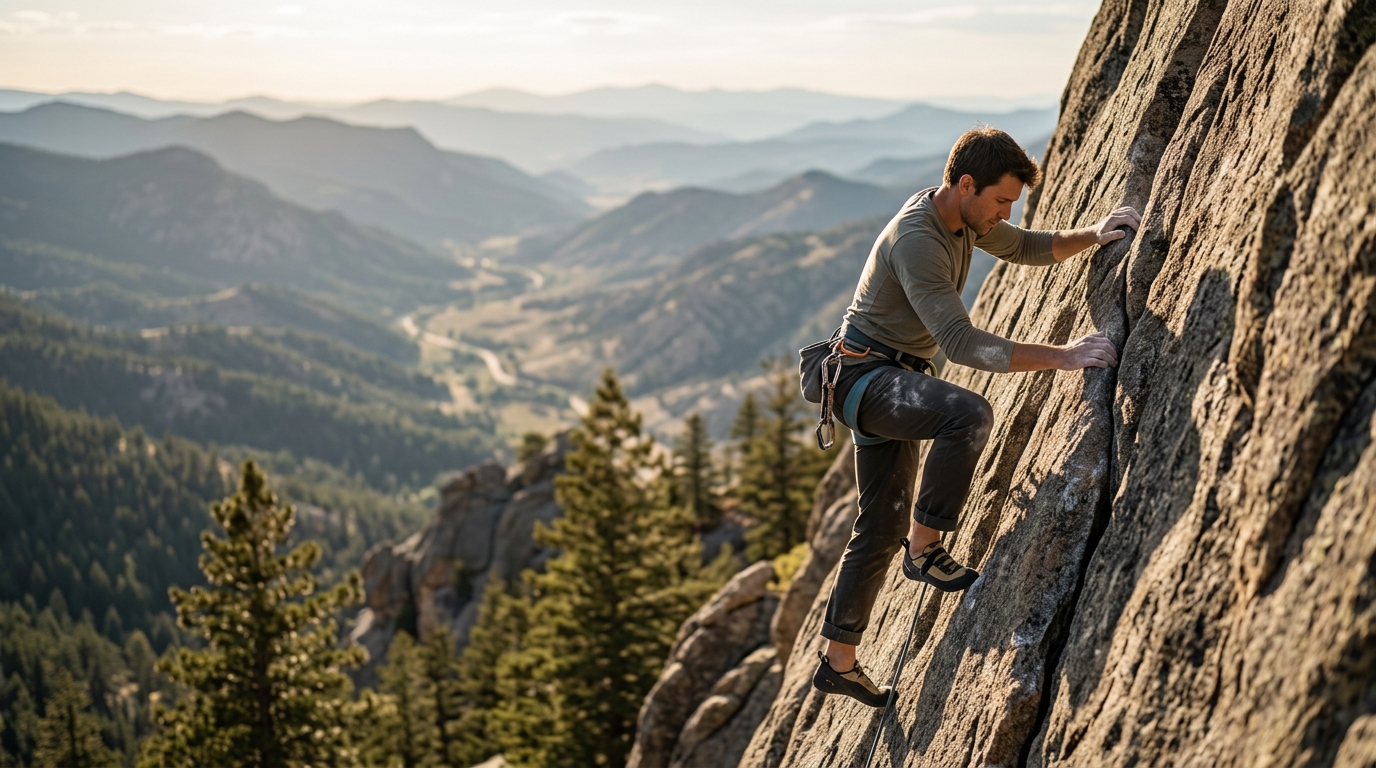
Most climbers waste up to 40 percent of their energy through poor body positioning and inefficient movement patterns. This statistic highlights why technical proficiency often outweighs raw strength in long-term climbing progression. Understanding the biomechanics of climbing allows athletes to conserve energy, reduce injury risk, and send harder routes with greater consistency. This guide breaks down the core methodologies used by professional coaches to transform unstructured climbing into calculated, efficient movement. (ABOUT Paradigm Climbing)
Understanding Climbing Efficiency
Climbing efficiency is defined as the ability to move from one hold to another using the minimum amount of energy required. It is not merely about being strong; it is about being smart with your strength. When climbers rely too heavily on arm strength, they fatigue quickly because the muscles in the forearms are small and have limited endurance capacity. By shifting the load to the larger leg muscles and using skeletal alignment, climbers can climb for hours without burning out. (Paradigm Climbing Rock Climbing)
Professional coaching emphasizes that technique is a learnable skill, not an innate talent. Over 1000 climbers have been guided through this transition by experienced coaches who focus on the "why" and "how" of movement. This approach moves athletes beyond unstructured training and helps them take ownership of their progress. The goal is to develop a holistic understanding of how your body interacts with the wall, including mental focus and physical conditioning.
Research in sports science indicates that periodized training protocols are essential for optimizing performance. By controlling volume, duration, and load, climbers can prevent overtraining and improve performance over both the short and long term. This scientific approach is what separates casual climbers from those who consistently reach higher grades.
The Art of Footwork Mastery
Footwork is the foundation of climbing efficiency. Precise foot placement allows you to stand on the wall rather than hang from it. When your feet are placed correctly, your center of gravity shifts over your support base, reducing the tension required in your arms. This principle is critical for both bouldering and sport climbing.
Point of Contact
Using the tip of your climbing shoe to find the smallest possible contact point is a fundamental technique. This method, often referred to as "edging," requires you to place your foot precisely on the hold. The precision of this placement determines how much weight you can transfer through your leg. A common mistake is placing the foot too flat on the hold, which reduces friction and stability.
Heel Hooks and Toe Hooks
Advanced footwork includes the use of heel hooks and toe hooks. A heel hook involves wrapping your heel around a hold to pull your hips in or stabilize your body. This technique is particularly useful when you are reaching for a distant hold. According to data on climbing biomechanics, using heel hooks can reduce the load on the fingers by up to 30 percent in certain positions. This reduction in finger load is crucial for preventing injury and extending climbing duration.
Toe hooks are used to pull your knee toward your chest, which is essential for maintaining body tension on overhanging terrain. These techniques require significant flexibility and core strength. Coaches often prescribe specific mobility drills to improve hip flexibility, which directly enhances your ability to execute these advanced footwork maneuvers.
Hip Positioning and Center of Gravity
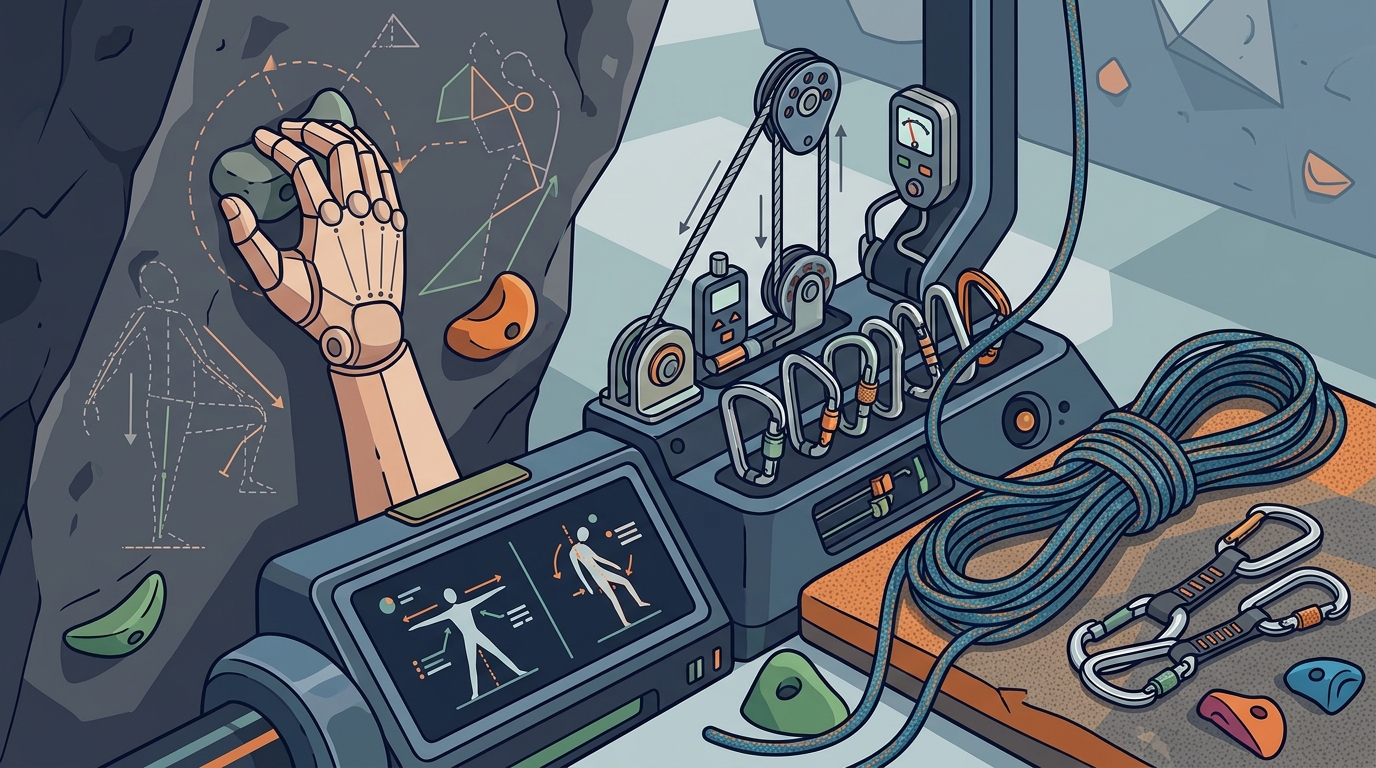
Hips are the steering wheel of your climbing body. The position of your hips relative to the wall determines your balance and reach. Keeping your hips close to the wall is a primary rule for efficient climbing. When your hips are away from the wall, you create a lever arm that increases the load on your fingers and arms.
Flagging and Cross-Over
Flagging is a technique used to maintain balance when one foot is placed on a hold that does not support your weight. By extending the opposite leg out to the side, you create a counterbalance that keeps your center of gravity over your supporting foot. This technique is essential for traversing and moving sideways on the wall.
Cross-over is another critical hip movement. When reaching for a hold with one hand, you cross the opposite leg over the supporting leg. This movement allows your hips to rotate toward the wall, bringing your center of gravity closer to the surface. This rotation reduces the distance you need to reach and decreases the strain on your fingers.
Proper hip positioning also involves understanding your center of gravity. This point is the average location of the weight of your body. By aligning your center of gravity with your base of support, you can move with greater stability and control. Coaches emphasize that awareness of your center of gravity is a mental skill that improves with practice and video analysis.
Weight Transfer and Body Tension
Body tension is the ability to keep your body engaged and connected to the wall. It involves using your core muscles to maintain a rigid structure between your hands and feet. Without body tension, your movements become sloppy and inefficient, leading to rapid fatigue.
Core Engagement
A strong core is essential for transmitting force from your legs to your hands. When you engage your abs and obliques, you create a stable platform for your limbs to move from. This stability allows you to make precise movements without wasting energy on stabilization. Non-climbing strength training, particularly core exercises, is often prescribed to climbers to enhance this capability.
Dynamic vs. Static Movement
Understanding when to use dynamic versus static movement is key to efficiency. Static movement involves controlled, deliberate motions where you maintain balance at all times. This is the most energy-efficient method for most climbing situations. Dynamic movement, or "dynoing," involves jumping to a hold. While dynos are necessary for some moves, they require significant power and coordination. Overuse of dynamic movement can lead to increased injury risk and faster fatigue.
Coaches recommend analyzing your climbing video to identify where you are using unnecessary dynamic movement. By breaking down complex moves into smaller, static steps, you can often find a more efficient path to the hold. This analysis is a core part of the coaching process at Paradigm Climbing, where personalized feedback is provided to every athlete.
Training Methods for Technical Growth
Improving technique requires dedicated training that focuses on movement quality rather than just strength. Pre-written plans and custom training programs are designed to address specific technical weaknesses. These programs often include technical drills that isolate specific movements, such as foot placement or hip rotation.
Repetition and Pattern Recognition
Repeating climbs is a powerful method for improving technique. By climbing the same route multiple times, you can refine your movement patterns and identify inefficiencies. This process helps build muscle memory and improves your ability to read the wall. A step-by-step process for repeating climbs involves analyzing the route, identifying key moves, and practicing those moves in isolation.
Video Analysis
Video analysis is a critical tool for technical improvement. By recording your climbing, you can compare your movements to those of elite climbers. This comparison helps you identify discrepancies in your technique, such as poor hip positioning or inefficient footwork. Coaches use video analysis to provide specific feedback and corrective exercises.
Periodization and Recovery
Periodization involves structuring your training into phases that focus on different aspects of performance. This approach ensures that you are not overtraining and that you are peaking at the right time. Recovery is an essential part of this process. Overtraining is not just a physical issue but also an emotional one. Recognizing when to stop and rest is crucial for long-term progress.
According to sports medicine guidelines, adequate rest allows the body to repair micro-tears in the muscles and adapt to the training load. Ignoring these signals can lead to overuse injuries, which can sideline climbers for months. Therefore, integrating rest days and active recovery into your training plan is non-negotiable for sustained improvement.
Key Takeaways
- Precision over Power: Placing your feet precisely on holds reduces arm load and increases endurance.
- Hips Close to the Wall: Keeping your hips close minimizes the lever arm effect and conserves energy.
- Flagging and Cross-Over: These hip movements are essential for balance and reach on steep terrain.
- Core Engagement: A strong core transmits force efficiently from legs to hands.
- Video Analysis: Recording your climbs helps identify technical flaws and track progress.
- Periodized Training: Structured training phases prevent overtraining and optimize performance.
- Professional Coaching: Expert guidance accelerates learning and prevents bad habits.
Frequently Asked Questions
How can I improve my foot placement accuracy?
Practice placing the tip of your shoe on small holds with precision. Start on easier routes and focus on the sound of your foot sticking to the hold. Consistent practice builds the muscle memory needed for accuracy.
What is the most important hip movement for beginners?
Keeping your hips close to the wall is the most critical movement for beginners. This simple adjustment can significantly reduce finger strain and improve balance.
How often should I climb to improve technique?
Consistency is key. Climbing two to three times a week with a focus on technique rather than intensity is more effective than climbing daily with poor form.
Is strength training necessary for technical climbing?
Yes, but it should be complementary. Core strength and flexibility are more important than raw finger strength for efficiency. Non-climbing strength training helps support your climbing muscles.
How does video analysis help climbers?
Video analysis provides objective feedback on your movement patterns. It allows you to see errors that you cannot feel while climbing, such as hip positioning or arm bending.
What is the difference between bouldering and sport climbing technique?
Bouldering often requires more dynamic movement and power, while sport climbing emphasizes endurance and efficient static movement. However, the core principles of footwork and hip positioning apply to both.
Can I improve my climbing without a coach?
Yes, but progress may be slower. Self-analysis through video and studying technical resources can help. However, a coach provides personalized feedback that accelerates improvement.
Start Your Technical Journey
Transform your climbing from a struggle for strength into a dance of efficiency. Whether you are a beginner looking to build a solid foundation or an advanced climber aiming for your first V17, the right training plan can make all the difference. Our custom-designed climbing training programs are tailored to your specific goals, schedule, and commitment level. Visit our Training Plans page to explore our options. For personalized guidance, contact Coach Charlie directly. He reads every email and provides expert advice to help you maximize your climbing potential. Join the community of climbers who have moved beyond unstructured training and taken ownership of their progress.