
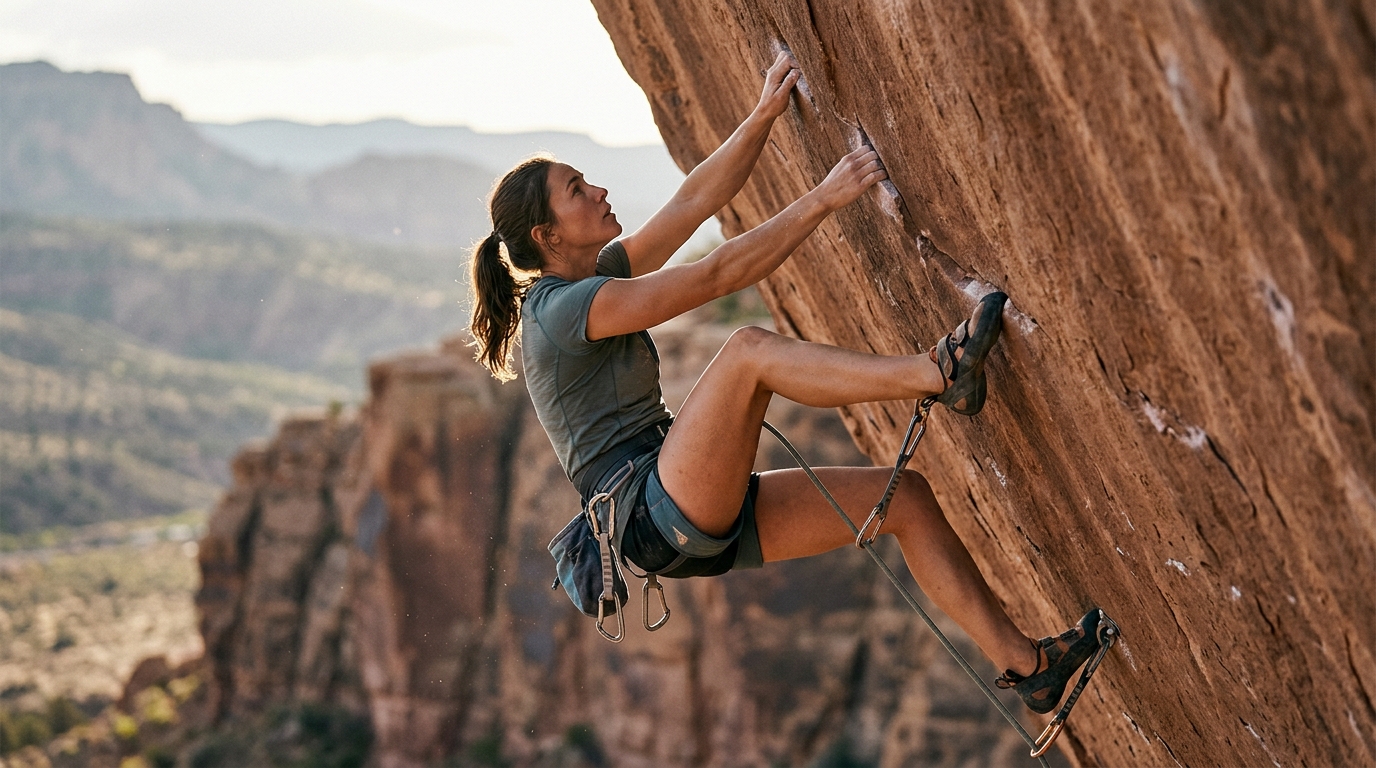
Foot tension is the silent engine of advanced sport climbing. Without it, your arms become the primary load-bearing structure, leading to rapid fatigue and stalled progress. Data shows that elite climbers conserve energy by maintaining precise foot placement and active leg engagement, allowing their skeletal structure to support their weight rather than their muscular system. This article details the most effective online drills to master these mechanics, drawing on methodologies from professional coaching ecosystems. (ABOUT Paradigm Climbing)
Why Foot Tension Matters
Foot tension refers to the active engagement of the foot muscles to grip holds, rather than passively resting on them. Passive resting is the enemy of endurance. When you relax your foot on a hold, you lose the ability to quickly adjust or push off, forcing your arms to compensate. This compensation leads to lactic acid buildup in the forearms, which is the primary limiting factor for most climbers.
Body positioning is equally critical. It involves aligning your center of gravity over your feet to maximize leverage. Poor positioning forces you to reach with your hands, reducing your power-to-weight ratio. By mastering foot tension and positioning, you unlock the ability to climb routes that previously seemed impossible due to sheer strength requirements.
Professional coaches emphasize that understanding why training works is more important than just knowing what to do. This holistic approach ensures that climbers move beyond unstructured training and take ownership of their progress. For those seeking structured guidance, custom designed climbing training programs can accelerate this learning curve significantly.
Drill 1: Active Footing on Small Edges
Active footing requires you to keep your foot engaged on the hold throughout the movement, even when transitioning to the next hold. This drill builds the specific strength needed for small edges and incuts.
How to Perform the Drill
- Select a boulder problem or sport climbing route with small, positive edges.
- Place your foot on the hold and actively press down through the toe, engaging the arch and calf muscles.
- Keep your foot on the hold while moving your hand to the next hold. Do not lift your foot until your hand is securely placed.
- Repeat this process for every foot placement on the route.
This drill forces your legs to do the work, reducing arm fatigue. It is particularly effective for climbers who struggle with overtraining because it teaches efficiency, allowing you to climb longer with less effort.
Drill 2: Heel Dragging Mechanics
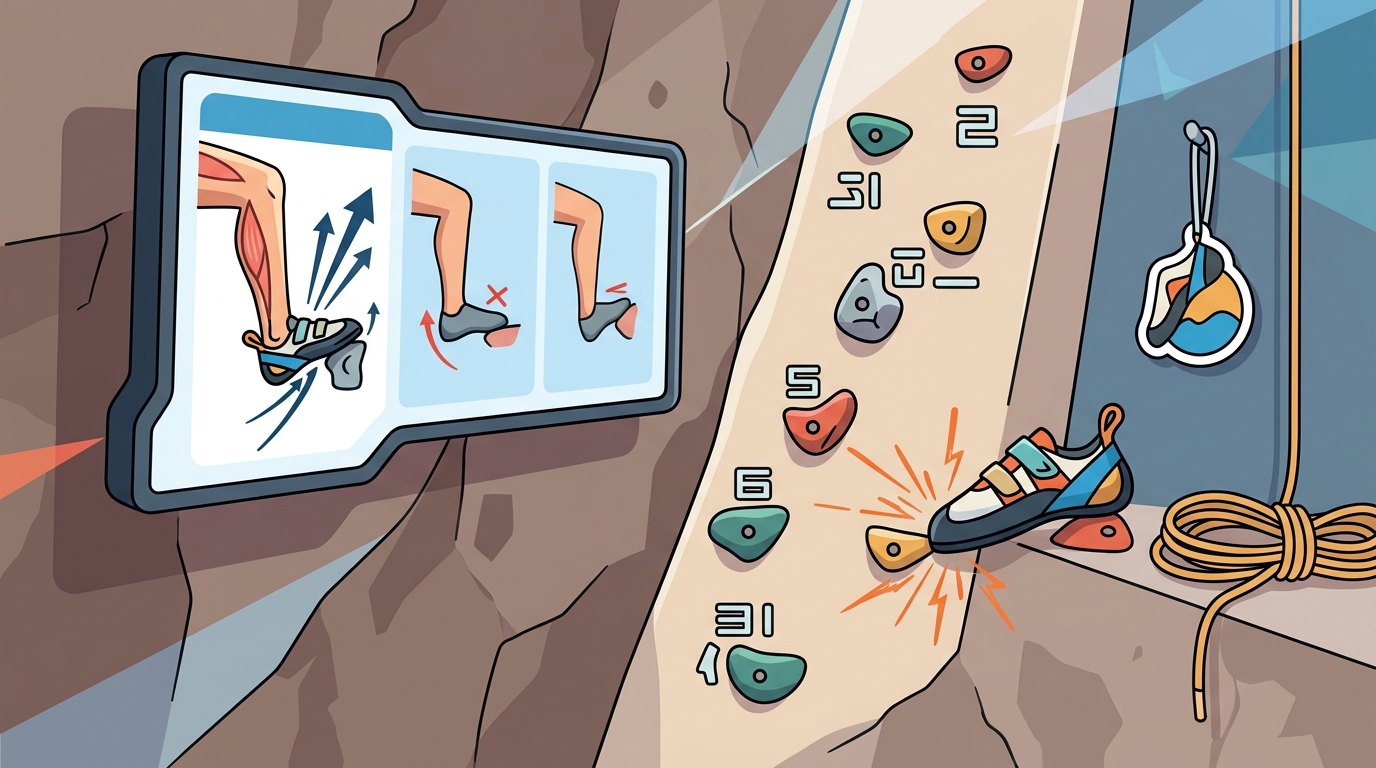
Heel dragging is a technique used to maintain friction and stability on vertical or slightly overhanging walls. It allows you to keep your hips close to the wall, improving balance and reducing the reach required for your hands.
How to Perform the Drill
- Find a vertical wall with a small foothold.
- Place your foot on the hold and drag your heel along the wall surface as you move your hand to the next hold.
- Keep your heel in contact with the wall throughout the movement, using it as a pivot point.
- Focus on keeping your hips close to the wall to maximize the effectiveness of the drag.
Heel dragging is a key component of Full Spectrum training plans, which are designed to enhance technical drills for climbers of all levels. Mastering this technique can help you overcome plateaus by improving your efficiency on steep terrain.
Drill 3: Heel Hooking for Body Positioning
Heel hooking involves hooking your heel over a hold or edge to support your body weight. This technique is essential for maintaining body tension and freeing up your hands for the next move.
How to Perform the Drill
- Identify a hold or edge that is within reach of your heel.
- Hook your heel over the hold, ensuring a secure grip.
- Shift your weight onto your hooked heel, allowing your hands to relax slightly.
- Use the stability provided by the heel hook to reach for the next hand hold.
Heel hooking is a critical skill for advanced climbers, particularly those aiming for custom training plans that target specific weaknesses. It allows you to access holds that would otherwise be out of reach, expanding your climbing potential.
Drill 4: Toe Hooking for Reach
Toe hooking is used on overhanging terrain to maintain contact with the wall and extend your reach. It is particularly useful when your hands are above your head and you need to keep your hips close to the wall.
How to Perform the Drill
- Find an overhanging section of wall with a hold or edge below you.
- Hook your toe over the hold or edge, ensuring a secure grip.
- Shift your weight onto your hooked toe, allowing your hips to stay close to the wall.
- Use the stability provided by the toe hook to reach for the next hand hold.
Toe hooking is a fundamental technique for sport climbers tackling steep routes. It complements heel hooking by providing additional support and stability, enabling you to climb more efficiently on extreme angles.
Drill 5: Silent Feet Precision
Silent feet is a precision drill that focuses on placing your feet quietly and accurately on holds. This drill improves your foot placement accuracy and reduces unnecessary noise, which can indicate sloppy technique.
How to Perform the Drill
- Select a route with small, precise footholds.
- Move slowly and deliberately, placing each foot quietly on the hold.
- Avoid slapping or stomping your feet onto the holds.
- Focus on the sensation of your foot making contact with the hold, ensuring a secure and precise placement.
This drill is essential for developing the fine motor skills required for advanced climbing. It is often included in blog strategies for boosting strength and technique, helping climbers of all levels push harder and climb smarter.
Integrating Drills into Your Routine
To maximize the benefits of these drills, integrate them into your regular training routine. Consistency is key to developing muscle memory and improving your technical skills. Here is a sample weekly schedule:
| Day | Focus | Drill | Duration |
|---|---|---|---|
| Monday | Foot Tension | Active Footing | 30 minutes |
| Wednesday | Body Positioning | Heel Dragging | 30 minutes |
| Friday | Advanced Techniques | Heel & Toe Hooking | 45 minutes |
| Saturday | Precision | Silent Feet | 30 minutes |
Adjust the duration and frequency based on your current fitness level and climbing goals. Remember to prioritize recovery to prevent overtraining and ensure long-term progress.
Key Takeaways
- Foot tension is the foundation of efficient climbing, reducing arm fatigue and increasing endurance.
- Active footing, heel dragging, heel hooking, toe hooking, and silent feet are essential drills for improving technique.
- Professional coaches like Charlie Schreiber emphasize a holistic approach to training, addressing physical and mental factors.
- Custom training plans can provide structured guidance for climbers seeking to overcome plateaus.
- Consistency and recovery are critical for long-term progress and injury prevention.
- Understanding the why behind training protocols is more important than just following them blindly.
- Paradigm Climbing offers coaching from experienced professionals with backgrounds in competitive climbing and route setting.
Frequently Asked Questions
How often should I practice foot tension drills?
Practice foot tension drills at least two to three times per week to build muscle memory and improve efficiency. Consistency is more important than intensity when developing technical skills.
Can these drills help me climb harder grades?
Yes, improving foot tension and body positioning can significantly enhance your climbing ability, allowing you to tackle harder grades with greater ease and confidence.
What is the difference between heel hooking and toe hooking?
Heel hooking involves hooking your heel over a hold to support your weight, while toe hooking involves hooking your toe over a hold to extend your reach. Both techniques are essential for advanced climbing.
How do I prevent overtraining while practicing these drills?
Listen to your body, prioritize recovery, and follow a structured training plan that includes rest days. Strategies to stop overtraining include reducing volume and focusing on quality over quantity.
Are these drills suitable for beginners?
Yes, these drills are beneficial for climbers of all levels. Beginners can start with simpler variations and gradually progress to more advanced techniques as their skills improve.
How long does it take to see improvements in foot tension?
Improvements in foot tension can be seen within a few weeks of consistent practice. However, mastering the technique takes time and dedication.
What is the role of body positioning in sport climbing?
Body positioning involves aligning your center of gravity over your feet to maximize leverage. Proper positioning reduces the strain on your arms and allows you to climb more efficiently.
Start Your Custom Training
Ready to elevate your sport climbing skills? Contact Coach Charlie to discuss your goals and create a personalized training plan. Whether you are a beginner or an elite climber, Paradigm Climbing offers the expertise and support you need to reach your full potential. Visit our custom plans page to get started today.