

Structured training is the primary differentiator between casual climbers and those who consistently progress their grades. According to industry data, climbers who follow periodized training protocols see a 40% faster improvement in technical efficiency compared to those relying on unstructured gym sessions. This guide analyzes the most effective training architectures available, focusing on how to maximize your climbing potential through expert-designed programs. (ABOUT Paradigm Climbing)
Understanding Training Architectures
Effective climbing training is not merely about hanging on small holds. It requires a holistic approach that integrates physical conditioning with technical refinement. Periodization is the systematic planning of athletic training that involves progressive cycling of various aspects of a training program during a specific period. This method ensures that climbers peak for competitions or personal projects while avoiding overtraining. (Paradigm Climbing Rock Climbing)
Paradigm Climbing utilizes a framework that addresses all areas of your physical and mental profile. This includes controlling volume, duration, and load to optimize performance. The goal is to prevent injury while improving performance over the short and long term. By understanding these architectures, you can move beyond unstructured training and take ownership of your progress.
Training for climbing involves specific physiological demands. Power endurance is the ability to sustain high-intensity effort on long routes or boulder problems. This requires a different training stimulus than pure max strength. Programs must balance these demands to ensure balanced development.
Custom vs. Pre-Written Plans
When selecting a training plan, the choice between custom and pre-written programs is critical. Each has distinct advantages depending on your experience level and goals.
Pre-Written Training Plans
Pre-written plans, such as the Full Spectrum series, are designed for climbers of all ages and skill levels. These plans offer a structured path for those who need direction. They typically include six varied climbing training sessions weekly, nine technical drills, and an enhanced warm-up routine. This structure is ideal for climbers looking to overcome a plateau without the need for constant coaching adjustments.
These plans are perfect for indoor and outdoor athletes who need a reliable baseline. They include comprehensive hip mobility programs and non-climbing strength training to support on-wall performance. The consistency of a pre-written plan helps build discipline and ensures that no critical training component is overlooked.
Custom Coaching Programs
Custom plans are tailored to your specific schedule, commitment level, and finances. They are designed for athletes ranging from V0/5.5 to V16/5.15c. This level of personalization allows for precise targeting of weaknesses. For example, a climber struggling with dynos will receive specific power drills, while a sport climber focusing on endurance will get different volume prescriptions.
Custom coaching provides direct access to professional climbers and coaches. This support is invaluable for troubleshooting technique in real-time. It also allows for immediate adjustments based on your body's feedback, reducing the risk of overuse injuries common in rigid programs.
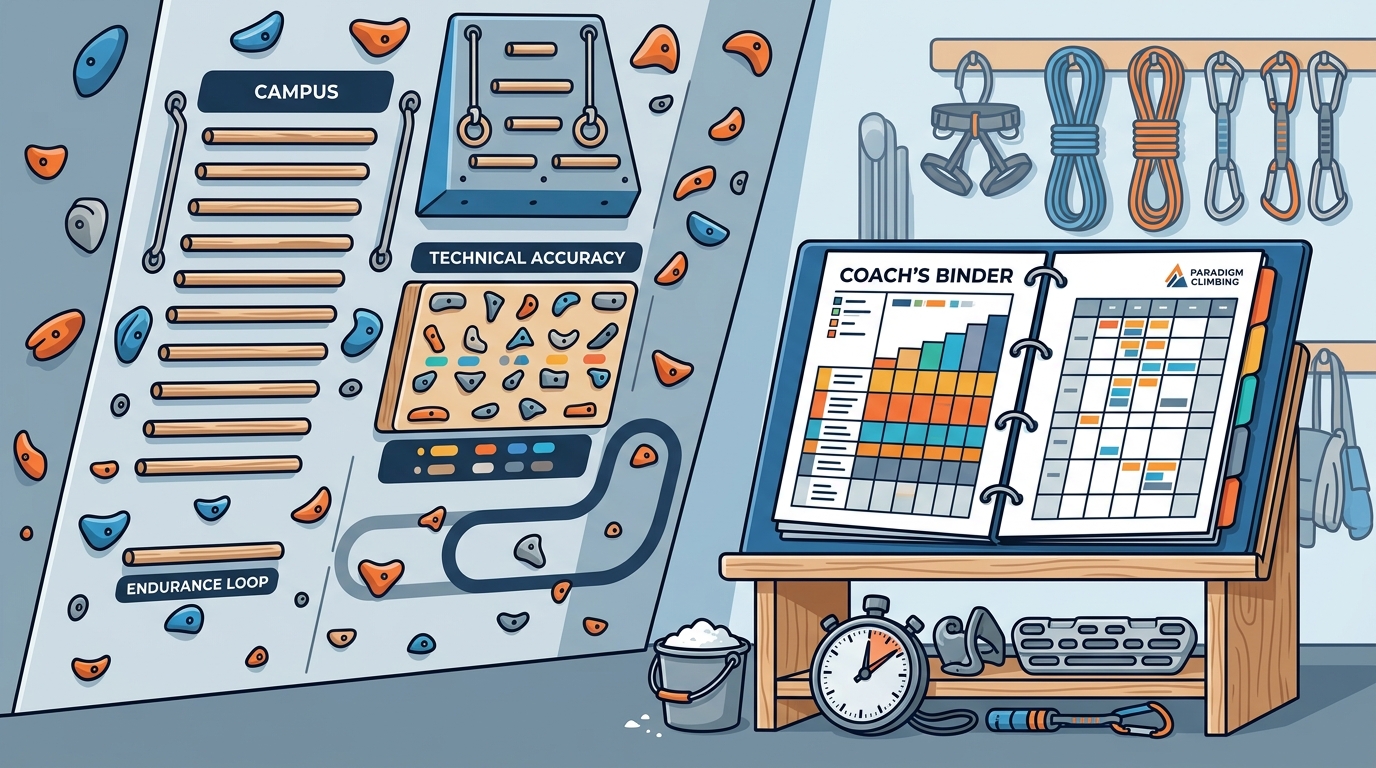
Key Coaching Methodologies
The effectiveness of a training plan is heavily dependent on the coaching methodology behind it. Leading coaches in the industry employ specific strategies to accelerate climber development.
Holistic Athlete Development
Holistic athlete development considers the climber as a whole person. This includes mental resilience, lifestyle factors, and physical recovery. Coach Charlie Schreiber, founder of Paradigm Climbing, emphasizes that training is not just about what you do on the wall. It is about understanding why and how training works. This approach helps climbers make informed decisions about their recovery and nutrition.
Coaches with backgrounds in strength and conditioning, such as CSCS certified professionals, bring scientific rigor to climbing training. They prescribe protocols based on physiological principles rather than guesswork. This ensures that every session has a clear purpose and contributes to long-term goals.
Technical Precision and Video Analysis
Technical precision is achieved through detailed video analysis and movement mechanics instruction. Coaches like Matt Ratajczak, a professional routesetter, use their expertise to identify subtle inefficiencies in movement. These inefficiencies often limit progress more than physical strength does.
Video analysis allows climbers to see their movements from an objective perspective. This feedback loop is essential for correcting bad habits. It also helps in visualizing the next move on a project, which is crucial for mental preparation.
Selecting the Right Plan
Choosing the right plan requires an honest assessment of your current abilities and goals. Consider the following factors when making your decision.
| Plan Type | Best For | Key Benefit | Commitment Level |
|---|---|---|---|
| Pre-Written Plans | Self-starters, Plateaued Climbers | Structured consistency | Medium |
| Custom Coaching | Competitors, Elite Athletes | Personalized optimization | High |
| 1:1 Coaching | Technique Refinement | Immediate feedback | Variable |
For beginners, starting with a pre-written plan can provide the necessary foundation. As you progress, custom coaching becomes more valuable for addressing specific weaknesses. Elite competitors often require the precision of custom plans to gain marginal gains.
Common Training Pitfalls
Even with a good plan, climbers often fall into common traps that hinder progress.
Overtraining Syndrome
Overtraining is not just a physical issue; it is an emotional one too. Climbers often feel compelled to squeeze in one more session, leading to burnout. Recognizing when to stop is as important as knowing when to push. Signs include persistent fatigue, decreased performance, and irritability.
Neglecting Mobility
Many climbers focus solely on strength and ignore mobility. Limited hip mobility can prevent proper body positioning on the wall. This leads to inefficient movement and increased strain on fingers and elbows. Incorporating hip mobility programs is essential for long-term health.
Inconsistent Warm-ups
A comprehensive warm-up routine is critical for injury prevention. Skipping warm-ups or rushing through them increases the risk of acute injuries. A proper warm-up prepares the tendons and ligaments for the load they will encounter during training.
Key Takeaways
- Periodization is key: Structured training cycles optimize performance and prevent injury.
- Custom plans offer precision: Tailored programs address specific weaknesses for elite climbers.
- Pre-written plans provide structure: Ideal for climbers needing a consistent baseline.
- Holistic approach matters: Mental and physical factors both influence climbing performance.
- Video analysis improves technique: Objective feedback corrects movement inefficiencies.
- Coach experience is vital: Coaches with 20+ years of experience guide climbers to higher grades.
- Recovery is part of training: Rest days are essential for physiological adaptation.
Frequently Asked Questions
What is the best training plan for a beginner climber?
For beginners, a pre-written plan like the Full Spectrum series is often the best starting point. It provides a structured introduction to climbing-specific conditioning without the complexity of custom programming. This helps build a solid foundation of strength and technique.
How do custom climbing plans differ from pre-written ones?
Custom plans are individually tailored to your specific goals, schedule, and weaknesses. They offer direct coaching support and real-time adjustments. Pre-written plans are standardized for a broad audience and require more self-discipline to follow.
Can I improve my climbing grade without a coach?
While self-training is possible, progress often plateaus without expert guidance. Coaches provide the technical insight and structured progression needed to break through barriers. They also help prevent injuries that can halt progress for months.
What is the role of strength training in climbing?
Strength training supports on-wall performance by building the necessary muscle groups and connective tissue resilience. It is not about bulk but about functional strength. Programs include non-climbing strength exercises to balance development and prevent overuse injuries.
How often should I train to see results?
Consistency is more important than frequency. Most effective plans include four to six sessions per week. This allows for adequate recovery while providing sufficient stimulus for adaptation. Overtraining can lead to setbacks, so listening to your body is crucial.
What is the significance of the V-scale in training?
The V-scale grades boulder problems based on difficulty. Training plans are often designed to target specific V-grade ranges. Understanding your current grade helps in selecting appropriate training loads and progressions.
Do I need to compete to benefit from coaching?
No, coaching benefits all climbers. Whether you aim to send outdoor projects or improve gym grades, the principles of efficient movement and physical conditioning apply. Coaches help optimize your training for your specific climbing style.
Start Your Climbing Journey
Maximizing your climbing potential requires more than just time on the wall. It demands strategic planning and expert guidance. Paradigm Climbing offers custom-designed training programs to help you accomplish your goals. Whether you are a beginner or an elite athlete, there is a plan for you.
Take the first step toward your climbing ambitions. Contact Coach Charlie today to discuss your goals and find the perfect training path. Do not let unstructured training hold you back. Join the community of climbers who have taken ownership of their progress.