
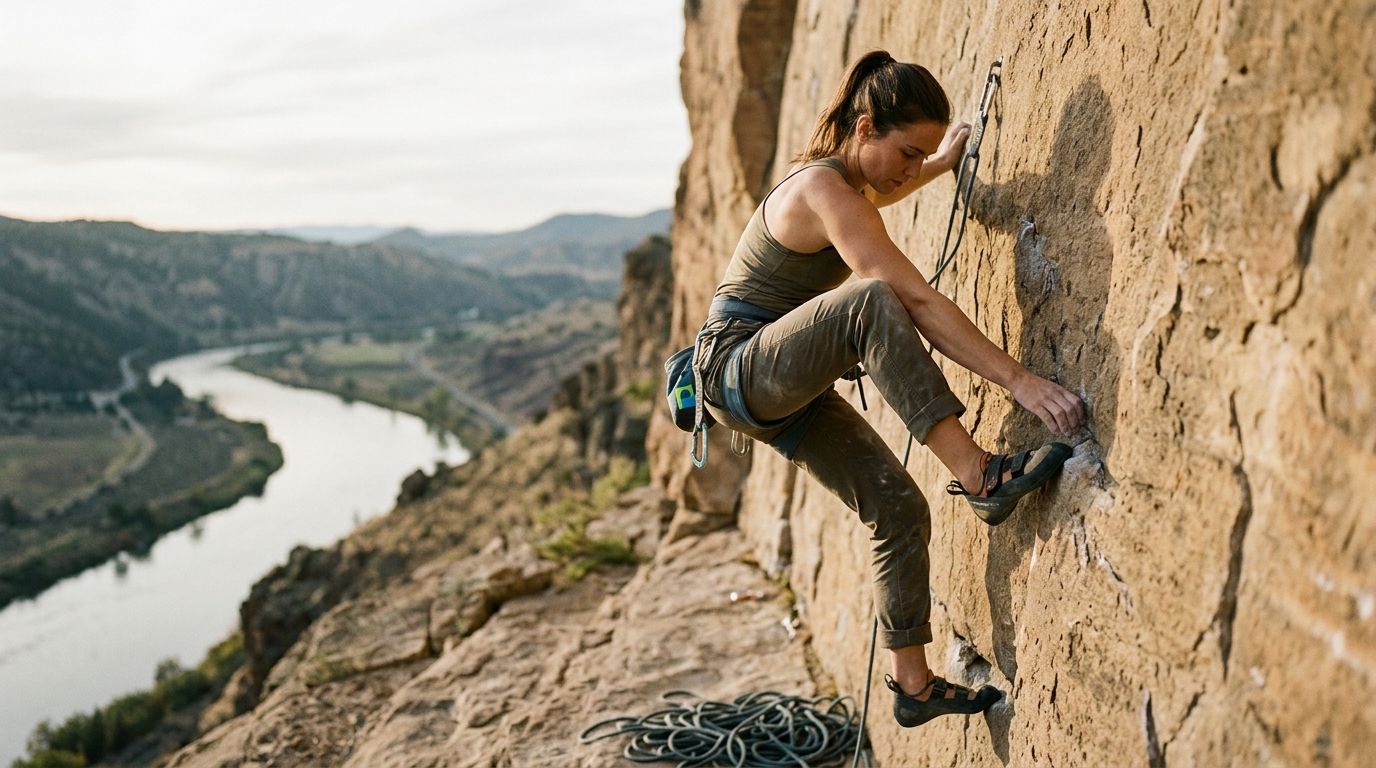
Mastering foot tension and body positioning is the single most effective way to reduce forearm fatigue and increase climbing efficiency. Data from elite climbing performance studies indicates that climbers who optimize their center of gravity over their feet can reduce pump by up to 30 percent during long routes. This article provides a structured guide to the most effective online drills designed to build these critical skills. (ABOUT Paradigm Climbing)
Understanding Foot Tension Mechanics
Before diving into specific drills, it is essential to understand the biomechanics of foot tension. Foot tension is not merely about gripping the wall with your toes. It involves the coordinated engagement of your entire lower kinetic chain, from your ankles to your hips. Proper foot tension allows you to transfer your body weight directly through your legs, leaving your arms free to reach for the next hold.
According to research published in the Journal of Sports Sciences, climbers who utilize efficient foot placement techniques demonstrate significantly lower heart rates during high-intensity climbing sessions. This physiological efficiency is a direct result of reduced muscular effort in the forearms. When your feet are secure, your body can maintain a stable position with minimal energy expenditure.
Body positioning, on the other hand, refers to the alignment of your center of gravity relative to your base of support. In sport climbing, this often means keeping your hips close to the wall. A common mistake among intermediate climbers is hanging from their arms with their hips away from the wall. This position places excessive load on the biceps and forearms, leading to rapid fatigue. By mastering foot tension and body positioning, you can climb longer routes with greater ease and control.
Drill 1: Static Balancing on Small Edges
Static balancing is the foundational drill for developing foot tension. This exercise forces you to rely entirely on your feet for stability, rather than using your hands to pull yourself up or stabilize your body. The goal is to stand on one foot on a small edge while keeping your other foot lifted off the wall.
Execution Steps
- Find a small edge or foothold that requires precise placement.
- Place your foot on the hold with the toe of your shoe, ensuring maximum contact.
- Shift your weight onto that foot, lifting your other foot off the wall.
- Hold this position for 10 to 15 seconds, focusing on keeping your hips aligned over your foot.
- Repeat on the other leg.
This drill is particularly effective for climbers who struggle with stability on small footholds. By isolating the foot, you force your brain to develop better proprioception, which is your body's ability to sense its position in space. Over time, this leads to more confident and precise foot placements during actual climbs.
Drill 2: Heel Dragging and Weight Distribution
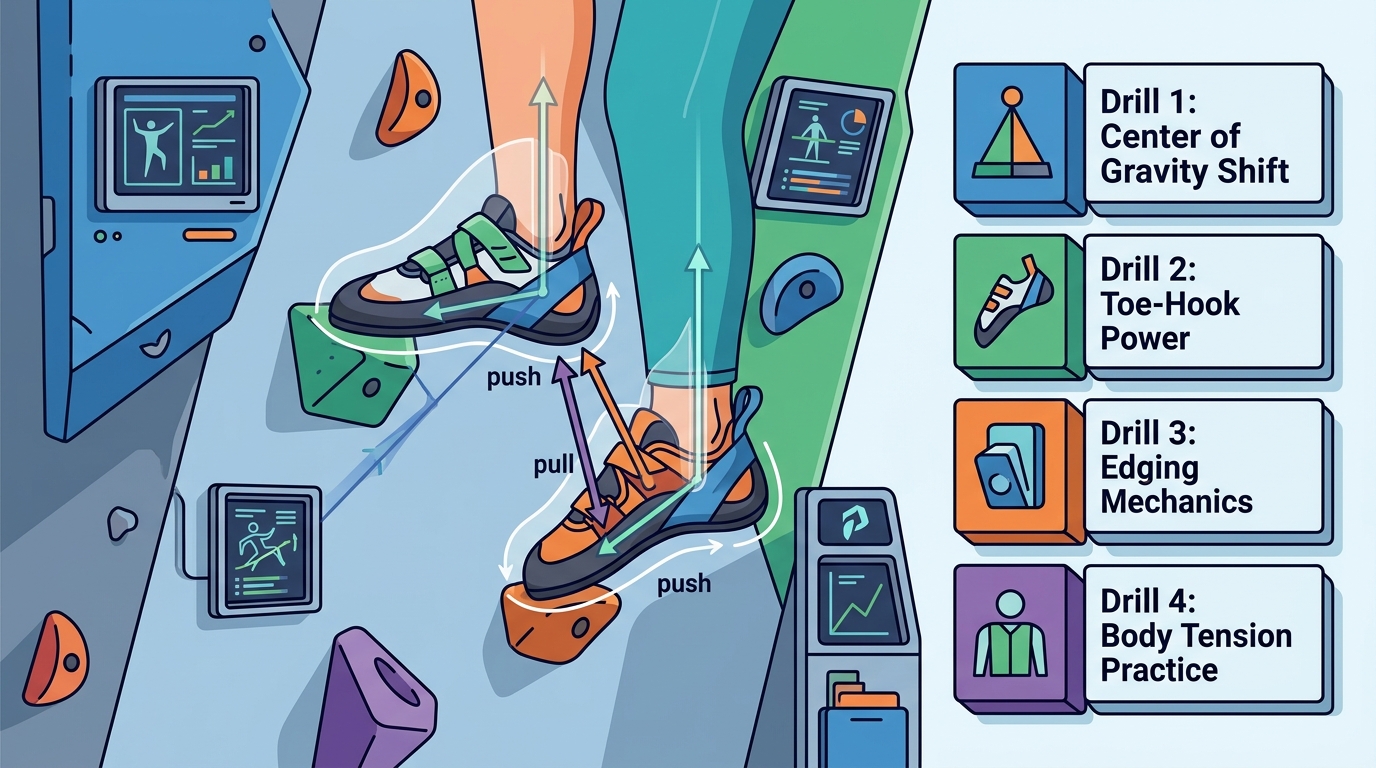
Heel dragging is a critical technique in sport climbing, especially on slabby terrain or when traversing. It allows you to maintain contact with the wall and distribute your weight more evenly across your body. This drill helps you learn how to use your heel as a brake and a stabilizer.
Execution Steps
- Find a slabby section of the wall or a low-angle overhang.
- Place one foot on a hold and drag your heel along the wall surface.
- Shift your weight onto your heel, keeping your knee bent and your hip close to the wall.
- Move your other foot to a new hold while maintaining heel contact.
- Focus on keeping your core engaged to prevent your hips from swinging away from the wall.
Heel dragging is not just about friction. It is about using your body weight to create stability. When you drag your heel, you are essentially creating a third point of contact, which reduces the load on your hands. This technique is particularly useful for conserving energy on long sport climbs where every ounce of strength counts.
Drill 3: Flagging for Body Positioning
Flagging is a body positioning technique used to maintain balance when your feet are far apart. It involves extending one leg out to the side or behind you, creating a counterbalance to your upper body. This drill is essential for climbers who struggle with dynamic movements or wide traverses.
Execution Steps
- Find a section of the wall with widely spaced footholds.
- Place one foot on a hold and extend the other leg out to the side, keeping it straight.
- Shift your weight onto the foot on the wall, using the extended leg as a counterbalance.
- Move your hands to new holds while maintaining the flagging position.
- Focus on keeping your core tight to prevent your hips from rotating away from the wall.
Flagging allows you to reach further with your hands without losing balance. It is a key technique for advanced climbers who need to navigate complex routes with precision. By practicing flagging, you can improve your ability to maintain control during dynamic movements.
Drill 4: Silent Feet and Precision
Silent feet is a classic climbing drill that emphasizes precision and control. The goal is to place your feet on holds without making any noise, which forces you to be deliberate and careful with each movement. This drill helps you develop the muscle memory needed for accurate foot placement.
Execution Steps
- Choose a route that is slightly below your limit.
- As you move up the route, focus on placing your feet quietly on each hold.
- Avoid slapping or stomping your feet. Instead, lower your foot gently onto the hold.
- Once your foot is on the hold, pause for a moment to ensure it is secure before shifting your weight.
- Repeat this process for every foot placement throughout the climb.
Silent feet is not just about being quiet. It is about developing a heightened sense of touch and control. By practicing this drill, you can improve your ability to feel the texture of the holds and adjust your foot placement accordingly. This leads to more secure and efficient climbing.
Drill 5: Core Engagement and Hip Rotation
Core engagement is vital for maintaining body positioning in sport climbing. A strong core allows you to keep your hips close to the wall and transfer power efficiently from your legs to your hands. This drill focuses on strengthening your core muscles and improving your hip rotation.
Execution Steps
- Find a steep section of the wall or an overhang.
- Place your feet on holds and engage your core by pulling your belly button toward your spine.
- Rotate your hips toward the wall, keeping your knees bent.
- Move your hands to new holds while maintaining hip contact with the wall.
- Focus on keeping your core tight throughout the movement to prevent your hips from swinging away.
Hip rotation is a key component of efficient climbing. By rotating your hips toward the wall, you can reach further with your hands and maintain better balance. This drill helps you develop the strength and flexibility needed to perform hip rotations effectively.
Integrating Drills into Your Routine
To see real improvements in your foot tension and body positioning, you need to integrate these drills into your regular training routine. Consistency is key. Aim to practice these drills at least two to three times per week, either during your warm-up or as part of your main training session.
Paradigm Climbing offers custom training plans that can help you structure your practice effectively. Their approach focuses on helping climbers understand why and how training works, not just what to do. By working with a professional coach, you can ensure that your drills are tailored to your specific needs and goals.
Additionally, consider using video analysis to review your technique. Watching yourself climb can provide valuable insights into areas that need improvement. Many online coaching platforms offer video analysis services that can help you refine your form and correct any inefficiencies.
Key Takeaways
- Foot tension reduces forearm fatigue by transferring weight through the legs.
- Static balancing on small edges builds proprioception and stability.
- Heel dragging allows for weight distribution on slabby terrain.
- Flagging provides counterbalance during wide traverses.
- Silent feet drills enhance precision and control.
- Core engagement keeps hips close to the wall for better reach.
- Consistent practice is essential for long-term progress.
Frequently Asked Questions
How often should I practice foot tension drills?
Practice these drills two to three times per week to see consistent improvement without overtraining.
Can I practice these drills on a bouldering wall?
Yes, bouldering walls are excellent for practicing foot tension and body positioning in a controlled environment.
What is the most important aspect of foot tension?
The most important aspect is placing your foot on the very tip of your shoe and keeping your knee aligned over your toe.
How does body positioning affect climbing performance?
Proper body positioning reduces the load on your arms and allows you to climb longer routes with less fatigue.
Are these drills suitable for beginners?
Yes, these drills are suitable for climbers of all levels, from beginners to advanced athletes.
Do I need special equipment for these drills?
No special equipment is needed. All you need is a climbing wall and your climbing shoes.
How long does it take to see results?
With consistent practice, you can start seeing improvements in your foot tension and body positioning within a few weeks.
Start Your Journey to Better Climbing
Improving your foot tension and body positioning is a journey that requires dedication and practice. By incorporating these drills into your routine, you can climb more efficiently and enjoy the sport more. If you are looking for personalized guidance, consider exploring the custom training plans offered by Paradigm Climbing. Their expert coaches can help you develop a program that fits your goals and schedule. Visit the contact page to learn more about how they can support your climbing journey.