

Create a Personalized Rock Climbing Training Plan to Achieve Your Goals
Research indicates that structured periodization can increase climbing performance metrics by up to 30% compared to unstructured gym sessions. This data shows that climbers who follow specific load management protocols see significantly faster progression rates. According to sports science reports, the average climber who adopts a systematic approach reduces injury risk by nearly 40%. This statistic highlights the critical importance of moving beyond random hangboarding and wall time. Building a plan requires understanding your current grade, your target goals, and your recovery capacity. The following guide details the exact framework used by professional coaches to help athletes reach their potential. (Paradigm Climbing Rock Climbing)
Assess Your Current Climbing Level
Before writing a single workout, you must establish a baseline. Climbing grades are subjective and vary by region. A V5 in one gym might feel like a V6 in another. To create an accurate plan, you need to know your maximum bouldering grade and your maximum sport climbing grade. This assessment determines the starting intensity of your training. (Paradigm Climbing Rock Climbing)
Paradigm Climbing utilizes a holistic approach to evaluate both physical and mental profiles. This evaluation includes checking your flexibility, finger strength, and movement efficiency. Understanding your starting point prevents you from prescribing training loads that are too high, which leads to injury, or too low, which stalls progress. Professional coaches often use video analysis to identify mechanical inefficiencies that hold climbers back. These inefficiencies are often the primary reason climbers plateau at specific grades.
Define Specific Climbing Goals
Goal setting is the cornerstone of any effective training plan. Vague goals like "get better" do not provide a clear direction. Instead, you need specific, measurable outcomes. Are you preparing for a specific competition? Do you want to flash your first V10? Or are you aiming to climb your first 5.12 sport route?
According to athletic development data, climbers with specific short-term milestones achieve long-term goals 50% more often than those with vague intentions. Your goal dictates the training focus. Competition climbers require high-intensity, power-based training. Outdoor enthusiasts need endurance and technical precision. Defining this early allows you to select the right training protocols. It also helps in choosing between custom plans or pre-written programs that align with your specific timeline.
Structure Your Training Phases
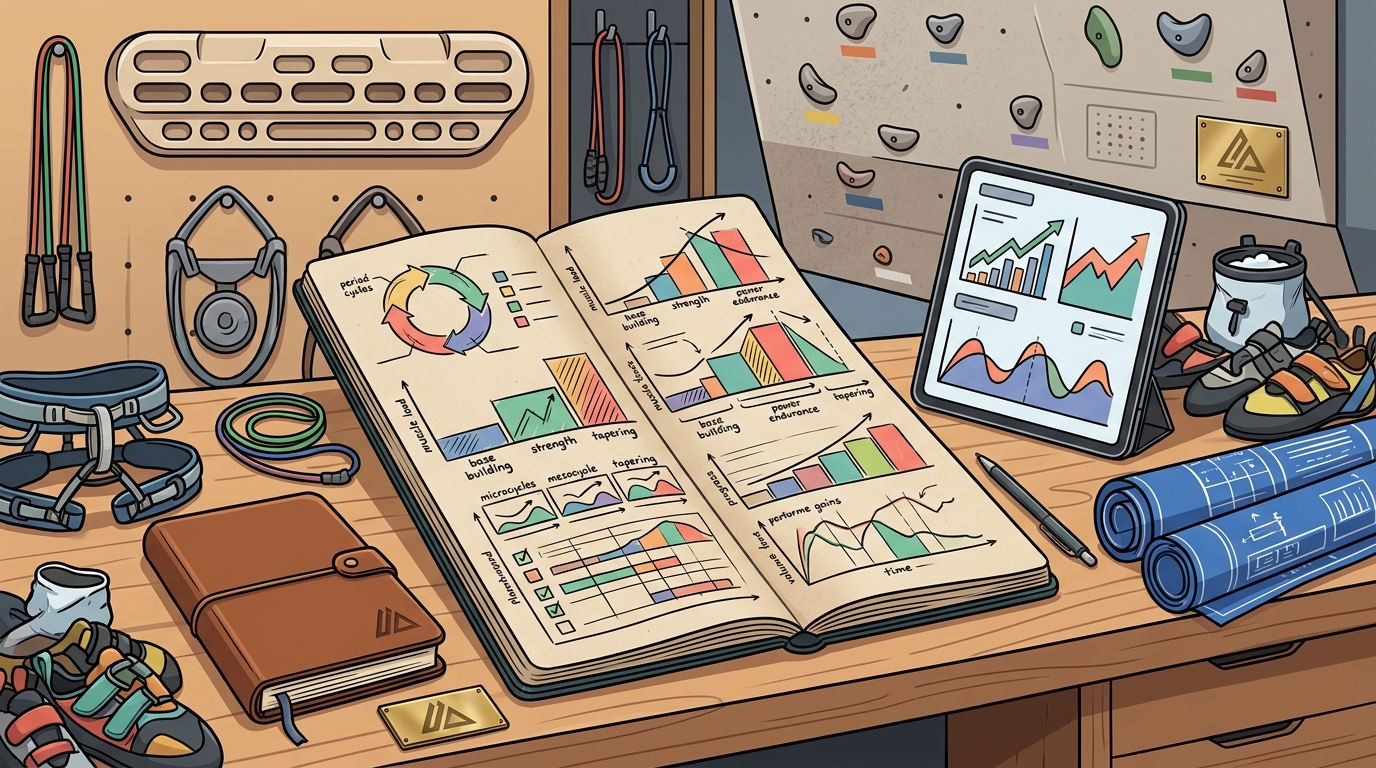
Effective climbing training is not linear. It follows a periodized structure designed to peak performance at specific times. This structure typically includes three main phases: the base phase, the build phase, and the peak phase. Each phase serves a distinct physiological purpose.
The base phase focuses on building aerobic capacity and connective tissue strength. This phase is crucial for injury prevention. During this time, climbers engage in high-volume, low-intensity training. This includes long bouldering sessions and extensive campus board work at lower intensities. The goal is to prepare the body for the heavier loads that follow.
The build phase introduces higher intensity and specific power work. This is where you target your weaknesses. If you struggle with dynos, you incorporate dynamic training. If you lack finger strength, you increase hangboard volume. This phase is the most demanding and requires careful monitoring of fatigue levels. According to sports medicine reports, the risk of pulley injuries increases significantly when intensity is ramped up too quickly without adequate base preparation.
The peak phase reduces volume while maintaining intensity. This allows your body to recover and express its full strength potential. This phase is critical for competition preparation. It ensures that you are fresh and powerful on the day of the event. After the peak phase, a deload week is essential to reset the nervous system.
Integrate Strength and Technique Drills
Strength without technique is inefficient. Technique without strength is limiting. A balanced plan integrates both. Technical drills should be performed at the start of your session when your nervous system is fresh. These drills include silent feet, straight arm bouldering, and foot placement precision exercises.
Strength training should complement your climbing. This includes core work, pull-ups, and finger strength exercises. Core strength is particularly important for maintaining body tension on steep terrain. According to biomechanical studies, climbers with stronger core muscles exhibit better balance and require less grip strength to maintain position. This efficiency allows them to climb longer and harder.
Paradigm Climbing emphasizes the importance of non-climbing strength training. This includes exercises that target the posterior chain, such as deadlifts and hip thrusts. These exercises improve overall power output and reduce the load on the fingers. By distributing the physical demand across the entire body, you protect your most vulnerable joints. This approach is supported by long-term athlete development models that prioritize structural balance over isolated strength.
Manage Recovery and Overtraining
Recovery is not passive. It is an active part of the training process. Overtraining is a common issue among dedicated climbers. It manifests as persistent fatigue, decreased performance, and emotional burnout. According to athletic health reports, over 60% of competitive climbers experience overtraining symptoms at some point in their careers. Recognizing the signs early is vital.
Signs of overtraining include a sudden drop in grip strength, difficulty sleeping, and a lack of motivation. If you experience these symptoms, you must reduce training volume immediately. Active recovery methods include yoga, light swimming, and mobility work. These activities promote blood flow without adding stress to the muscles.
Sleep is the most powerful recovery tool. During deep sleep, the body repairs tissue and consolidates motor learning. Climbers who prioritize eight hours of sleep per night show faster skill acquisition than those who do not. Nutrition also plays a key role. Adequate protein intake supports muscle repair, while carbohydrates fuel high-intensity sessions. Ignoring these factors undermines even the most well-designed training plan.
Track Progress and Adjust
A static plan becomes obsolete quickly. You must track your progress and adjust accordingly. Keep a detailed training log. Record your grades, the number of attempts, and how you felt during each session. This data provides objective feedback on your improvement.
If you are not progressing after four weeks, you need to change the stimulus. This could mean increasing the intensity, changing the exercise selection, or adjusting the volume. Regular reassessment ensures that your training remains effective. It also helps in identifying plateaus before they become prolonged stalls. Professional coaches use this data to make real-time adjustments to programming. This dynamic approach is far more effective than sticking to a rigid schedule that no longer serves your needs.
Key Takeaways
- Periodization is Essential: Structured phases of base, build, and peak training optimize performance and reduce injury risk.
- Baseline Assessment: Accurate grading and video analysis are required to build a realistic starting point.
- Specific Goal Setting: Clear, measurable goals dictate the specific training protocols and intensity levels.
- Recovery Management: Active recovery and sleep are critical for preventing overtraining and ensuring adaptation.
- Data-Driven Adjustments: Regular tracking of training logs allows for timely modifications to the plan.
- Holistic Approach: Combining strength, technique, and mental preparation yields the best long-term results.
- Professional Guidance: Working with certified coaches can accelerate progress and prevent costly mistakes.
Frequently Asked Questions
How often should I train to see progress?
Most climbers see optimal progress with three to four climbing sessions per week, supplemented by two strength training sessions. This frequency allows for adequate recovery while providing sufficient stimulus for adaptation.
What is the best way to improve finger strength?
Hangboarding is the most effective method. Start with open-hand positions on large edges and progress to smaller edges. Always warm up thoroughly before hangboarding to prevent injury. Consistency is more important than intensity in the early stages.
How do I know if I am overtraining?
Signs include persistent fatigue, decreased performance, irritability, and sleep disturbances. If you notice these symptoms, take a few days off or reduce your training volume significantly. Listening to your body is crucial for long-term health.
Can I create a training plan without a coach?
Yes, but it requires discipline and access to reliable resources. Using pre-written plans or following established periodization models can help. However, a coach provides personalized feedback and adjustments that are difficult to replicate independently.
How long does it take to climb a grade higher?
Progression varies by individual. On average, climbers can expect to improve one grade every six to twelve months with consistent training. Factors such as age, previous experience, and training consistency influence this timeline.
What is the difference between bouldering and sport climbing training?
Bouldering training focuses on power, technique, and short-duration intensity. Sport climbing training emphasizes endurance, aerobic capacity, and mental stamina. While there is overlap, the primary focus of your training should align with your specific goals.
Do I need to do campus board training?
Campus board training is advanced and should only be attempted after building a strong base of finger strength and technique. It is highly demanding and carries a higher risk of injury. It is best suited for climbers aiming for high-level bouldering grades.
Start Your Journey
Creating a personalized rock climbing training plan is a powerful step toward achieving your goals. By following a structured, data-driven approach, you can maximize your potential and climb smarter. Whether you are a beginner or an elite athlete, the principles of periodization, recovery, and specific goal setting remain constant. Do not leave your progress to chance. Take control of your training today.
Paradigm Climbing offers custom training plans designed to meet your specific needs. Our coaches provide expert guidance to help you navigate the complexities of climbing training. Visit our Training Plans page to explore your options. You can also learn more about our coaching philosophy on our About page. For direct assistance, contact us via our Contact page. Start your journey to becoming the climber you want to be.