
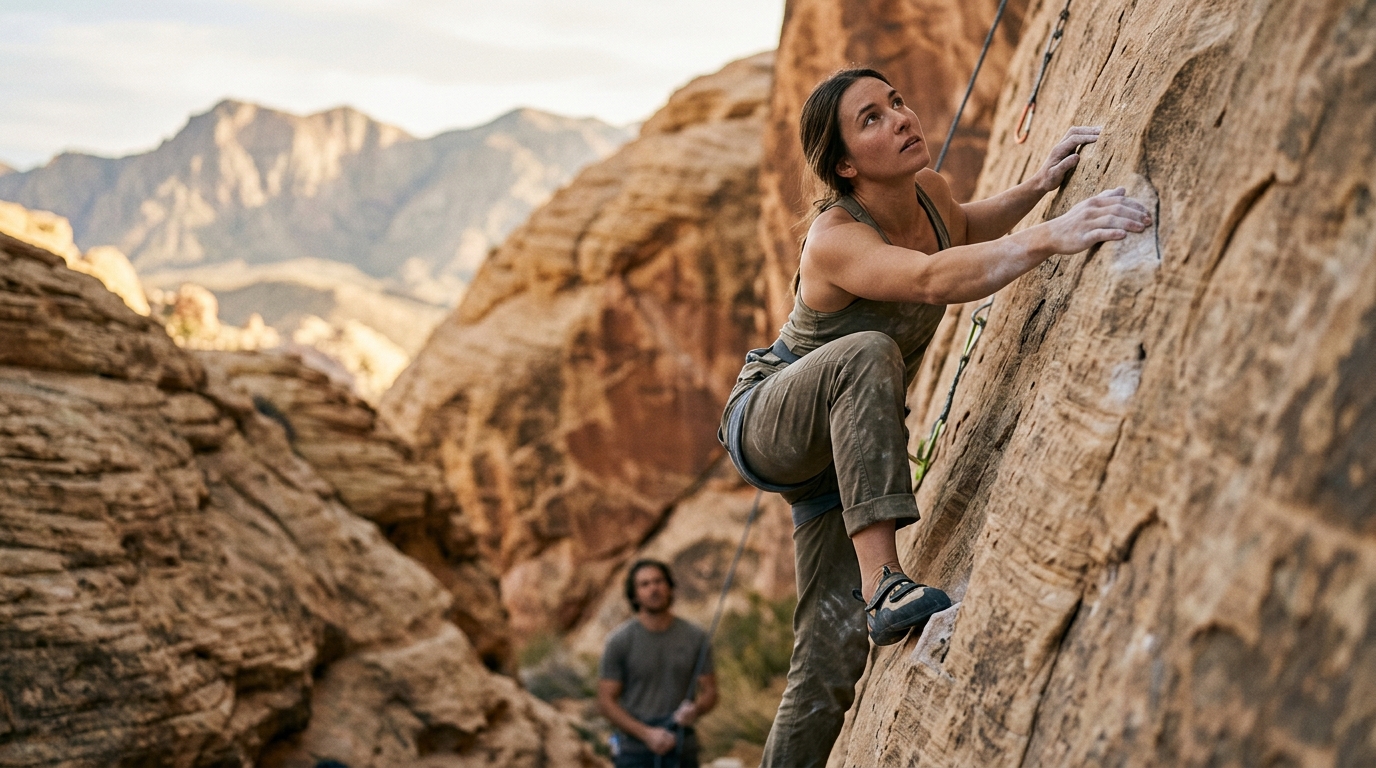
Modern climbing performance relies heavily on biomechanical efficiency rather than raw muscular strength. Research indicates that elite climbers utilize significantly less energy than amateurs when navigating identical routes. This disparity stems from superior weight distribution and precise foot placement. By mastering core movement principles, climbers can reduce fatigue and extend their endurance on long routes. This guide outlines five critical techniques to transform your climbing style from brute-force to fluid. (CONTACT Paradigm Climbing)
Understanding Precision Footwork
Footwork is the foundation of climbing efficiency. Most climbers waste energy by relying too heavily on their arms. The primary goal is to use your legs, which are stronger and more resistant to fatigue, to support your body weight. Precision footwork involves placing your feet exactly where you intend them to be, rather than dragging or sliding them up the wall. (Paradigm Climbing Rock Climbing)
The Importance of Toe Placement
Using the tip of your climbing shoe allows for maximum sensitivity and precision. This technique enables you to find small footholds that larger surface areas might miss. When you place your foot precisely, you create a stable base that allows your center of gravity to remain close to the wall. This proximity reduces the lever arm effect, making it easier to reach the next hold. (Paradigm Climbing Rock Climbing)
Heel Hooks and Toe Hooks
Advanced footwork includes using your heels and toes as additional points of contact. A heel hook involves wrapping your heel around a hold to pull your hips toward the wall. This technique is particularly useful in bouldering and steep terrain. Conversely, a toe hook allows you to hang from the underside of a hold, freeing your hands for the next move. These techniques are essential for maintaining momentum without exhausting your grip strength.
Mastering the Art of Hanging
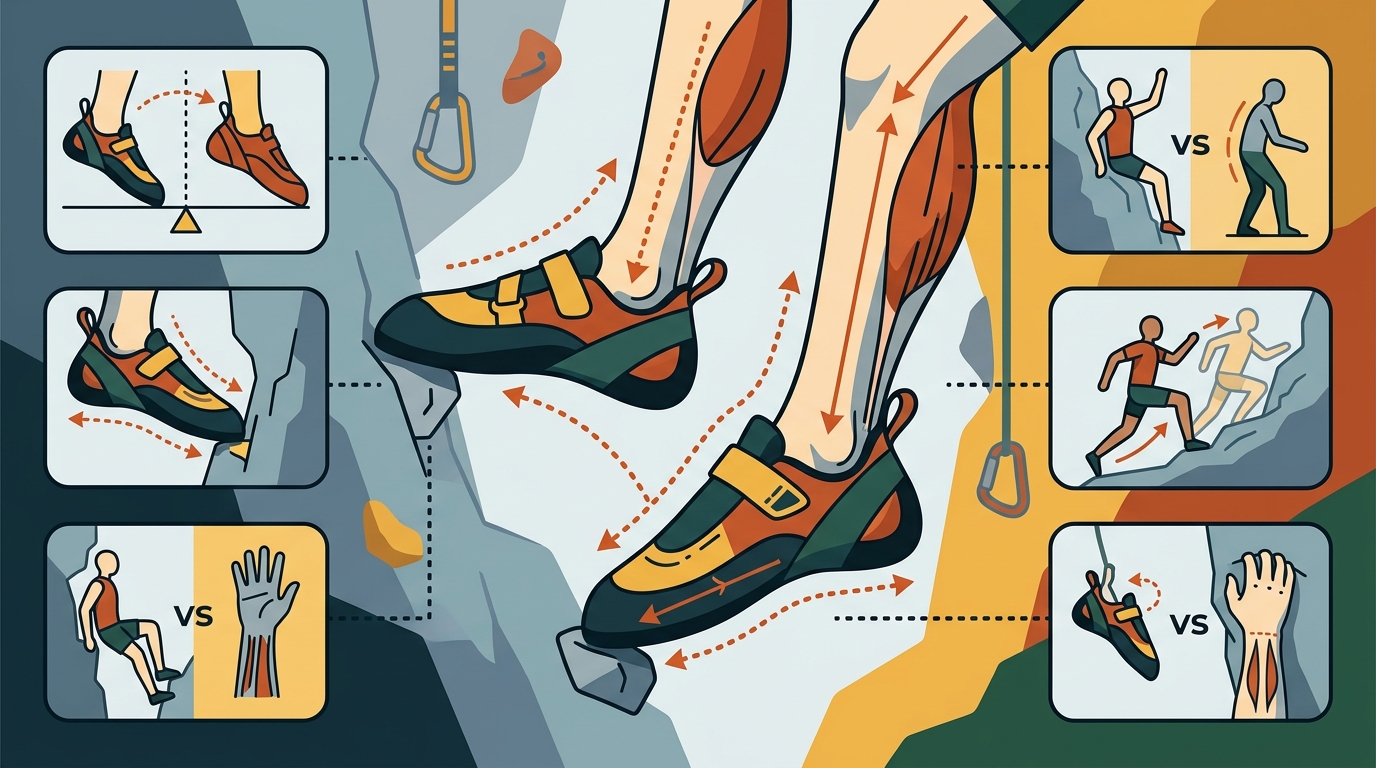
Hanging refers to the ability to rest on your feet and skeleton rather than your fingers. This skill is crucial for conserving energy during long climbs. When you hang effectively, your muscles relax, and your blood flow is restored to the forearms. This recovery period allows you to climb longer and harder than if you were constantly gripping.
Skeleton Loading
Skeleton loading involves aligning your joints so that your bones support your weight instead of your tendons and muscles. For example, when standing on a small foothold, ensure your knee is directly above your ankle. This alignment transfers the load to your skeletal structure, allowing your leg muscles to rest. Proper skeleton loading is a key component of the custom training programs offered by professional coaches.
Active vs. Passive Resting
Passive resting involves locking your joints to hold your position with minimal muscle engagement. Active resting requires continuous micro-adjustments to maintain balance. While passive resting is more energy-efficient, it requires precise balance. Active resting is necessary on dynamic moves or when the holds are unstable. Learning to switch between these states is vital for efficient climbing.
Optimizing Hip Positioning
Hip positioning determines how close your center of gravity is to the climbing surface. Keeping your hips close to the wall reduces the strain on your fingers and arms. When your hips are far from the wall, your arms must work harder to pull your body weight up, leading to rapid fatigue.
Flagging and Counter-Flagging
Flagging is a technique used to maintain balance when your feet are spread apart. By extending one leg out to the side, you create a counterbalance that allows you to reach further with your other hand. This technique is essential for maintaining stability on wide spans. Counter-flagging involves crossing your leg over your body to shift your center of gravity in the opposite direction.
Hip Rotation and Swiveling
Rotating your hips toward the wall allows you to use your legs more effectively. This movement brings your center of gravity closer to the holds, making it easier to push up with your legs. Swiveling your hips also helps in reaching distant holds without overextending your arms. Proper hip rotation is a hallmark of efficient climbing technique.
Strategic Weight Transfer
Weight transfer is the process of shifting your body weight from one limb to another during a move. Efficient weight transfer minimizes the effort required to initiate movement. It involves subtle shifts in balance that allow you to move smoothly from one hold to the next.
Reading the Route
Before making a move, visualize the sequence and identify where your weight needs to be. This mental preparation allows you to execute the move with precision. Reading the route also helps you identify rest positions and plan your energy expenditure. Effective route reading is a skill that improves with experience and practice.
Dynamic vs. Static Movements
Static movements involve slow, controlled shifts in weight. These are ideal for technical climbs where precision is key. Dynamic movements involve a burst of energy to reach a distant hold. While dynamic moves can be faster, they require more power and coordination. Knowing when to use each type of movement is crucial for efficiency.
Maintaining Mental Clarity
Mental clarity is often overlooked in climbing training, but it is just as important as physical technique. Anxiety and fear can cause tension in the body, leading to inefficient movement. Staying calm and focused allows you to execute techniques with precision.
Visualization Techniques
Visualization involves mentally rehearsing the climb before attempting it. This practice helps you anticipate challenges and plan your responses. By visualizing successful moves, you build confidence and reduce anxiety. Visualization is a powerful tool for improving performance under pressure.
Breathing and Relaxation
Proper breathing helps regulate your heart rate and reduces tension in your body. Deep, controlled breaths signal to your nervous system that you are safe, allowing you to relax your muscles. Relaxation is key to efficient climbing, as tense muscles consume more energy. Incorporating breathing exercises into your training can significantly improve your climbing efficiency.
Comparison of Climbing Training Approaches
| Approach | Focus Area | Best For | Key Benefit |
|---|---|---|---|
| Custom Plans | Individualized Goals | Elite Athletes | Tailored Progression |
| Pre-Written Plans | Structured Routine | Intermediate Climbers | Consistency |
| Self-Directed Training | Flexibility | Beginners | Cost-Effective |
| Group Coaching | Social Learning | Community Builders | Motivation |
Key Takeaways
- Precision footwork reduces reliance on arm strength and increases stability on the wall.
- Hanging on your skeleton allows for active rest and conserves forearm energy during long climbs.
- Keeping hips close to the wall minimizes the lever arm effect and improves reach.
- Strategic weight transfer involves visualizing moves before executing them to ensure smooth transitions.
- Mental clarity through visualization and breathing techniques enhances focus and reduces anxiety.
- Professional coaching can provide personalized feedback to accelerate skill acquisition.
- Consistent practice of these techniques leads to measurable improvements in climbing performance.
Frequently Asked Questions
How can I improve my foot placement accuracy?
Practice placing your feet deliberately on small holds. Focus on using the tip of your shoe and ensuring your knee is aligned over your ankle. Regular drills that challenge your balance will enhance precision.
What is the best way to rest while climbing?
Rest by hanging on your feet and locking your joints. This skeleton loading technique allows your muscles to relax. Find stable footholds and shift your weight onto them to recover your breath.
Why is hip positioning important in climbing?
Hip positioning determines your center of gravity. Keeping your hips close to the wall reduces the strain on your fingers and arms. It also allows you to use your stronger leg muscles to push you upward.
How do I know when to use dynamic versus static moves?
Use static moves when precision and balance are required. Use dynamic moves when you need to reach a distant hold quickly. Assess the difficulty of the hold and your current energy levels to decide.
Can mental training improve my climbing technique?
Yes, mental training helps reduce anxiety and tension. Techniques like visualization and controlled breathing allow you to stay calm and focused. This mental clarity enables you to execute physical techniques with greater precision.
What role does a coach play in improving efficiency?
A coach provides personalized feedback and identifies specific areas for improvement. They can design training programs that target your weaknesses. Working with a professional ensures that you are practicing correct techniques.
Start Your Journey to Efficient Climbing
Improving your climbing efficiency requires a combination of physical practice and mental discipline. By mastering footwork, hanging, hip positioning, and weight transfer, you can climb longer and harder with less effort. If you are ready to take your climbing to the next level, consider exploring our custom training plans designed to accelerate your progress. Contact us today to schedule a consultation and begin your transformation.