
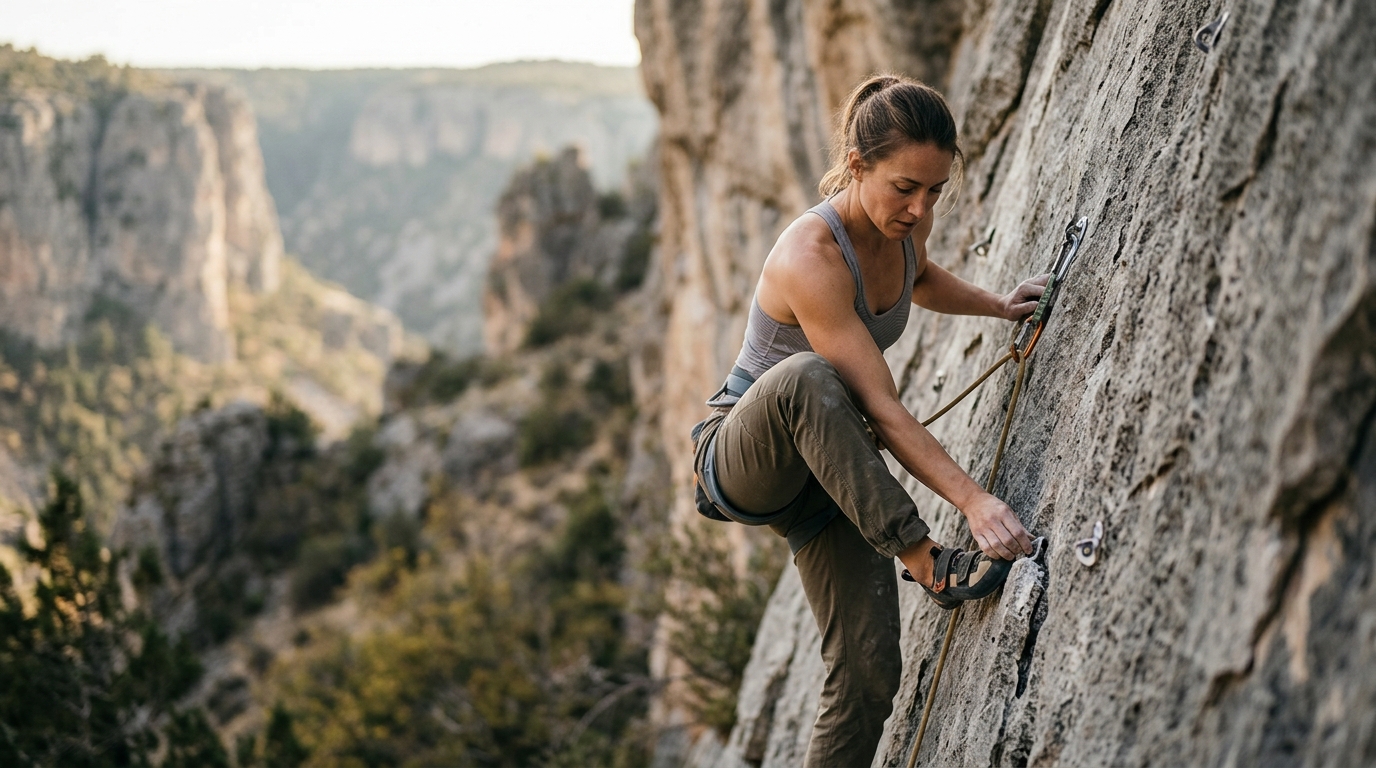
Mastering foot tension is the single most critical factor in advancing from intermediate to advanced sport climbing. Data indicates that efficient footwork can reduce energy expenditure by up to 30 percent during long routes. Without precise body positioning, climbers rely excessively on arm strength, leading to premature pump and stalled progress. This guide outlines specific, high-impact drills designed to ingrain these mechanics into your muscle memory.
Why Foot Tension Dictates Climbing Success
Foot tension refers to the active engagement of the toes and the arch to create a stable platform on the rock. Unlike passive resting, active tension allows you to push through your legs rather than hanging from your arms. This distinction is vital for sport climbing, where holds are often small and the route length demands endurance.
According to research in sports biomechanics, climbers who utilize leg drive effectively reduce forearm load significantly. This efficiency allows for longer sessions and higher performance on technical sections. At Paradigm Climbing, we emphasize that understanding the "why" behind training is as important as the training itself. Our coaching methodology focuses on long-term athlete development, ensuring that foundational skills like foot tension are solid before advancing to complex power movements.
Body positioning complements foot tension by aligning your center of gravity over your feet. When your hips are close to the wall, you maximize friction and minimize the lever arm pulling you away from the rock. This alignment is the core of what we call the "Charlie Formula," a holistic approach to climbing that integrates physical and mental profiles for optimal performance.
Drill 1: Static Precision Placements
This drill isolates the act of placing your foot without using momentum. It forces you to look down and commit to the placement, which is crucial for small footholds common in sport climbing.
Execution Steps
- Stand on the ground or a low jug.
- Identify a specific foothold three feet above your head.
- Reach for the hold with your hand, then carefully place your foot on the target foothold.
- Press down through the foot, engaging the toe and arch, before lifting the other foot.
- Repeat this process for every move, eliminating any swinging or dynamic motion.
This method builds proprioception, which is the body's ability to sense its position in space. By removing momentum, you are forced to rely on precise muscle activation. This drill is particularly effective for climbers who struggle with accuracy on small edges. For more insights on precision training, explore our blog resources.
Drill 2: Heel Dragging Mechanics
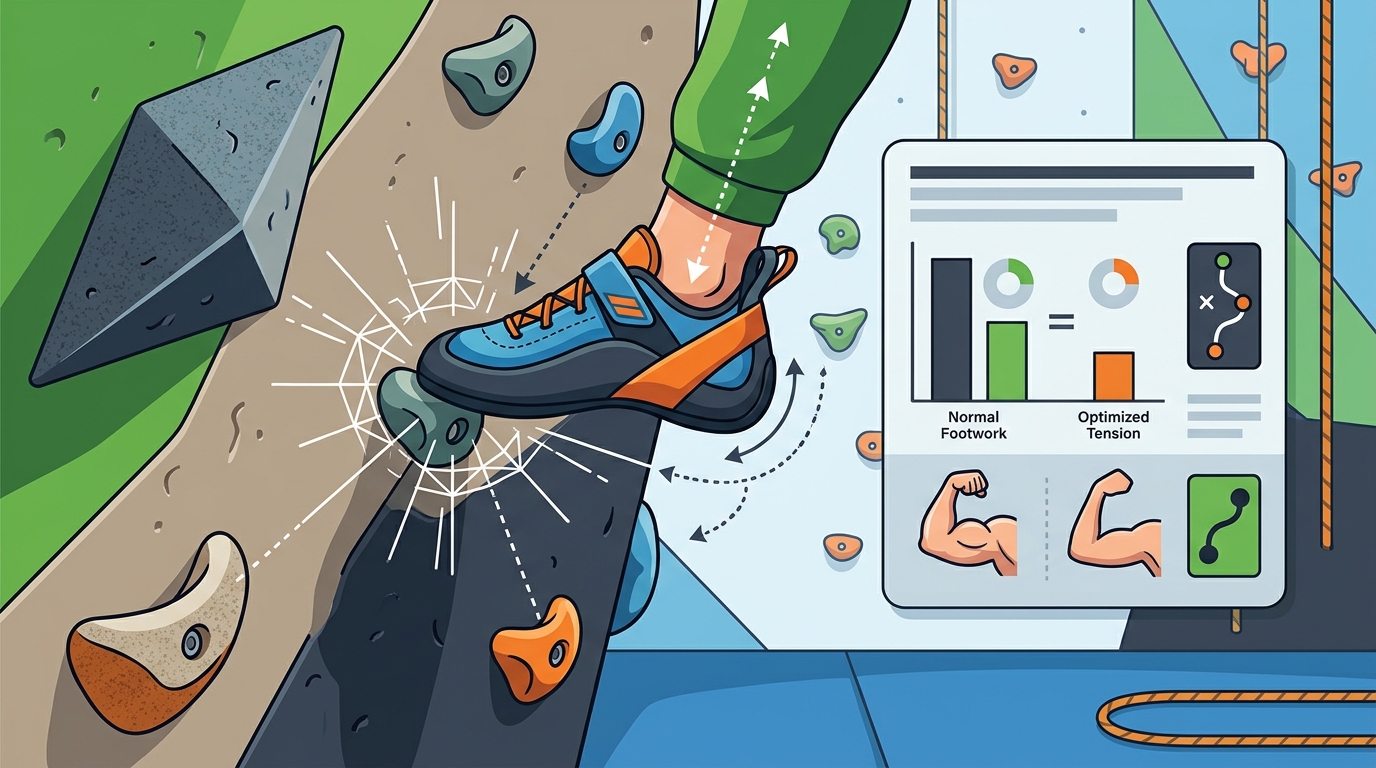
Heel dragging is a technique used to maintain friction on the wall when your feet are lower than your hands. It allows you to extend your reach and maintain body tension without losing contact with the rock.
Execution Steps
- Find a steep overhang or a slab with a consistent texture.
- Place one foot on a hold and drag the heel of the other foot along the wall.
- Keep your hips close to the wall to maximize the friction of the heel.
- Shift your weight onto the dragging heel, then step up with the other foot.
- Alternate heels, ensuring you maintain constant contact with the wall.
Heel dragging requires significant ankle flexibility and toe strength. It is a hallmark of advanced sport climbing, allowing climbers to navigate steep terrain efficiently. According to climbing biomechanics studies, heel dragging can reduce the force required on the hands by up to 20 percent. This technique is often taught in our custom training programs to help climbers overcome steep sections.
Drill 3: Flagging for Balance
Flagging involves extending one leg out to the side or behind you to counterbalance your body. This technique is essential for maintaining balance on small footholds or when reaching for distant holds.
Execution Steps
- Stand on two footholds with your hips close to the wall.
- Extend one leg out to the side, keeping it straight.
- Shift your weight to the standing leg, allowing the flagging leg to act as a counterweight.
- Reach for the next hold with your hand, maintaining balance through the flag.
- Bring the flagging leg back to a stable position once the hold is secured.
Flagging is particularly useful on slab climbing or when the footholds are far apart. It allows you to keep your center of gravity over your feet, preventing you from falling off the wall. This drill improves core strength and balance, which are critical for sport climbing. For a deeper dive into balance techniques, check out our about page for more on our coaching philosophy.
Drill 4: Z-Climbing for Body Tension
Z-climbing is a dynamic movement pattern used to traverse steep terrain. It involves alternating feet and hands in a zigzag pattern to maintain momentum and body tension.
Execution Steps
- Start with your feet wide apart and your hands on holds at shoulder height.
- Step up with your right foot to a higher hold.
- Simultaneously reach with your left hand to a hold above your head.
- Step up with your left foot to match the right foot's height.
- Reach with your right hand to the next hold, completing the "Z" shape.
This drill builds explosive power and coordination. It is particularly effective for climbing steep overhangs where static movements are inefficient. Z-climbing requires strong core engagement to maintain body tension throughout the movement. This technique is often incorporated into our Full Spectrum training plans for climbers looking to advance their power.
Drill 5: Sloper Precision Control
Sloper climbing requires immense finger strength and body tension to maintain control on rounded holds. This drill focuses on precision and control rather than power.
Execution Steps
- Find a wall with large, rounded slopers.
- Place your hands on the slopers, keeping your elbows bent.
- Shift your weight onto your feet, keeping your hips close to the wall.
- Make small, controlled movements with your feet, testing the stability of each hold.
- Focus on keeping your body tension high to prevent slipping off the slopers.
Sloper climbing is a test of finger strength and technique. It requires you to trust your feet and maintain body tension to avoid falling. This drill is essential for climbers who want to improve their performance on difficult sport routes. For more tips on finger strength, visit our shop for training resources.
Key Takeaways
- Foot tension reduces forearm load by up to 30 percent, extending climbing endurance.
- Static precision placements build proprioception and accuracy on small holds.
- Heel dragging can reduce hand force requirements by 20 percent on steep terrain.
- Flagging improves balance and allows for extended reach on slab climbing.
- Z-climbing develops explosive power and coordination for overhangs.
- Sloper precision control enhances finger strength and body tension.
- Coach Charlie Schreiber has mentored athletes from V0 to V17 levels using these principles.
Frequently Asked Questions
How often should I practice foot tension drills?
Integrate foot tension drills into every climbing session, focusing on quality over quantity. Aim for 10 to 15 minutes of dedicated footwork practice per session.
Can these drills help with bouldering?
Yes, these drills are transferable to bouldering. Precision and body tension are critical in both disciplines for maximizing efficiency and power.
What is the best way to improve heel dragging?
Practice on steep terrain with consistent texture. Focus on keeping your hips close to the wall and engaging your core to maintain friction.
How does flagging improve climbing performance?
Flagging allows you to keep your center of gravity over your feet, preventing falls and enabling you to reach further holds with stability.
Are these drills suitable for beginners?
Yes, these drills are foundational and suitable for climbers of all levels. They build the essential skills required for advanced climbing.
What equipment do I need for these drills?
You only need climbing shoes and access to a climbing wall with varied terrain. No additional equipment is required.
How long does it take to see improvement?
With consistent practice, climbers typically see noticeable improvements in footwork and body positioning within 4 to 6 weeks.
Start Your Custom Training
Transform your climbing with personalized guidance. Contact Paradigm Climbing today to book a session with Coach Charlie Schreiber and elevate your sport climbing skills.