
Create a Personalized Rock Climbing Training Plan to Achieve Your Goals
Building a sustainable climbing practice requires more than just hanging on the wall. According to recent industry data, structured periodization can increase climbing grade progression by up to 40 percent compared to unstructured training. This statistic highlights the critical difference between random effort and strategic athletic development. Without a clear roadmap, climbers often plateau or suffer from overuse injuries due to imbalanced muscle development. This guide outlines the exact framework used by professional coaches to build effective, personalized training protocols.
Assess Your Current Climbing Level
The foundation of any successful training plan is an honest assessment of your current abilities. You must identify your strengths and weaknesses across different climbing disciplines. This includes bouldering, sport climbing, and lead climbing. Understanding your baseline allows you to tailor exercises that address specific gaps in your technique or physical capacity.
For example, if you struggle with dynamic movements, your plan should prioritize power and coordination drills. If finger strength is your limiting factor, you will need to incorporate hangboard protocols. At Paradigm Climbing, we emphasize that self-awareness is the first step toward mastery. You should evaluate your performance on routes that are 1-2 grades above your comfort zone. This helps identify the specific physiological barriers holding you back.
Define Specific Climbing Goals
Clarity in goal setting dictates the structure of your training. Vague objectives like "get better" do not yield measurable results. Instead, you must define precise targets. These targets should be categorized into short-term, medium-term, and long-term milestones.
Short-term goals might include improving your ability to climb overhangs or increasing your hang time on small edges. Medium-term goals could involve sending a specific grade in a particular crag. Long-term goals might focus on competing in national championships or completing a 5.14d sport climb. Custom training plans are designed to align your daily efforts with these hierarchical objectives. This alignment ensures that every session contributes directly to your ultimate ambition.
Structure Your Training Phases
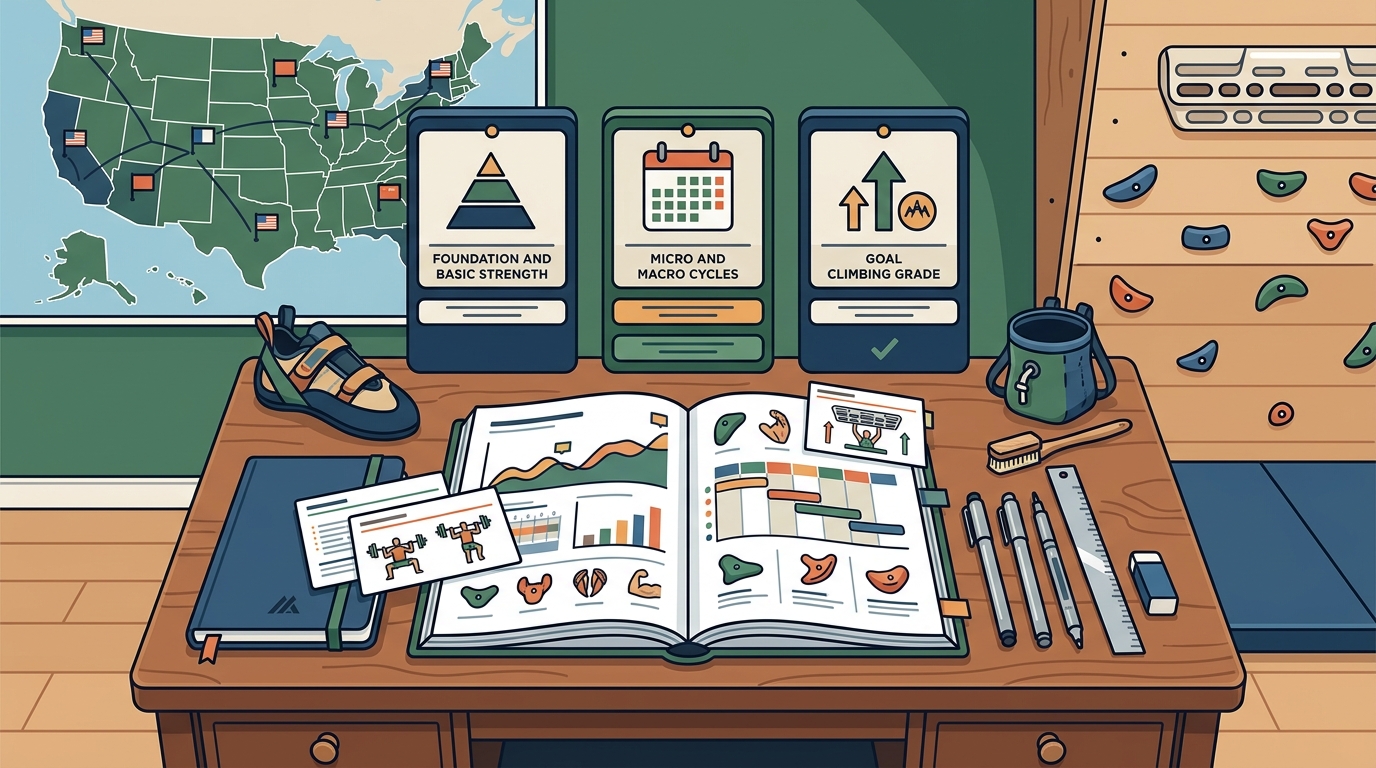
Effective climbing training follows a periodized model. This involves cycling through distinct phases to optimize different physical attributes. A typical macrocycle includes preparation, build, peak, and taper phases. Each phase has a specific focus and volume intensity.
The preparation phase focuses on building a base of general physical preparedness. This includes cardiovascular health and general strength. The build phase introduces specific climbing intensity. You will increase the volume of campus board or hangboard work. The peak phase reduces volume but maximizes intensity. This simulates competition conditions. Finally, the taper phase allows for full recovery before your target event. Pre-written plans often follow this exact structure to ensure athletes are peaking at the right time.
Balance Strength and Endurance
One of the most common mistakes climbers make is neglecting the balance between strength and endurance. Finger strength is crucial for short, intense moves. However, muscular endurance is required for long routes. Aerobic capacity determines your recovery speed between hard sections.
To balance these, you must incorporate varied training modalities. Include limit bouldering for maximum strength. Add campus board drills for power. Integrate hangboard routines for finger durability. For endurance, utilize circuit training and long-duration campus board sets. Our blog resources provide detailed breakdowns of how to integrate these modalities without causing overtraining. The key is to alternate high-intensity strength days with lower-intensity endurance days.
Implement Recovery Protocols
Recovery is not passive; it is an active component of training. Without adequate rest, your body cannot adapt to the stress imposed by training. This leads to stagnation or injury. You must prioritize sleep, nutrition, and active recovery techniques.
Sleep is the primary driver of hormonal balance and tissue repair. Aim for seven to nine hours of quality sleep per night. Nutrition should support your energy expenditure. Focus on lean proteins for muscle repair and complex carbohydrates for energy replenishment. Active recovery includes light mobility work, yoga, or easy swimming. Client testimonies frequently highlight how structured recovery protocols accelerated their progress. Ignoring recovery is the fastest way to derail your training plan.
Track and Adjust Your Progress
A static plan is a failing plan. You must continuously monitor your performance and adjust your training accordingly. Keep a detailed training log. Record your grades, repetitions, and perceived exertion. This data allows you to identify trends and plateaus.
If you are not progressing, you may need to increase volume or intensity. If you are feeling fatigued, you may need to reduce load. Regular reassessment ensures that your training remains effective. Contact our coaching team for professional guidance on interpreting your data and making necessary adjustments. This iterative process is what separates amateur climbers from elite athletes.
Comparison of Training Modalities
| Modality | Primary Benefit | Recommended Frequency | Intensity Level |
|---|---|---|---|
| Limit Bouldering | Maximum Finger Strength | 1-2 times per week | Very High |
| Hangboard | Finger Durability | 1-2 times per week | High |
| Campus Board | Power and Coordination | 1 time per week | High |
| Circuit Training | Muscular Endurance | 1-2 times per week | Moderate |
Key Takeaways
- Structured periodization can increase climbing grade progression by up to 40 percent.
- Coach Charlie Schreiber has over 20 years of experience in competitive climbing.
- Training must balance limit strength, power, and muscular endurance.
- Recovery protocols are as critical as the training sessions themselves.
- Continuous tracking and adjustment are necessary for long-term progress.
- Custom plans address individual weaknesses and strengths.
- Professional coaching provides accountability and expert guidance.
Frequently Asked Questions
How often should I train to see results?
Most climbers see significant results with three to four training sessions per week. This frequency allows for adequate recovery while providing sufficient stimulus for adaptation. Consistency is more important than volume.
What is the difference between bouldering and sport climbing training?
Bouldering training focuses on maximum power and short-duration strength. Sport climbing training emphasizes muscular endurance and aerobic capacity. Both require finger strength, but the energy systems utilized differ significantly.
Can I create a training plan without a coach?
Yes, but it is challenging to ensure proper periodization and injury prevention. Pre-written plans offer a structured starting point. However, personalized coaching provides real-time adjustments that generic plans cannot match.
How do I prevent finger injuries during training?
Prevent injuries by warming up thoroughly, avoiding excessive hangboard volume, and listening to your body. Gradually increase intensity over weeks, not days. Proper technique is also crucial for load distribution.
What is the best way to track my climbing progress?
Use a training log to record grades, attempts, and feelings of fatigue. Monitor your performance on specific drills like hangboard times or campus board repetitions. This data provides objective measures of improvement.
How long does it take to climb a grade higher?
The timeline varies based on your starting level and training consistency. On average, climbers may progress one grade every six to twelve months with structured training. Plateaus are normal and can be overcome with strategic adjustments.
Is strength training necessary for climbers?
Yes, general strength training supports climbing-specific adaptations. It improves bone density, tendon strength, and overall athletic resilience. Our coaches integrate general strength work into all custom plans.
Start Your Custom Training Journey Today
Achieving your climbing goals requires more than just effort; it requires strategy. By following a structured, personalized training plan, you can maximize your potential and minimize the risk of injury. Explore our custom plans to begin your journey toward becoming the climber you aspire to be. Take control of your progress today.