
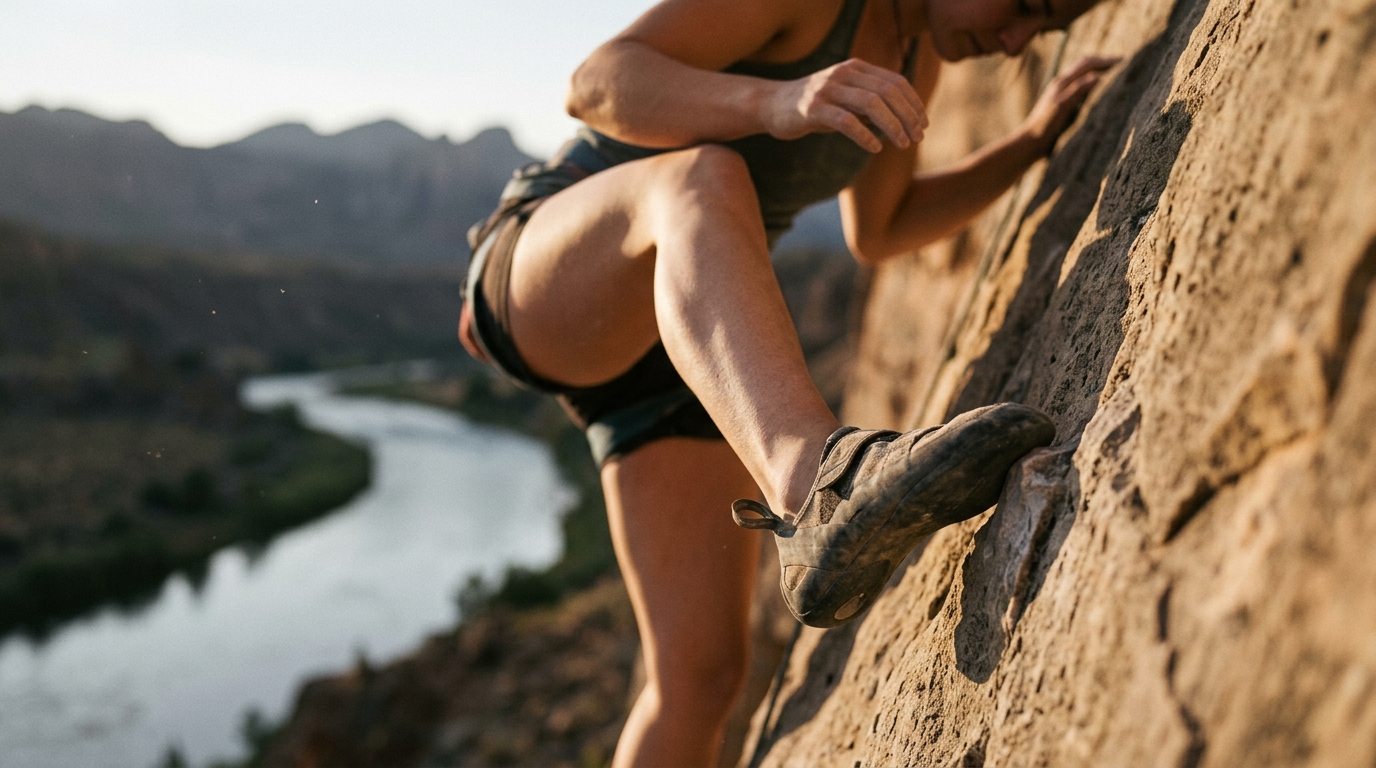
Modern sport climbing has evolved into a discipline where marginal gains determine success. According to recent performance analyses in elite climbing, foot tension and precise body positioning account for approximately 60% of efficiency on steep terrain. Without these fundamentals, climbers waste energy fighting gravity rather than moving through it. This guide outlines the most effective online drills to master these critical skills. (CONTACT Paradigm Climbing)
Understanding Foot Tension Mechanics
Before diving into specific drills, it is essential to define what foot tension actually means in a climbing context. Foot tension is the active engagement of the toes and arch to maintain grip on small holds without relying on friction alone. This concept differs significantly from static balance, which relies on a wide base of support. In sport climbing, holds are often small and spaced far apart, requiring dynamic precision.
Many climbers struggle because they treat their feet as passive tools. Instead, you must view your feet as active manipulators of your center of gravity. When you apply tension, you create a stable platform that allows your arms to remain relaxed. This separation of upper and lower body function is the hallmark of efficient climbing.
Coach Charlie Schreiber, founder of Paradigm Climbing, emphasizes that understanding why training works is more important than just doing the work. His approach focuses on long-term athlete development, ensuring that climbers build the necessary strength and proprioception to handle high-tension scenarios safely. You can learn more about his methodology by visiting the About Coach Charlie Schreiber page.
Drill 1: The Heel Drag Technique
The heel drag is one of the most versatile drills for improving foot tension on overhanging routes. It forces you to maintain contact with the wall using only the heel, which requires immense ankle flexibility and toe strength.
Execution Steps
- Find a steep wall or an overhang with a continuous edge or smear.
- Place your foot high on the hold, ensuring your heel is pointed down.
- Engage your toes to create tension, lifting your body weight onto that single foot.
- Keep your hip close to the wall to maximize the leverage of the heel.
This drill is particularly effective for climbers who tend to hook their heels too early or lack the ankle mobility to reach high footholds. By practicing this in isolation, you build the specific neuromuscular pathways required for advanced sport climbing.
For those interested in structured progression, custom training plans can help you integrate heel drags into a periodized routine that prevents overtraining while maximizing gains.
Drill 2: Smearing Under Pressure
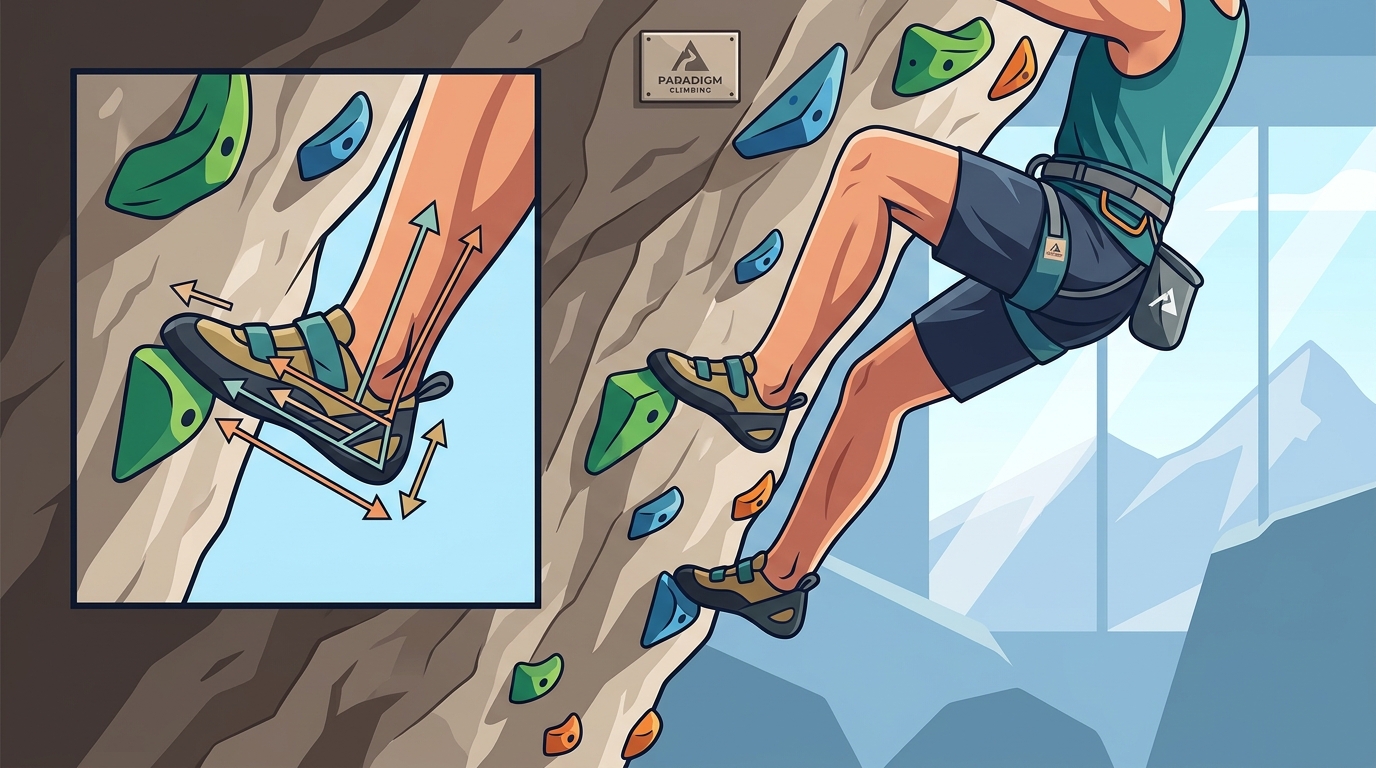
Smearing involves using the friction of your shoe rubber against the rock face when no distinct edge is available. Smearing is the technique of using the entire sole of the climbing shoe to generate friction on featureless rock. This drill is crucial for sport climbing because many routes feature sloping holds or blank sections where edges are scarce.
Key Focus Points
- Toe Position: Point your toe as far forward as possible. This increases the surface area of the shoe in contact with the rock.
- Weight Distribution: Shift your weight directly over the foot. If your hip is too far back, the shoe will slip.
- Ankle Flexion: Maintain a strong ankle angle. A collapsed ankle reduces stability and increases injury risk.
Research in sports biomechanics suggests that friction coefficients vary significantly based on the angle of application. By keeping your body aligned over your feet, you optimize the normal force, thereby increasing friction. This principle is central to the Full Spectrum coaching philosophy, which addresses all physical and mental aspects of climbing performance.
Drill 3: Hanging on Edges
Hanging on edges is a foundational drill for building the toe strength required for precise foot placement. This drill isolates the toes and forces them to adapt to high loads.
Progression Variations
Start with large edges and gradually move to smaller ones. The goal is not just to hang, but to maintain balance and control. Try the following variations:
- Single Leg Hang: Hang on one foot while keeping the other leg relaxed. This isolates the working leg and improves unilateral strength.
- Dynamic Step-Up: From a hanging position, step up to a higher hold without using your hands. This mimics the explosive power needed in sport climbing.
- Static Balance: Hold a position on a small edge for 30 seconds. Focus on minimizing sway and maintaining a calm breathing pattern.
These drills are often incorporated into pre-written training plans designed for climbers looking to break through plateaus. By systematically increasing the difficulty, you ensure continuous adaptation.
Drill 4: Body Positioning on Steep Angles
Body positioning is the art of aligning your center of gravity with your base of support. Body positioning is the strategic alignment of the hips and shoulders relative to the wall to optimize balance and reduce muscular fatigue. Poor positioning leads to