
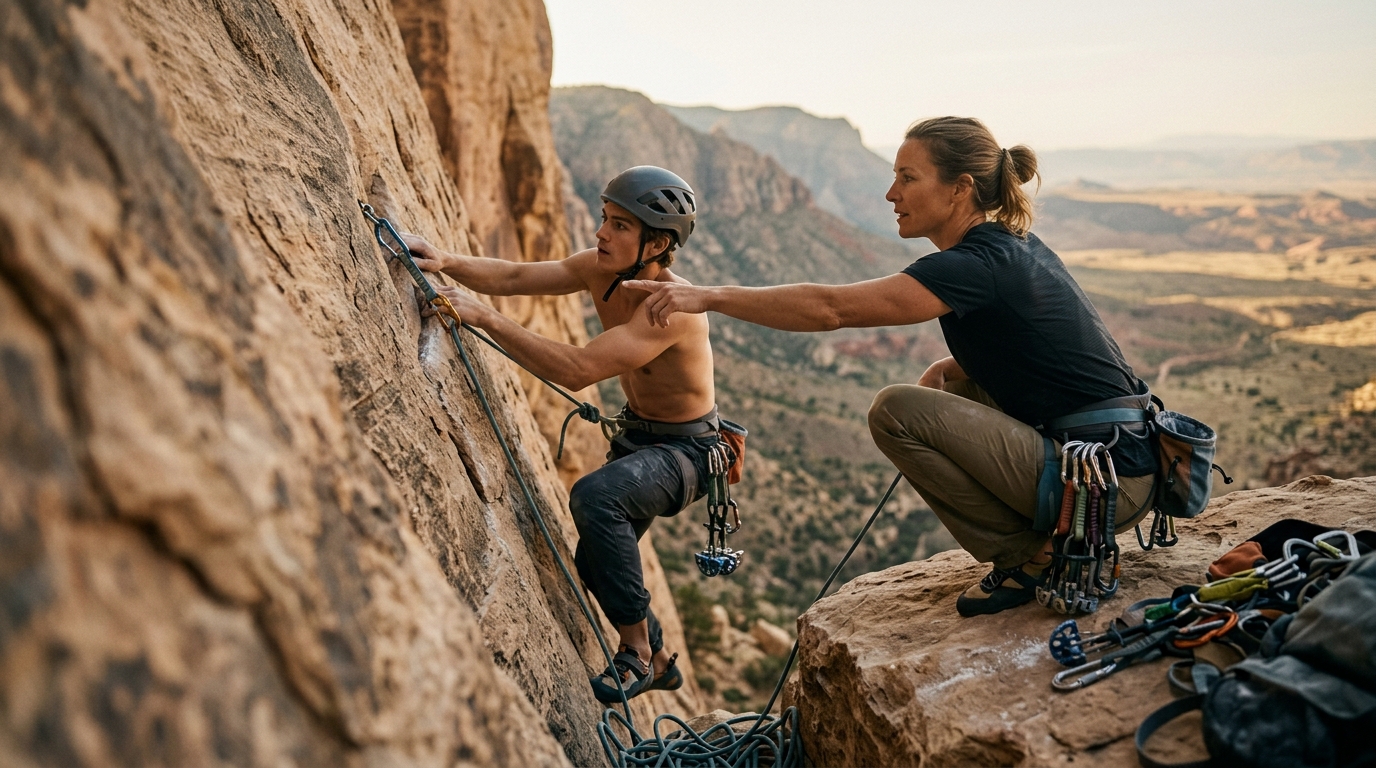
Securing the right mentorship is the single most effective lever for accelerating climbing progression. According to industry data, structured coaching can reduce the time required to master complex movement patterns by up to 40 percent compared to unguided self-training. This statistic highlights the critical importance of selecting a coach who understands both the biomechanics of climbing and the psychology of athletic development. Without a qualified guide, climbers often plateau due to inefficient training loads or poor technique reinforcement. This guide outlines the precise steps to identify, vet, and engage a professional climbing coach who aligns with your specific performance targets. (Rock Climbing Statistics) (Paradigm Climbing Rock Climbing)
Verify Professional Credentials and Experience
The first step in finding a qualified coach is validating their background. Climbing is a high-risk sport, and a qualified coach must prioritize safety alongside performance. Look for certifications in strength and conditioning, such as the CSCS (Certified Strength and Conditioning Specialist) or equivalent national body certifications. These credentials ensure the coach understands human physiology, injury prevention, and periodization. (Paradigm Climbing Rock Climbing)
Beyond formal certifications, examine their climbing history. A coach who has competed at high levels, such as the World Cup circuit or National Championships, possesses a deep intuitive understanding of elite movement. For example, Coach Charlie Schreiber, the founder of Paradigm Climbing, brings 20 years of experience, including competition at the World Cup level and route setting expertise. His background includes mentoring athletes from Day 1 V0 grades to V17 boulderers. This trajectory demonstrates a proven ability to handle long-term athlete development. (Education USA Climbing) (BLOG Paradigm Climbing)
When reviewing a coach's profile, look for specific metrics of success. Do they have a history of helping clients achieve specific grades? Have they coached youth athletes to national titles? These outcomes are strong indicators of pedagogical effectiveness. A coach who has only climbed well but never taught may lack the communication skills necessary to transfer knowledge effectively.
Define Your Specific Climbing Objectives
Before contacting potential coaches, you must clearly define your goals. Climbing is not a monolithic activity; it encompasses bouldering, sport climbing, trad climbing, and competition. Each discipline requires different training modalities and coaching expertise.
Bouldering is the practice of climbing short, difficult routes without ropes, typically over crash pads. Progression here relies heavily on power, finger strength, and complex problem-solving. A coach specializing in bouldering will focus on high-intensity interval training and specific fingerboard protocols.
Sport Climbing involves ascending longer routes protected by bolts and a rope. This discipline demands endurance, mental resilience, and efficient movement over large volumes of rock. A sport climbing coach will emphasize aerobic capacity, pump management, and route-reading skills.
If your goal is competition, you need a coach with specific experience in the competitive circuit. They will understand the nuances of route setting, time management on the wall, and the psychological pressure of judging. If your goal is outdoor recreation, the focus shifts to self-rescue, anchor building, and multi-pitch logistics. Misalignment between your goals and the coach's specialty is a common reason for coaching failure.
Evaluate Training Methodology and Philosophy
Not all coaching styles are created equal. The most effective coaches use a holistic approach that addresses physical, mental, and lifestyle factors. This is often referred to as long-term athlete development. A qualified coach will not just give you a workout; they will explain the "why" behind every exercise.
Look for coaches who prescribe periodized training protocols. Periodization is the systematic planning of athletic or physical training. It involves progressive cycling of various aspects of a training program during a specific period. This method controls volume, duration, and load to optimize performance while preventing overtraining and injury. Without periodization, climbers often hit plateaus or suffer from chronic tendonitis.
Additionally, evaluate their approach to mental training. Climbing is as much a mental game as a physical one. A qualified coach should integrate visualization, fear management, and focus techniques into your program. According to sports psychology research, mental skills training can improve climbing performance by enhancing decision-making under stress. A coach who ignores the mental component is providing an incomplete service. (Rock Climbing Statistics)
Ask potential coaches about their experience with injury prevention. Do they conduct mobility assessments? Do they adjust training loads based on your recovery metrics? A proactive coach will prioritize your long-term health over short-term gains. This is particularly important for climbers who have previously suffered from pulley injuries or shoulder impingement.
Assess Communication and Feedback Loops
The relationship between a coach and athlete is built on communication. You need a coach who is accessible, responsive, and able to provide clear, actionable feedback. During the initial consultation, pay attention to how they listen. Do they ask detailed questions about your history, your weaknesses, and your lifestyle? Or do they immediately push a generic package?
Effective coaching requires continuous feedback loops. This means regular check-ins, video analysis of your climbing, and adjustments to your training plan based on your progress. A coach who provides a static plan without follow-up is not truly coaching you; they are selling you a PDF. Look for coaches who offer ongoing support, such as weekly video reviews or monthly strategy calls.
Consider the coach's teaching style. Some coaches are highly technical and data-driven, while others are more intuitive and motivational. Neither is inherently better, but you must find a style that resonates with you. If you are a data-oriented person, you will thrive with a coach who uses heart rate monitors and power-to-weight ratios. If you are more intuitive, you may prefer a coach who focuses on feel and movement flow.
Compare Coaching Models and Pricing
Once you have identified potential coaches, compare their service models. Coaching is typically offered in three formats: one-on-one sessions, custom online programming, and group clinics.
One-on-One Sessions offer the highest level of personalization and immediate feedback. These are ideal for climbers who need specific technique corrections or are preparing for a major goal. However, they are also the most expensive option.
Custom Online Programming provides a tailored training plan that you execute independently. This model is cost-effective and flexible, allowing you to train on your own schedule. However, it requires a high degree of self-discipline and technical knowledge to execute safely. This model is best for intermediate to advanced climbers who understand their own body mechanics.
Group Clinics are great for learning fundamental skills and building community. They are less expensive than individual coaching but offer less personalized attention. These are ideal for beginners or climbers looking to refine specific skills like belaying or anchor building.
| Coaching Model | Best For | Pros | Cons |
|---|---|---|---|
| One-on-One | Elite progression, specific technique fixes | Immediate feedback, high customization | High cost, scheduling constraints |
| Custom Online | Intermediate/Advanced climbers, flexibility | Cost-effective, self-paced, scalable | Requires self-motivation, less feedback |
| Group Clinics | Beginners, skill acquisition | Low cost, community building | Generic instruction, limited personal attention |
Key Takeaways
- Verify Credentials: Ensure your coach holds relevant certifications like CSCS and has a proven track record of athlete development.
- Align Goals: Match your specific climbing discipline (bouldering, sport, or competition) with a coach who specializes in that area.
- Check Methodology: Look for coaches who use periodized training and address both physical and mental aspects of climbing.
- Evaluate Communication: Choose a coach who offers clear feedback loops and a teaching style that matches your learning preferences.
- Compare Models: Decide between one-on-one, online programming, or group clinics based on your budget and need for personalization.
- Review History: Prioritize coaches with extensive experience, such as those with 15+ years of coaching or competition at high levels.
- Assess Safety: Ensure the coach prioritizes injury prevention and long-term athlete health over short-term gains.
Frequently Asked Questions
What qualifications should a rock climbing coach have?
A qualified rock climbing coach should hold certifications in strength and conditioning, such as CSCS, and possess extensive climbing experience. They should also have a proven history of coaching athletes to specific goals, whether that is competition success or grade progression.
How do I know if I need a climbing coach?
You likely need a coach if you have hit a plateau, are preparing for a specific goal like a competition or a big wall climb, or want to prevent injuries through structured training. Coaches provide the expertise to optimize your training load and technique.
What is the difference between bouldering and sport climbing coaching?
Bouldering coaching focuses on power, finger strength, and short-duration problem solving. Sport climbing coaching emphasizes endurance, mental resilience, and efficient movement over longer durations. A coach's specialty should align with your primary discipline.
How much does a climbing coach cost?
Costs vary widely based on the coach's experience and the service model. One-on-one sessions can range from $100 to $200 per hour. Custom online programming typically costs between $100 and $300 per month. Group clinics are often priced per session or per day.
Can online coaching be as effective as in-person coaching?
Online coaching can be highly effective for intermediate to advanced climbers who understand their own body mechanics. It offers flexibility and cost savings. However, it requires self-discipline and lacks the immediate tactile feedback of in-person sessions.
How often should I train with a coach?
The frequency depends on your goals and current fitness level. Beginners may benefit from weekly sessions to build fundamentals. Advanced climbers might train with a coach bi-weekly or monthly for plan adjustments and technique refinement.
What should I expect in the first session with a climbing coach?
In the first session, the coach will assess your current fitness, climbing history, and goals. They will likely analyze your movement patterns and discuss a preliminary training plan. This session is crucial for establishing trust and alignment.
Start Your Coaching Journey
Finding the right coach is an investment in your climbing future. By verifying credentials, defining your goals, and evaluating methodologies, you can ensure a successful partnership. Do not settle for generic advice when you can access elite-level expertise. Explore the custom training programs available at Paradigm Climbing to maximize your potential. Visit the About page to learn more about Coach Charlie Schreiber's background and philosophy. Contact the team directly via the Contact page to schedule your initial consultation. Take the first step toward reaching your climbing goals today.