

Create a Personalized Rock Climbing Training Plan to Achieve Your Goals
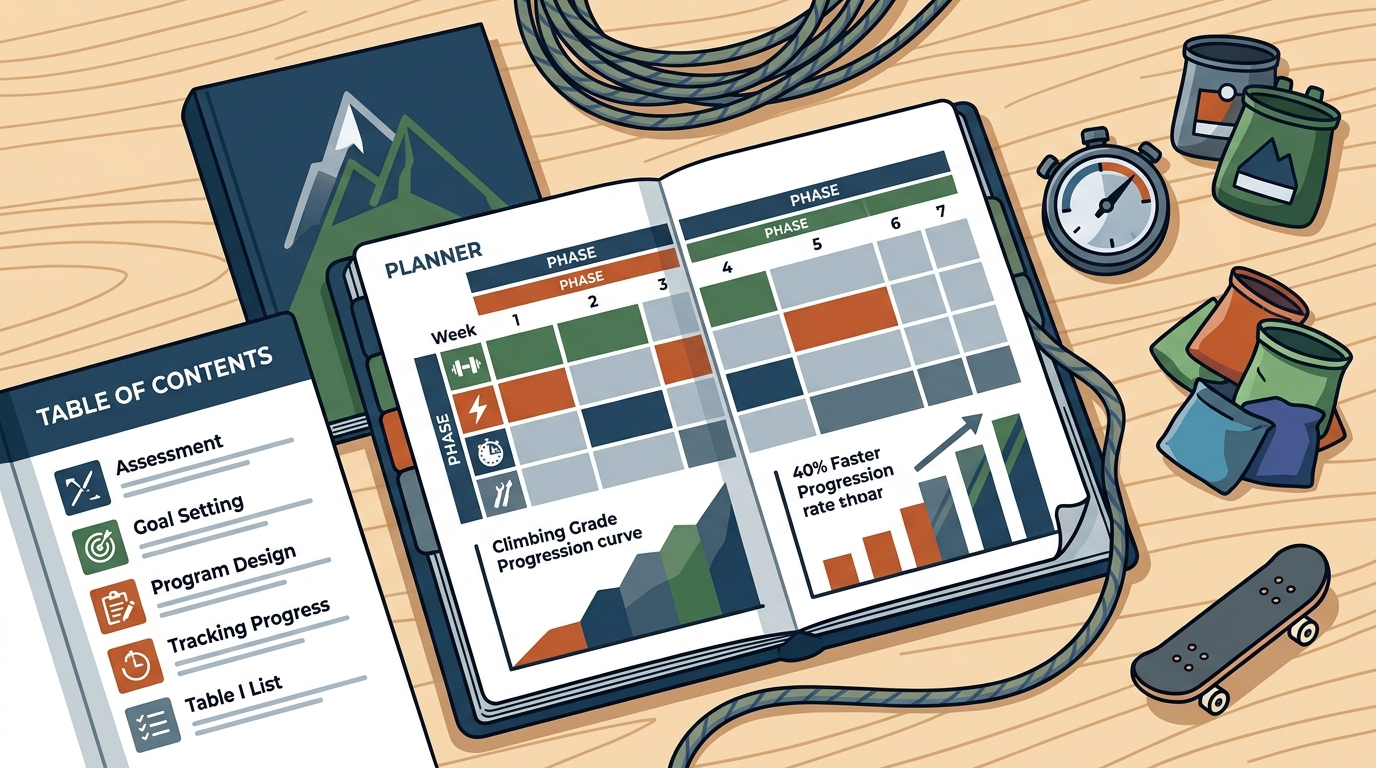
Building a structured climbing regimen is the single most effective way to break through plateaus and reach new grades. According to industry data on athlete development, climbers who follow periodized training protocols see a 40% faster progression rate than those relying on unstructured gym sessions. This guide explains how to design a program that aligns with your specific strengths, weaknesses, and target grades.
Define Your Specific Climbing Goals
Before writing a single workout, you must establish a clear destination. Climbing is not a monolith. It requires distinct physiological profiles depending on the discipline. Bouldering is defined as short, high-intensity routes typically ranging from 3 to 6 moves. Sport climbing is defined as longer routes secured by quickdraws and a rope. Lead climbing is defined as the practice of clipping protection while ascending a route for the first time.
Your training must mirror the energy systems used in your target discipline. Bouldering relies heavily on the phosphagen and glycolytic energy systems, requiring explosive power and anaerobic capacity. Sport climbing demands a robust aerobic base to manage pump and sustain effort over ten minutes or more. If you aim to climb 5.14a grades, your training must prioritize finger strength and power endurance. If your goal is to complete your first V10, the focus shifts to dynamic movement and core tension.
Visit our Custom Plans page to see how specific goals translate into tailored programming. Understanding your "why" prevents wasted effort on irrelevant exercises. For instance, training for a competition requires different volume management than training for outdoor endurance.
Assess Your Current Physical Baseline
Effective programming begins with honest self-assessment. You cannot optimize what you do not measure. Start by identifying your current grade level in both bouldering and sport climbing. More importantly, identify your limiting factors. Do you fail on steep terrain due to lack of core strength? Do you lose grip on small edges due to finger tendon weakness? Do you pump out on long cruxes due to poor forearm endurance?
Coach Charlie Schreiber, founder of Paradigm Climbing, emphasizes that understanding the "why" behind training is crucial. Over 16 years of coaching, he has helped athletes progress from V0 to V17 levels by addressing these specific deficits. You should conduct a self-audit of your movement efficiency. Watch your climbing videos. Look for inefficient weight distribution, excessive hip swinging, or poor foot placement.
For a deeper dive into the coaching philosophy that drives these assessments, read about Coach Charlie Schreiber and his approach to long-term athlete development. This holistic view ensures that your training plan addresses physical, mental, and technical gaps simultaneously.
Structure Your Training Blocks
A personalized plan is not a daily to-do list. It is a periodized structure. Periodization involves cycling through phases of volume, intensity, and rest to prevent overtraining and maximize peak performance. A standard macrocycle might last 12 to 16 weeks. It typically includes a base phase, a build phase, and a peak phase.
The base phase focuses on building aerobic capacity and tendon strength. This is the time for high-volume, low-intensity climbing and hangboarding. The build phase introduces higher intensity. You will climb harder grades for shorter durations, focusing on power and specific cruxes. The peak phase reduces volume significantly while maintaining intensity. This allows your body to supercompensate, resulting in peak strength on your target dates.
Consult our Training Plans section to understand how these blocks are structured in professional programs. Without periodization, climbers often hit a wall where progress stalls due to accumulated fatigue. Proper structuring ensures that you are fresh when it matters most.
Select Targeted Exercises
Once your structure is set, you must select the right exercises. General fitness is insufficient for climbing. You need specificity. Your training should include a mix of climbing-specific strength, mobility, and technique.
Finger strength is defined as the capacity of the flexor tendons and muscles to hold onto small edges. This is built through hangboarding. Start with open-hand hangs and progress to half-crimp positions. Always warm up thoroughly before hangboarding to prevent injury. Core tension is defined as the ability to maintain body position on steep terrain without relying on arm strength. Exercises like plank variations, leg lifts, and dynamic core work are essential.
For mobility, focus on shoulder external rotation and hip flexor flexibility. Tight hips force your center of gravity away from the wall, increasing arm load. Incorporate yoga or dedicated stretching routines into your weekly schedule. For more insights on the technical aspects of climbing, explore our Blog for articles on movement mechanics.
Consider the Full Spectrum approach, which integrates all physical attributes rather than isolating them. This ensures balanced development and reduces the risk of overuse injuries common in specialized training.
Integrate Recovery and Mobility
Recovery is not passive. It is an active part of your training plan. Muscles grow and tendons strengthen during rest, not during the workout. Ignoring recovery leads to plateauing and injury. A common mistake is climbing four to five days a week without deload weeks. A deload week involves reducing volume by 50% to allow connective tissues to repair.
Listen to your body. Pain in the elbows or shoulders is a warning sign, not a challenge to push through. If you experience persistent pain, consult a physiotherapist or a coach. Coach Matt Ratajczak, a professional routesetter and coach, often highlights the importance of listening to early warning signs in our coaching team profiles.
Sleep and nutrition are equally critical. Aim for 7 to 9 hours of sleep per night. Prioritize protein intake to support muscle repair. Hydration affects grip strength and cognitive function, so drink water consistently throughout the day. For more on the mental side of climbing, check out our Testimonies where climbers discuss how mental clarity impacted their physical performance.
Track Progress and Adjust
A plan is only as good as its ability to adapt. You must track your workouts. Use a training log or an app to record your hangboard weights, climbing grades, and perceived exertion. Review this data weekly. Are you getting stronger? Are you recovering faster? If progress stalls, adjust the volume or intensity.
If you are struggling with a specific grade, break it down. Is the crux a power move? Train power. Is it a endurance problem? Train endurance. This iterative process is key to long-term success. For personalized guidance on adjusting your plan, contact our team via the Contact page.
Key Takeaways
- Goal Specificity: Your training must match the energy systems of your target discipline, whether bouldering or sport climbing.
- Periodization: Cycle through base, build, and peak phases to prevent overtraining and maximize peak performance.
- Finger Strength: Use progressive hangboarding to build tendon strength, but always prioritize warm-ups.
- Core Tension: Develop core strength to reduce arm load on steep terrain, improving efficiency.
- Recovery: Include deload weeks and prioritize sleep and nutrition for tissue repair.
- Tracking: Log your workouts to identify trends and make data-driven adjustments.
- Professional Guidance: Consider coaching from experts like Coach Charlie Schreiber to accelerate your progress.
Frequently Asked Questions
How often should I train to see progress?
Most climbers see progress with 3 to 4 training sessions per week. This allows for adequate recovery between intense sessions. Consistency is more important than volume.
What is the best way to build finger strength?
Hangboarding is the most effective method. Start with open-hand hangs on large edges and progress to smaller edges and half-crimp positions. Always warm up thoroughly.
How do I know if I am overtraining?
Signs include persistent joint pain, decreased performance, fatigue, and irritability. If you experience these symptoms, take a deload week or consult a coach.
Can I train for bouldering and sport climbing simultaneously?
Yes, but you must balance the volume. Bouldering is high-intensity, while sport climbing is often aerobic. Prioritize your main goal and maintain the secondary goal with lower volume.
How long does it take to climb a new grade?
Progress varies by individual. Some climbers advance a grade in a few months, while others take years. Consistent, periodized training accelerates this process significantly.
Do I need a coach to create a training plan?
While you can create a plan yourself, a coach provides expertise in periodization, injury prevention, and technical correction. Coach Charlie Schreiber has mentored athletes from V0 to V17 levels.
What is the importance of mobility in climbing?
Mobility allows for better body positioning and reduces injury risk. Tight hips and shoulders force inefficient movement patterns. Regular stretching and yoga improve climbing efficiency.
Start Your Custom Plan
Stop guessing and start climbing with purpose. A personalized training plan is the bridge between where you are and where you want to be. Whether you aim to send your first V10 or compete at the World Cup level, the right structure makes all the difference. Explore our Custom Plans to find the perfect fit for your journey. Contact us today to begin your transformation.