
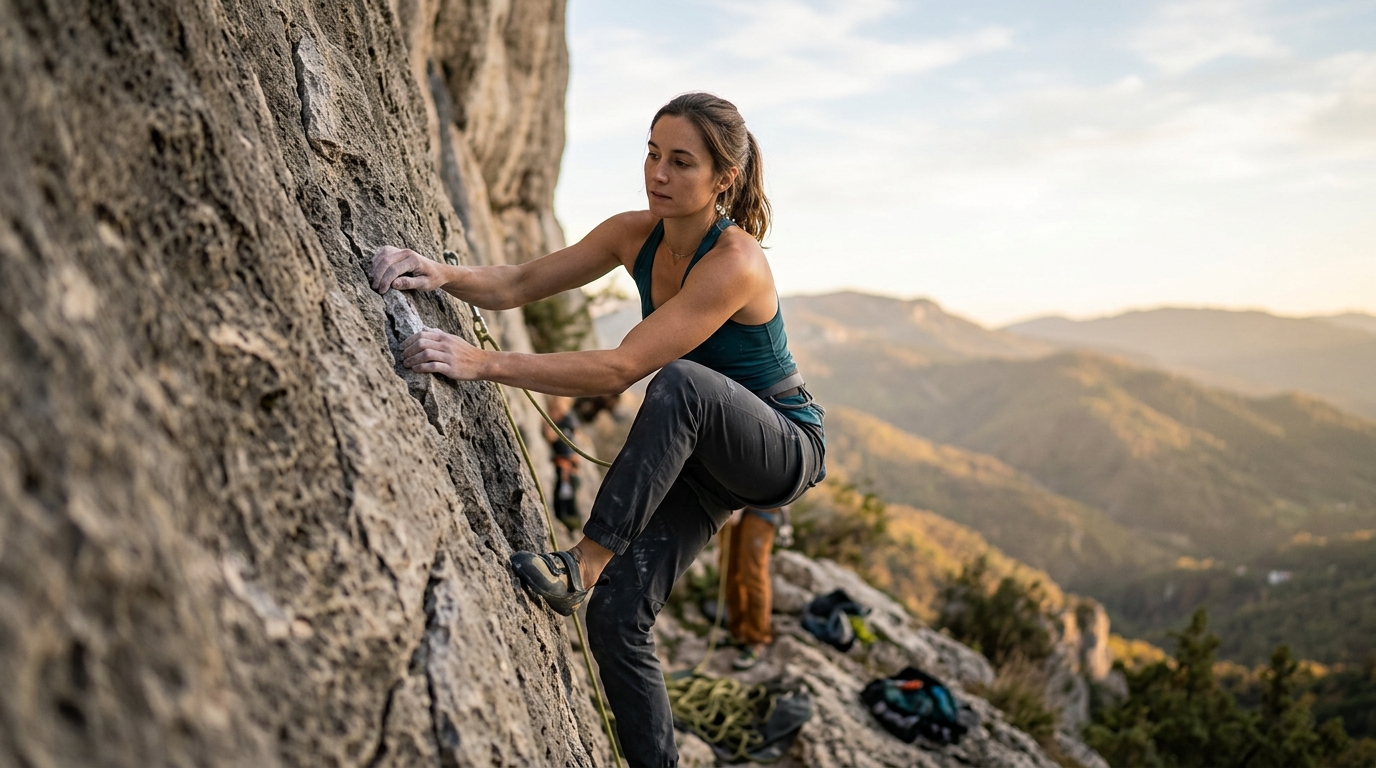
Most climbers believe that raw strength is the primary driver of progress. This assumption is fundamentally flawed and often leads to plateaus or injury. According to data from the International Federation of Sport Climbing, elite performance relies heavily on biomechanical efficiency rather than brute force alone. When you optimize your movement patterns, you reduce energy expenditure significantly. This guide details the specific methodologies used by professional coaches to transform unstructured climbing into precise, sustainable progress.
Understanding Climbing Efficiency
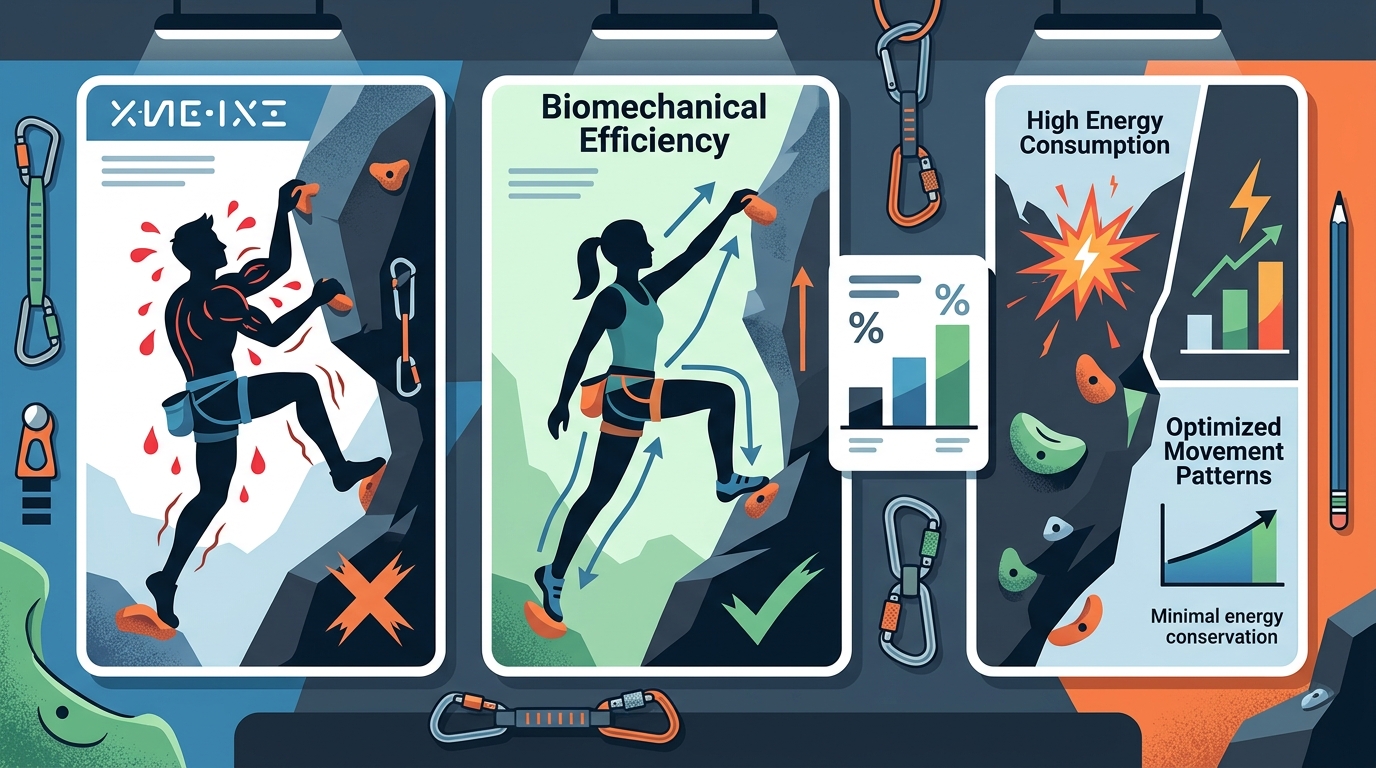
Climbing efficiency is the ratio of upward progress to energy consumed. It is not merely about moving quickly. It is about moving economically. When a climber uses their skeletal structure to support their weight, their muscles can rest. This concept is critical for long routes or high-difficulty boulder problems. Many climbers fail because they rely on their arms to pull their entire body weight. This approach depletes glycogen stores rapidly and leads to premature failure.
Effective technique requires a holistic approach to physical and mental profiles. At Paradigm Climbing, we emphasize that understanding why training works is more important than just knowing what to do. By addressing all areas of your performance, you can move beyond unstructured training. This allows you to take ownership of your progress and achieve sustainable growth.
Research in sports physiology indicates that efficient climbers use less oxygen at the same intensity compared to inefficient climbers. This metabolic advantage allows for longer endurance and better recovery between moves. The goal is to minimize the workload on your forearms. Your forearms are the limiting factor for most climbers. By optimizing your technique, you protect these muscles from overtraining and injury.
Footwork Mastery and Precision
Footwork is the foundation of climbing efficiency. Your feet are your primary contact points with the wall. Using them effectively reduces the load on your hands and arms. Precision is more important than size. A small foothold can support your entire body weight if placed correctly. This requires acute spatial awareness and deliberate movement.
Placement Accuracy
Every foot placement must be intentional. You should aim to place the toe of your climbing shoe on the very edge of the hold. This maximizes friction and stability. Avoid placing your foot in the middle of a hold unless necessary. This reduces your leverage and increases the chance of slipping. Consistent practice of precise footwork builds muscle memory. Over time, this becomes automatic during difficult climbs.
Heel Hooks and Toe Hooks
Advanced footwork includes hooks. A heel hook involves using your heel to catch a hold behind you. This technique stabilizes your body and allows your hands to rest. It is particularly useful on slab climbs or when traversing. A toe hook uses the top of your shoe to catch a hold above you. This is common in overhanging terrain. Both techniques require core strength and flexibility. Incorporating these into your training can unlock new beta possibilities.
For more insights on training methodologies, visit our training plans page. These resources are designed to help you integrate footwork drills into your routine effectively.
Body Positioning and Center of Gravity
Your body position determines your balance and leverage. Keeping your center of gravity close to the wall is a fundamental principle. This reduces the moment arm that your arms must counteract. When your hips are far from the wall, your arms work exponentially harder. This is why many climbers struggle with overhangs. They fail to adjust their body position to maintain proximity to the wall.
Hip Orientation
The orientation of your hips affects your reach and stability. Turning your hips toward the wall allows you to reach further with your opposite hand. This is known as flagging. It also helps in maintaining balance on small footholds. Practicing hip rotation in low-angle terrain can help you develop this skill. You should feel your hips moving smoothly as you transition between holds.
Flagging and Counterbalancing
Flagging is a technique where you extend one leg out to the side to counterbalance your body. This prevents your hips from swinging away from the wall. It is essential for maintaining balance on thin edges or when making long reaches. Counterbalancing involves using your arms and legs to create a stable triangle. This allows you to shift your weight safely between holds. Mastering these techniques requires practice and body awareness.
According to biomechanical studies, climbers who maintain a low center of gravity use less muscle activation in their forearms. This efficiency gain is significant over the course of a climb. For detailed analysis of these principles, refer to climbing biomechanics research.
Weight Shifting and Balance
Weight shifting is the dynamic process of moving your center of gravity from one support point to another. This is the core of climbing movement. It requires smooth, controlled transitions. Jerky movements waste energy and disrupt balance. You should aim to move your hips directly over your feet before reaching for the next hold. This ensures that your feet are supporting your weight before you release your hands.
Static vs. Dynamic Movement
Static movement involves moving slowly and deliberately. It is the most efficient method for technical climbing. Dynamic movement involves using momentum to reach distant holds. This is useful for powerful moves but less efficient for sustained climbing. Understanding when to use each method is key. Static climbing builds strength and precision. Dynamic climbing builds power and coordination. A balanced training program includes both.
Reading the Route
Before you climb, analyze the route. Identify the key holds and plan your sequence. This mental rehearsal helps you execute the moves with confidence. It also allows you to anticipate difficult sections. By visualizing the movement, you can prepare your body for the specific demands. This cognitive aspect of climbing is often overlooked but is crucial for efficiency.
Our coach Charlie Schreiber emphasizes the importance of periodized training protocols. These protocols control volume, duration, and load to optimize performance. You can learn more about our approach on the custom plans page.
Training Methods for Technique
Improving technique requires specific training methods. General climbing is not enough. You must isolate and practice specific skills. This includes footwork drills, balance exercises, and route reading. Consistency is key. Regular practice of these skills will lead to noticeable improvements in your climbing.
Drills for Precision
One effective drill is the silent foot drill. Climb a route while trying to make no sound with your feet. This forces you to place your feet precisely and quietly. Another drill is the one-foot drill. Climb using only one foot for several moves. This improves your balance and core strength. These drills can be incorporated into your regular climbing sessions.
Strength and Conditioning
While technique is paramount, strength supports it. A certified strength and conditioning coach can help you develop a program that complements your climbing. This includes exercises for core stability, finger strength, and shoulder health. Preventing injury is as important as improving performance. Proper conditioning ensures that your body can handle the demands of climbing.
At Paradigm Climbing, we provide resources and coaching to help you build a strong foundation. Our coaches have extensive experience in long-term athlete development. We focus on helping climbers understand the science behind their training.
Key Takeaways
- Precision Over Power: Accurate foot placement reduces forearm load significantly.
- Center of Gravity: Keeping hips close to the wall improves leverage and efficiency.
- Holistic Training: Addressing physical and mental profiles leads to sustainable progress.
- Periodization: Controlled volume and load prevent overtraining and injury.
- Route Reading: Mental rehearsal enhances execution and confidence on the wall.
- Professional Guidance: Coaching from experts like Charlie Schreiber accelerates learning.
- Consistent Practice: Regular drills build the muscle memory needed for efficiency.
Frequently Asked Questions
How do I improve my footwork?
Focus on placing the toe of your shoe on the edge of the hold. Practice the silent foot drill to increase precision. Regularly climb routes that require precise foot placement to build muscle memory.
What is the most important body position for climbing?
Keeping your center of gravity close to the wall is crucial. This reduces the strain on your arms and allows for more efficient movement. Practice hip orientation and flagging to maintain this position.
How does periodization help climbers?
Periodization controls training volume and intensity to optimize performance and prevent injury. It ensures that you peak at the right time and recover adequately. This structured approach leads to long-term progress.
Can I improve climbing technique without a coach?
Yes, but a coach provides personalized feedback and structured plans. Self-study can be effective, but professional guidance accelerates learning and helps avoid bad habits. Resources like our blog offer valuable insights.
What is the difference between static and dynamic climbing?
Static climbing involves slow, controlled movements for efficiency. Dynamic climbing uses momentum for power. Both are important, but static climbing is generally more efficient for technical routes.
How often should I train climbing technique?
Integrate technique drills into your regular climbing sessions. Aim for at least two sessions per week focused on precision and balance. Consistency is more important than intensity.
What role does mental training play in climbing?
Mental training helps you stay focused and manage fear. Route reading and visualization prepare you for the physical demands. A strong mental profile complements your physical skills.
Start Your Custom Plan
Ready to transform your climbing? Stop guessing and start training with purpose. Our custom-designed climbing training programs are built to accomplish your specific goals. Whether you are a beginner or an elite athlete, we have the expertise to guide you. Visit our contact page to book a consultation. Take the first step toward maximizing your climbing potential today.