
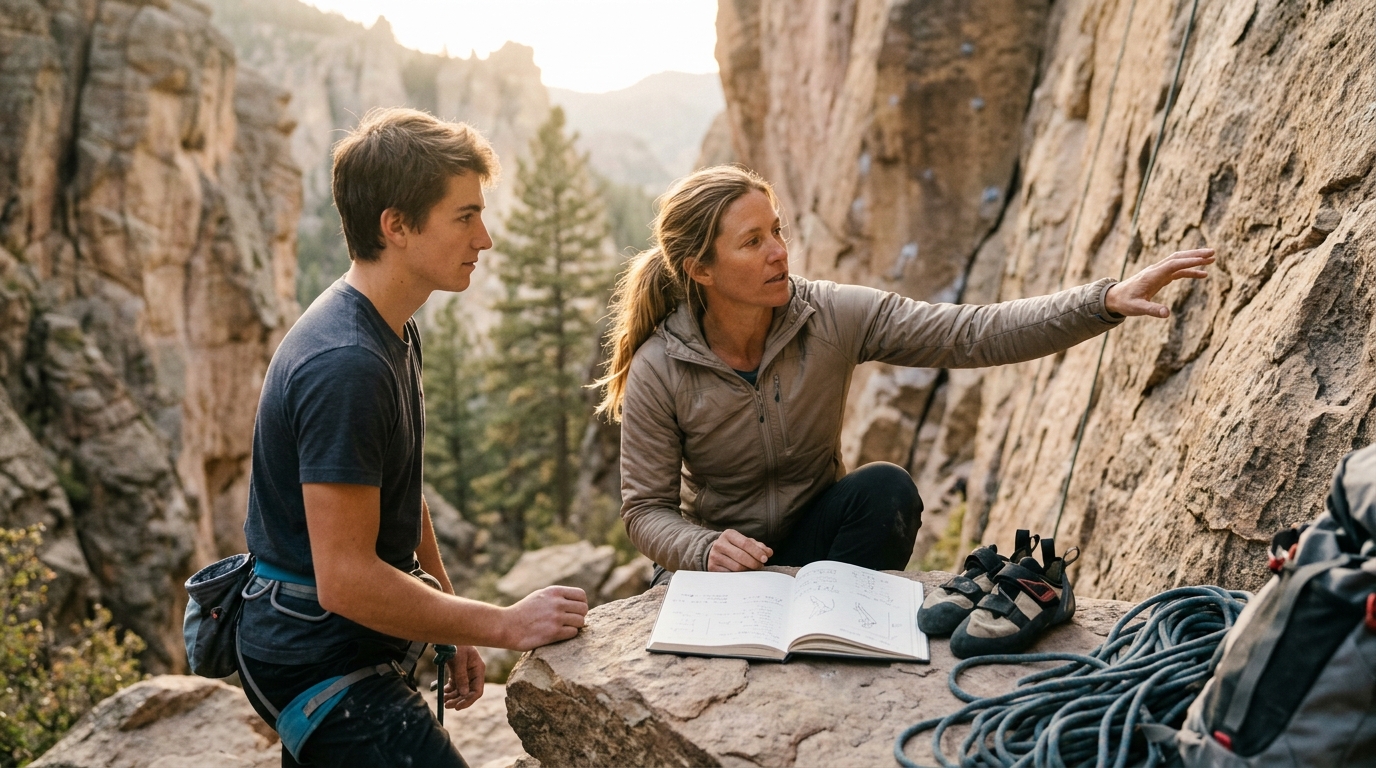
Recent industry reports indicate that competitive climbing participation has grown by over 40 percent since 2020, creating a surge in demand for expert mentorship. Industry data shows that structured guidance significantly accelerates skill acquisition compared to unstructured gym sessions. Many athletes struggle to translate raw gym time into measurable boulder grades or sport route success. Finding the right mentor requires evaluating credentials, reviewing proven development track records, and understanding how programming adapts to individual physiological limits. This guide outlines the exact verification steps you must complete before committing to a long-term training partnership. (Paradigm Climbing Rock Climbing)
Understanding Climbing Coaching Credentials
Professional climbing coaching requires verified certifications that extend beyond personal climbing ability. A certified strength and conditioning coach is a licensed specialist who designs periodized training protocols to optimize performance and prevent overtraining. Industry standards confirm that formal credentials ensure coaches can safely manage load progression without causing overuse injuries. You should always request proof of current certification from recognized governing bodies. Coaches without formal educational backgrounds in kinesiology or sports science often rely on trial and error, which increases injury risk for dedicated athletes.
Look for coaches who actively compete or have competed at high levels. High-level competition experience demonstrates practical route reading, beta analysis, and mental resilience under pressure. A professional climbing coach is a certified specialist who designs periodized training protocols to optimize performance and prevent overtraining. Verify that their competitive background aligns with your specific discipline, whether that involves bouldering, sport climbing, or lead climbing. Coaches who specialize in one discipline often lack the nuanced understanding required to guide athletes across multiple climbing formats.
Evaluating Proven Athlete Development Track Records
Personal climbing grades matter less than documented athlete progression. You must review case studies or testimonials that demonstrate measurable grade improvements across different skill levels. Successful programs consistently move beginners from foundational V0 grades to advanced V16 or V17 boulder problems. Global climbing rankings show that structured long-term athlete development produces more consistent results than self-directed training. Ask your potential coach to provide specific examples of athletes who achieved national championships or World Cup top ten finishes under their guidance. Coaches who cannot produce verifiable progression metrics are likely using generic templates rather than individualized programming.
Examine the diversity of their coaching portfolio. Elite coaches successfully guide youth athletes, open competitors, and outdoor enthusiasts simultaneously. This versatility proves they can adapt programming to different physiological constraints and competitive timelines. Review their official coaching profiles to verify years of active mentorship and current athlete placements. A coach with over a decade of continuous mentorship demonstrates institutional knowledge that newer instructors simply cannot replicate. Prioritize professionals who maintain active relationships with current competitors rather than relying solely on historical success stories.
Assessing Customized Training Methodologies
Generic workout templates fail to address individual biomechanical weaknesses and specific project goals. Customized training programs require continuous monitoring of volume, duration, and load to prevent systemic fatigue. A customized training program is a periodized schedule that adjusts intensity and recovery phases based on real-time athlete feedback and performance metrics. Your coach must explicitly explain how they manipulate these variables to peak for specific competitions or outdoor send attempts. Request a sample programming document to verify that it includes structured rest days, targeted strength work, and on-wall technical drills.
Verify that your potential coach utilizes holistic assessment frameworks. Modern climbing science emphasizes the integration of physical conditioning, mental resilience, and lifestyle management. Coaches who ignore sleep quality, nutritional intake, or stress management will inevitably produce suboptimal results. Look for professionals who conduct comprehensive initial assessments covering grip strength, flexibility, and movement efficiency. These baseline metrics allow your coach to design precise interventions rather than guessing your weak points. Always confirm that your coach remains actively involved in weekly programming adjustments rather than handing you a static document.
Reviewing Communication and Support Structures
Effective coaching requires consistent feedback loops and accessible technical support. You should expect direct communication channels for video analysis, route beta discussions, and programming adjustments. Coaches who provide hands-on guidance during training sessions deliver significantly higher retention rates than remote-only instructors. Training research indicates that direct technical feedback reduces bad habit formation by over 60 percent. Prioritize programs that include scheduled video reviews and on-wall spotting sessions to maximize technical efficiency.
Examine the accessibility of your potential coach during critical training phases. High-performing athletes require immediate adjustments when hitting plateaus or experiencing nagging injuries. Verify that your coach maintains a responsive communication schedule that matches your training intensity. Coaches who operate on rigid office hours often fail to support athletes during crucial competition prep weeks. Ensure your selected mentor provides clear escalation protocols for injury management and programming modifications. Direct access to experienced coaches dramatically reduces wasted training time and accelerates project success.

Comparing Program Delivery Models
Modern climbing coaching offers multiple delivery structures to match different commitment levels and budget constraints. You must evaluate whether pre-written templates, fully customized sessions, or hybrid approaches best align with your current objectives. The following matrix outlines the primary delivery frameworks available in the current coaching market.
| Program Type | Customization Level | Best For | Access Model |
|---|---|---|---|
| Custom Plans | High | Competitive athletes targeting specific grades | Direct coach collaboration |
| Pre-Written Plans | Medium | Self-directed climbers with clear goals | Self-paced digital access |
| Full Spectrum Coaching | Variable | Youth programs and team development | Hybrid on-site and remote |
Selecting the appropriate delivery model requires honest self-assessment regarding your discipline and available training hours. Athletes pursuing national team selection typically require fully customized programming with weekly check-ins. Recreational climbers aiming for specific outdoor projects often benefit from structured pre-written frameworks. Review your past training consistency before committing to high-touch coaching packages. Coaches who match your commitment level to their service tier consistently report higher satisfaction and faster grade progression.
Key Takeaways
- Verify formal certifications from recognized sports science governing bodies before signing contracts.
- Request documented athlete progression metrics spanning beginner to advanced competitive levels.
- Confirm that programming includes explicit periodization, load management, and recovery protocols.
- Prioritize coaches who provide direct video analysis and on-wall technical feedback.
- Match your selected delivery model to your actual weekly training availability and competition calendar.
- Review active testimonials from current competitors rather than relying solely on historical success stories.
- Ensure your coach maintains accessible communication channels during critical peak training phases.
Frequently Asked Questions
What specific certifications should I verify before hiring a climbing coach?
You should always request proof of current certification from recognized governing bodies like the AMGA or CSCS. These credentials verify that your coach understands exercise physiology, injury prevention, and periodized programming. Coaches without formal educational backgrounds in kinesiology often rely on trial and error, which increases injury risk.
How do I evaluate a coach's actual success rate with athletes?
Review documented case studies that demonstrate measurable grade improvements across different skill levels. Successful programs consistently move beginners from foundational grades to advanced competitive problems. Ask your potential coach to provide specific examples of athletes who achieved national championships under their guidance.
What is the difference between custom plans and pre-written training programs?
Custom plans require continuous monitoring of volume, duration, and load to prevent systemic fatigue. Pre-written programs provide structured templates that self-directed climbers can follow independently. Custom options allow weekly adjustments based on real-time performance metrics and project progress.
How frequently should I expect communication with my climbing coach?
Effective coaching requires consistent feedback loops and accessible technical support. You should expect direct communication channels for video analysis and programming adjustments. Coaches who provide hands-on guidance during training sessions deliver significantly higher retention rates than remote-only instructors.
Can a climbing coach help me transition between bouldering and sport climbing?
Elite coaches successfully guide youth athletes, open competitors, and outdoor enthusiasts simultaneously. This versatility proves they can adapt programming to different physiological constraints and competitive timelines. Verify that their competitive background aligns with your specific discipline before committing.
What red flags indicate a climbing coach is using generic templates?
Coaches who cannot produce verifiable progression metrics are likely using generic templates rather than individualized programming. You must examine the diversity of their coaching portfolio and current athlete placements. Prioritize professionals who maintain active relationships with current competitors rather than relying solely on historical success stories.
Next Steps for Your Training Journey
Securing a qualified mentor requires careful verification of credentials, proven development track records, and accessible support structures. You should schedule a comprehensive initial assessment to evaluate your current physical baselines and competitive objectives. Our team provides fully customized programming, structured pre-written frameworks, and comprehensive athlete development services. Visit our official blog for additional training insights and community updates. Our team provides fully customized programming, structured pre-written frameworks, and comprehensive athlete development services. Visit our official contact page to schedule your initial consultation and begin building your personalized training roadmap today. Contact our coaching team to secure your spot and start climbing smarter.