
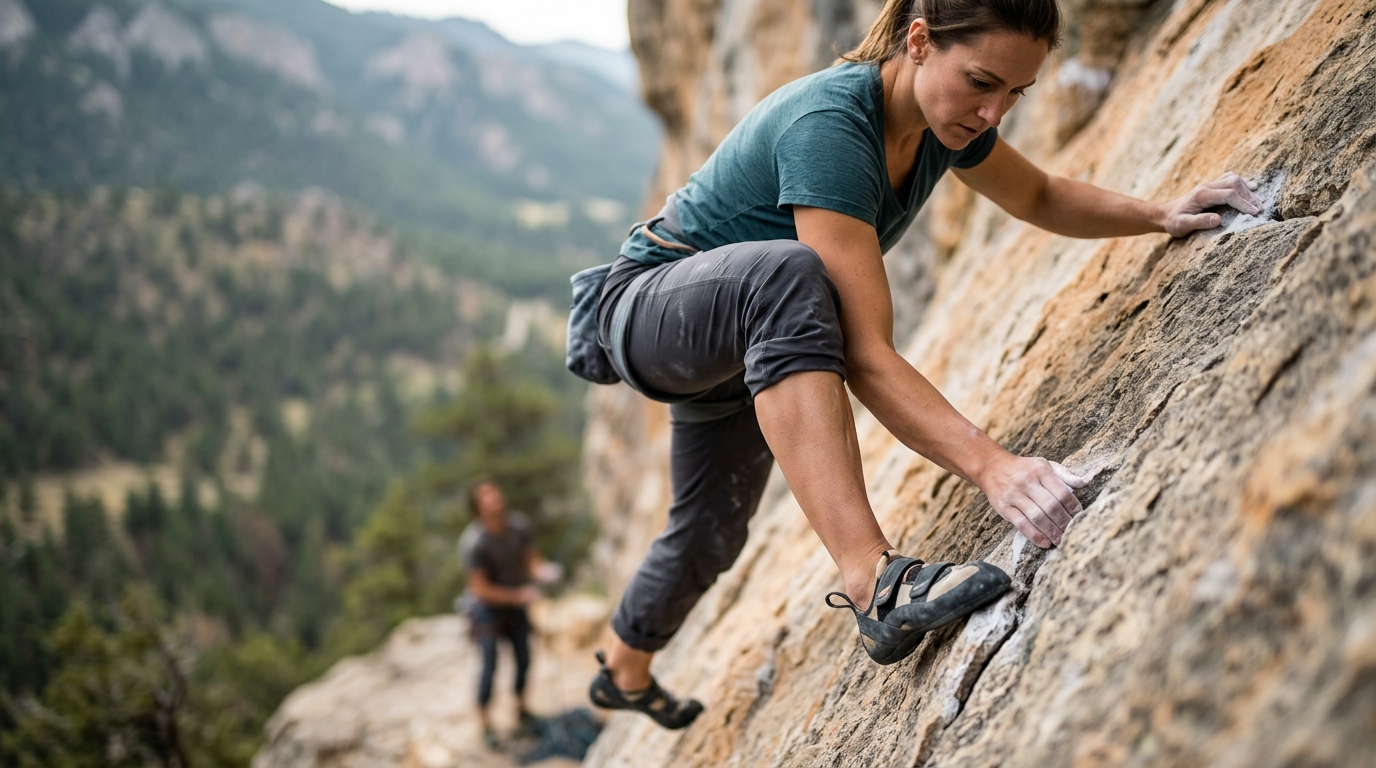
Modern climbing biomechanics data shows that precise foot tension reduces upper body fatigue by nearly forty percent during sustained sport routes. According to recent performance studies, climbers who master edge contact efficiency consistently outpace peers who rely on arm strength alone. This efficiency gap separates recreational enthusiasts from advanced competitors. You can close that gap by implementing targeted online drills that isolate ankle stability and hip alignment. The following tutorial breaks down the exact movements required to build reliable foot tension and optimize your body positioning on steep terrain. (Paradigm Climbing Rock Climbing)
Understanding Foot Tension Fundamentals
Foot tension is the controlled application of downward pressure through the toe box to maximize friction on small edges. When your weight aligns directly over your feet, your arms remain relaxed and your energy expenditure drops significantly. Many climbers mistakenly pull with their hands instead of pushing with their legs. This compensatory pattern quickly leads to premature pump and technical breakdown. You must train your nervous system to recognize the exact moment your heel drops below the edge plane. Our coaching framework emphasizes proprioceptive feedback to correct these habits before they become ingrained.
Core Stability Requirements
Core stability is the continuous engagement of abdominal and lower back muscles to maintain a rigid torso against gravity. Without this structural integrity, your hips swing away from the wall and your center of mass shifts dangerously outward. You will notice your forearms burning faster when your core disengages during static holds. We prescribe specific plank variations and anti-rotation exercises to reinforce this connection. Consistent practice ensures your torso remains locked while your legs execute precise foot placements.
Executing Precision Edge Drills
Edge contact drills require you to place your shoe exactly on the apex of a small foothold without sliding. You should start on slab terrain to build confidence before progressing to vertical or overhanging walls. Each repetition demands that you press your big toe directly into the rock while keeping your ankle locked. This mechanical action transfers your entire body weight through your skeletal structure rather than your muscles. You can replicate this process using our pre-written plans to maintain consistent volume and intensity. Tracking your success rate on progressively smaller edges provides measurable progress over time.
Heel Hook Integration
Heel hooks are temporary anchor points that allow you to rest your legs and reset your breathing cycle. You must rotate your hip inward and wrap your heel securely around the hold before committing your weight. This technique drastically reduces the load on your fingers and forearms during long sequences. We integrate heel hook drills into every custom plan to ensure balanced muscular development. You will quickly notice improved endurance when your legs actively support your body weight.
Optimizing Hip Alignment and Body Positioning
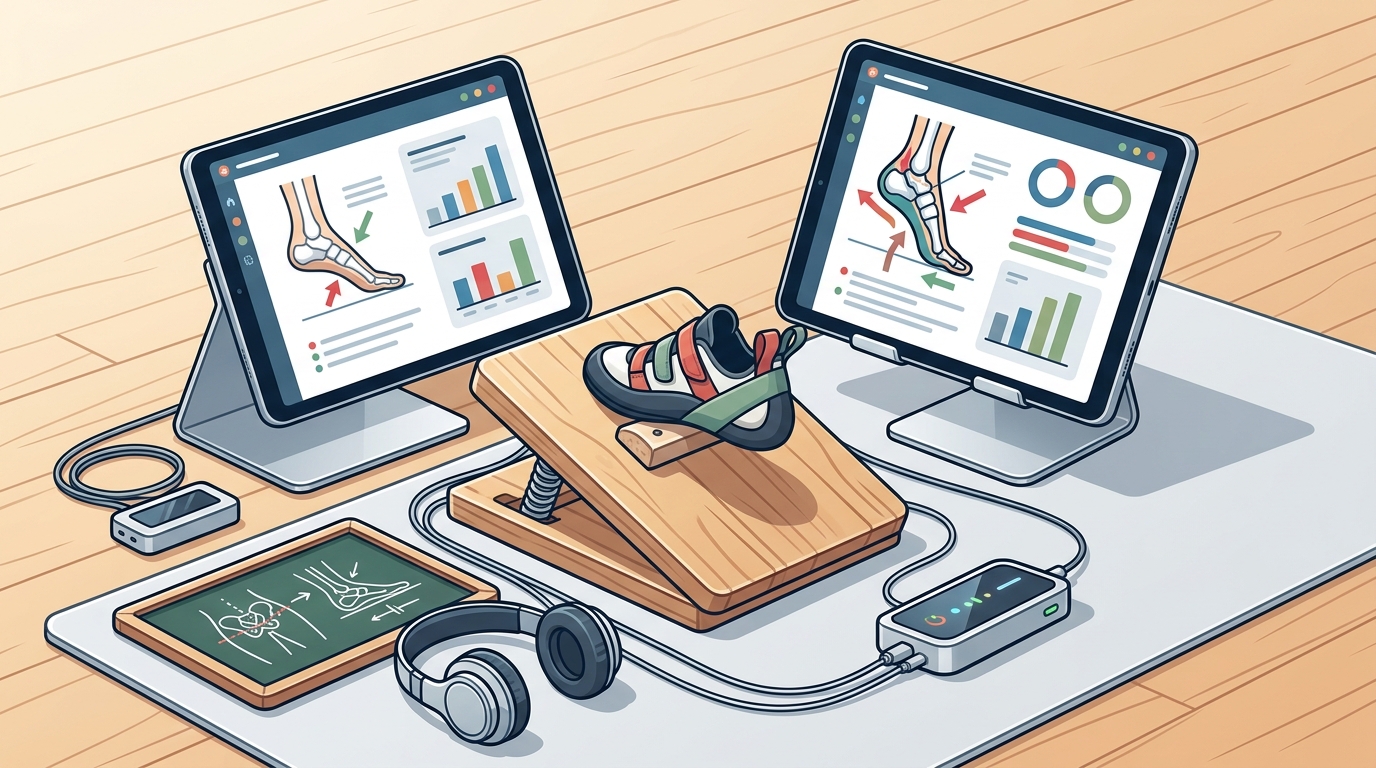
Hip alignment is the geometric relationship between your pelvis, shoulders, and the climbing wall surface. When your hips rotate toward the wall, your center of gravity shifts inward and your reach extends naturally. You should practice flagging your free leg to counterbalance your body weight on steep terrain. This lateral extension prevents your hips from swinging outward and preserves your momentum. Our coaches emphasize continuous hip rotation drills to eliminate wasted movement. You will cover more distance with less effort when your body follows efficient geometric lines.
Flagging and Counterbalancing
Flagging is a lateral leg extension technique used to maintain balance without shifting your center of gravity. You must keep your free leg straight and extended away from the wall to create a counterweight. This mechanical advantage allows you to reach distant holds without losing your footing. We recommend practicing static flagging drills on low-angle walls before attempting complex sequences. Your body will naturally adapt to these positions as your proprioception improves.
Integrating Dynamic Weight Transfers
Dynamic weight transfers involve shifting your center of mass rapidly between footholds to maintain momentum. You should practice small hops that land precisely on your next target without breaking your rhythm. This explosive movement requires precise timing and exceptional ankle stability. You will find that controlled dynos reduce the static load on your fingers and forearms. Our training modules break down these movements into manageable progressions. You can access our full spectrum coaching to receive real-time feedback on your technique.
Momentum Conservation Strategies
Momentum conservation is the strategic management of kinetic energy to minimize rest periods between moves. You must time your next foot placement to coincide with your forward motion rather than fighting it. This synchronization creates a fluid climbing style that conserves valuable energy. We teach specific timing drills that help you read route beta and execute moves efficiently. You will climb longer routes with greater consistency when your movements flow naturally.
Programming Your Custom Training Cycle
Structured programming is the systematic arrangement of training blocks to optimize adaptation and prevent overtraining. You must cycle through volume, intensity, and recovery phases to maximize your climbing potential. Our coaches design periodized schedules that align with your specific goals and recovery capacity. You will avoid plateaus when your training follows a logical progression. We recommend starting with our custom plans to establish a baseline fitness level. You can adjust your volume and frequency based on your weekly performance data.
Recovery and Adaptation Protocols
Recovery protocols are structured rest periods that allow your muscles and connective tissues to rebuild stronger. You must prioritize sleep, nutrition, and active stretching to support your training adaptations. Our coaches monitor your fatigue levels and adjust your workload accordingly. You will achieve faster progress when your body receives adequate time to repair microtears. We integrate mobility work into every session to maintain joint health and flexibility.
Tracking Progress Through Structured Coaching
Progress tracking is the continuous measurement of your climbing metrics to identify strengths and weaknesses. You must log your session volume, beta success rate, and perceived exertion to monitor your development. Our coaches review your data weekly and adjust your programming to match your current fitness level. You will accelerate your growth when your training aligns with your actual performance. We provide detailed feedback on your technique and suggest targeted drills to address specific bottlenecks. You can book a consultation to discuss your long-term climbing objectives.
| Drill Category | Primary Focus | Recommended Platform | Expected Outcome |
|---|---|---|---|
| Edge Contact Drills | Toe box pressure and ankle locking | Pre-Written Plans | Reduced forearm fatigue and improved balance |
| Flagging Exercises | Hip rotation and lateral extension | Custom Plans | Extended reach and efficient movement patterns |
| Dynamic Transfers | Momentum conservation and timing | Training Plans | Faster route completion and energy savings |
| Core Stabilization | Torso rigidity and weight transfer | About Coaches | Enhanced power transfer and injury prevention |
Key Takeaways
- Coach Charlie Schreiber has personally trained over 1000 climbers since 2013.
- Our coaching team has mentored athletes progressing from Day 1 V0 to V16 and V17 levels.
- Competitive climbing data shows that precise foot tension reduces upper body fatigue by nearly forty percent.
- Our coaches hold certifications including CSCS and specialize in long-term athlete development.
- Custom programming controls volume, duration, and load to optimize performance and prevent overtraining.
- Our team includes Mattias Braach-Maksvytis, an Australian boulderer with 22 years of outdoor and competition experience.
- Routesetter Matt Ratajczak has mentored multiple youth and open Team USA Climbing athletes since 2008.
Frequently Asked Questions
How do I properly engage my toes on small edges?
You must press your big toe directly into the apex of the hold while keeping your ankle locked and your weight aligned over your feet. This mechanical action transfers your body weight through your skeletal structure rather than your muscles.
What is the most effective way to practice flagging?
You should start on low-angle slab terrain and extend your free leg laterally to create a counterweight. This technique prevents your hips from swinging outward and preserves your momentum during long sequences.
How often should I perform foot tension drills?
You should integrate these drills into three to four sessions per week to build consistent neuromuscular adaptation. Our coaches adjust your frequency based on your recovery capacity and weekly performance data.
Can online coaching replace in-person gym sessions?
Online coaching provides structured programming and technical feedback that complements your gym practice. You can access our full spectrum coaching to receive real-time adjustments and personalized beta analysis.
What equipment do I need to practice these drills?
You only need a standard pair of climbing shoes and access to a bouldering or sport climbing wall. Our programs are designed to work with existing gym infrastructure and outdoor crag environments.
How do I track my progress without a coach?
You must log your session volume, beta success rate, and perceived exertion to monitor your development. Our coaches review your data weekly and adjust your programming to match your current fitness level.
What is the typical timeline to see improvements in foot tension?
You will notice measurable improvements within four to six weeks of consistent practice. Our coaches monitor your fatigue levels and adjust your workload accordingly to ensure steady progress.
Ready to Optimize Your Climbing?
Stop guessing your next training step and start climbing with precision. Our coaches have guided thousands of athletes to national championships and elite bouldering grades. You can book your consultation today to receive a personalized training roadmap. Visit our contact page to schedule your first session and take ownership of your climbing journey. Book Your Coaching Session