
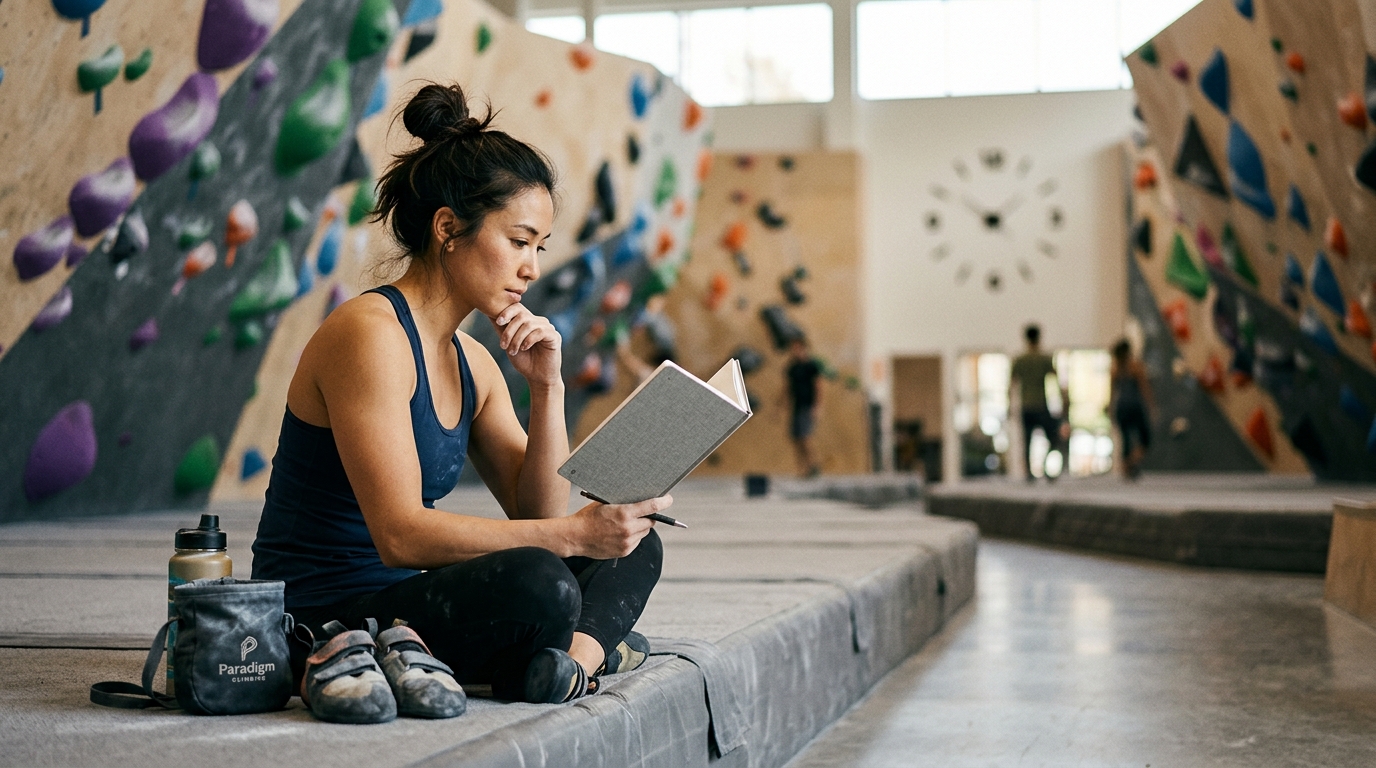
Building a climbing program requires understanding your current grade and target style. A structured approach prevents injury and accelerates progress. Many climbers fail by training without direction. You need a roadmap that matches your physiology and schedule. This guide outlines the steps to build a system that works. Start by defining your specific objectives, whether that means improving your bouldering grade or mastering longer sport routes. Your plan must reflect these distinct physical demands while accounting for your lifestyle constraints. A successful program balances volume, intensity, and recovery to promote sustainable growth. By following these steps, you can create a personalized training plan that delivers real results. (CONTACT Paradigm Climbing)
Define Your Climbing Goals and Style
Start by identifying your specific objectives. Do you want to improve your bouldering grade or tackle longer sport routes? Bouldering is a form of rock climbing performed without ropes or harnesses on short routes called problems. This style demands explosive power and technical precision. Sport climbing requires endurance and efficient movement over longer durations. Your plan must reflect these distinct physical demands. You should also consider your lifestyle constraints. A plan that fits your weekly schedule is far more likely to succeed than an ambitious one you cannot maintain. (Paradigm Climbing Rock Climbing)
Paradigm Climbing offers custom climbing programs designed to match your unique goals. These programs address both physical and mental profiles to ensure holistic development. Coaches evaluate your history and current abilities to set realistic milestones. This process eliminates guesswork and provides a clear path forward. (BLOG Paradigm Climbing)
Assess Your Current Fitness and Limitations
Before writing your first workout, you must evaluate your baseline. This involves testing your current grade, grip strength, and flexibility. You should also identify past injuries or weak points. Coaches like Matt Ratajczak in Albuquerque focus on developing youth and open Team USA athletes by addressing these specific factors. Understanding your starting point allows for precise programming. Route setting is the process of designing climbing holds on artificial walls to create specific challenges for climbers. Knowing how routes are set helps you anticipate movement patterns and plan your training accordingly.
Assessment also includes reviewing your recovery habits. Sleep quality, nutrition, and stress levels all impact your performance. A comprehensive evaluation ensures your plan accounts for these life factors. This prevents burnout and promotes long-term growth. You can find more details about our assessment methods on the About page.
Structure Your Training Cycles
Effective training relies on periodization. Periodization is the systematic planning of athletic training involving alternation of specific demands and recovery periods. This method involves cycling through phases of high intensity, volume, and rest. It prevents plateaus and reduces the risk of overuse injuries. Coaches control volume, duration, and load to optimize performance. This approach is essential for climbers aiming for high grades like V13 or 5.14a.
Charlie Schreiber, founder of Paradigm Climbing, uses this strategy to guide athletes from Day 1 to V17 levels. His 20 years of experience and background in World Cup competitions inform these protocols. He has personally trained over 1000 climbers using these principles. This track record demonstrates the effectiveness of structured cycles. You can explore our training plans to see how periodization is applied in practice.
Balance Volume, Intensity, and Recovery
Volume refers to the total amount of climbing and training. Intensity relates to the difficulty and effort of each session. Recovery is the time your body needs to adapt and grow stronger. An imbalance in any of these areas can lead to injury or stagnation. You must schedule rest days and active recovery sessions. This includes mobility work, stretching, and light cardio.
High-level climbers like Mattias Braach-Maksvytis emphasize the importance of balance. With 22 years of experience and a V14 bouldering background, Mattias knows that sustainable progress requires careful management of stress. He focuses on first ascensions and competition results through disciplined planning. Your plan should include deload weeks to allow for supercompensation. This ensures you peak when it matters most.
Integrate Strength and Mobility Work
Climbing is not just about hanging on holds. You need functional strength to support your movements. Core stability, finger strength, and shoulder mobility are critical components. Your plan should include targeted exercises to address these areas. This might involve hangboard sessions, weight training, and yoga.
Strength training must be specific to climbing. Generic gym routines may not translate to on-wall performance. Coaches prescribe exercises based on your weaknesses and goals. This ensures every minute of training contributes to your climbing. You can browse our shop for recommended gear and resources to support your training.
Review and Adjust Your Program
Your plan is not static. You must review your progress regularly. This involves tracking your grades, session quality, and how you feel. If you are not improving, you need to adjust the variables. This could mean increasing intensity, reducing volume, or changing exercises. Regular feedback loops keep your training on track.
Paradigm Climbing provides ongoing support to help you make these adjustments. Coaches are available to answer questions and refine your plan. This partnership ensures you stay motivated and focused. You can read testimonies from climbers who have achieved their goals with this approach.
Leverage Professional Coaching Resources
While self-coaching is possible, working with a professional accelerates your progress. Coaches bring expertise in biomechanics, psychology, and programming. They can identify blind spots and correct bad habits. This saves time and prevents costly mistakes. You can choose between custom plans or pre-written options based on your needs.
For those who prefer a structured start, pre-written plans offer a reliable framework. These plans are designed by experienced coaches and tested by hundreds of athletes. They provide a solid foundation for climbers at various levels. If you need personalized guidance, contact us to discuss your goals and get started.
| Plan Type | Best For | Features |
|---|---|---|
| Custom Plans | Climbers with specific goals or unique constraints | Tailored programming, coach support, holistic assessment |
| Pre-Written Plans | Climbers seeking a structured starting point | Proven frameworks, accessible pricing, self-guided |
| Coaching Sessions | Climbers needing real-time feedback | On-wall instruction, technique correction, motivation |
Key Takeaways
- Define clear goals and style to guide your programming decisions.
- Assess your current grade, injuries, and lifestyle constraints before starting.
- Use periodization to cycle volume, intensity, and recovery for optimal results.
- Integrate specific strength and mobility work to support on-wall performance.
- Review your progress regularly and adjust variables to avoid plateaus.
- Leverage professional coaching to save time and prevent injuries.
- Charlie Schreiber has trained over 1000 climbers from Day 1 to V17 levels.
Frequently Asked Questions
How long does it take to see results from a training plan?
Results vary based on your starting point and consistency. Most climbers notice improvements in strength and technique within four to six weeks. Significant grade jumps often require three to six months of dedicated training. Your plan should include milestones to track this progress.
Can I create a plan without a coach?
Yes, but it requires discipline and research. You must understand periodization and exercise selection. Using pre-written plans can provide a safe starting point. However, a coach can tailor the plan to your specific needs and correct errors.
What is the difference between bouldering and sport climbing training?
Bouldering training focuses on power and technical precision on short routes. Sport climbing training emphasizes endurance and efficiency over longer durations. Your plan should reflect the specific demands of your target style.
How do I prevent injuries while training?
Injuries often result from poor programming or ignoring recovery. A structured plan includes deload weeks and balanced volume. You should also address weak points and maintain mobility. Coaches monitor load to prevent overtraining and ensure safe progression.
What resources does Paradigm Climbing offer?
We offer custom plans, pre-written plans, coaching sessions, and a shop with gear. Our coaches have extensive experience in competitions and outdoor climbing. You can find detailed information on our blog and contact page.
Start Your Custom Plan Today
Ready to maximize your climbing potential? Contact Paradigm Climbing to book a consultation. Our coaches will help you design a plan that fits your goals and lifestyle. Take ownership of your progress and achieve your next grade.