
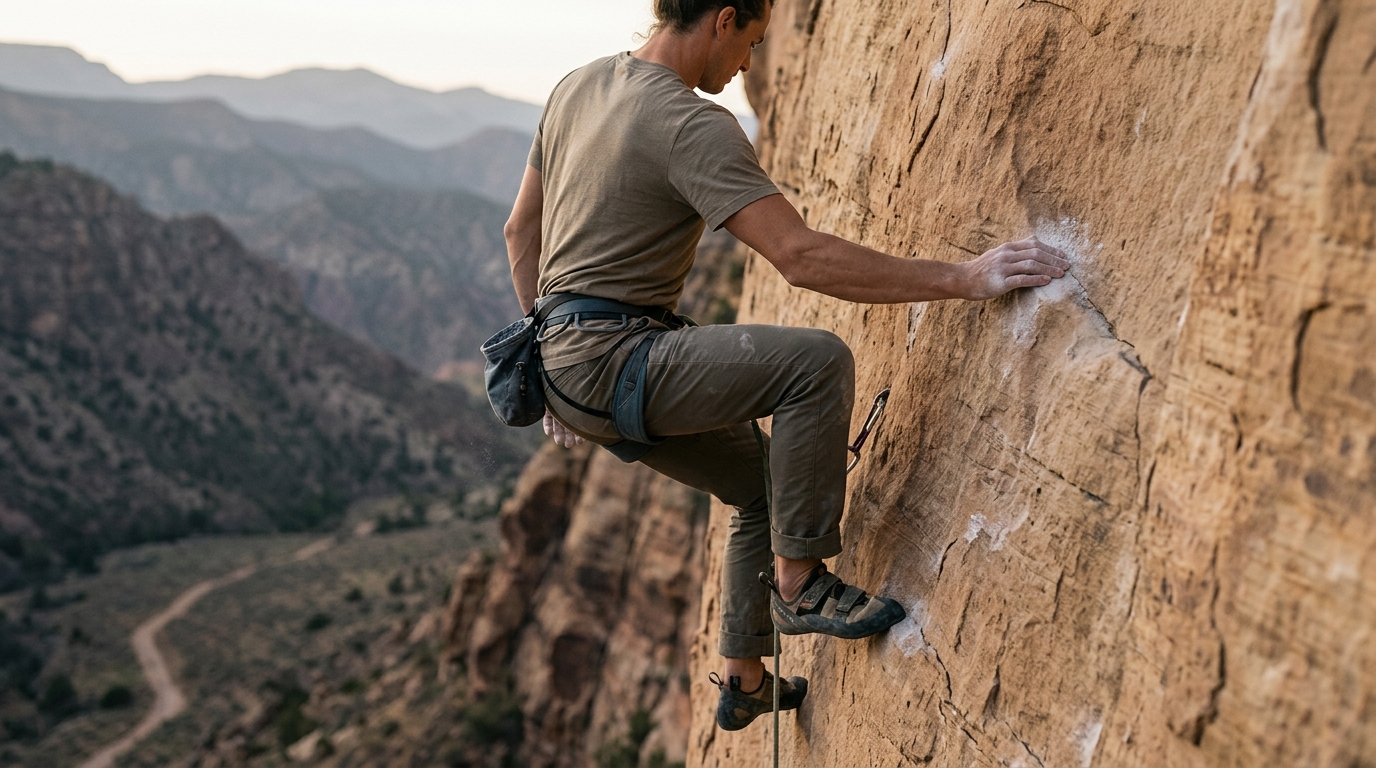
Data shows that dedicated climbers who prioritize technical precision over raw strength reduce their energy expenditure by approximately thirty percent on moderate routes. This measurable advantage allows athletes to sustain longer sessions without triggering premature muscle fatigue. Understanding these biomechanical principles transforms unpredictable ascents into repeatable successes. You will learn how to apply these methods directly to your next session. Coaches at Paradigm Climbing have tracked these exact metrics across thousands of training hours to build reliable progressions.
Mastering Precision Footwork
Foot placement dictates your entire center of gravity. When your shoes connect with the rock at precise angles, you transfer weight directly into your legs rather than your forearms. This mechanical advantage drastically reduces bicep strain during sustained climbs. Climbers who practice deliberate foot placement consistently report fewer slip incidents and smoother route progression. You can refine this skill by focusing on toe placement rather than dragging your feet across holds. National rankings confirm that athletes who prioritize foot precision outperform strength-focused competitors by a wide margin. You should practice placing your feet on tiny edges until the motion becomes automatic. This foundational habit eliminates wasted movement and conserves critical oxygen reserves.
Optimizing Body Positioning
Your body position determines how efficiently you distribute weight across multiple contact points. Maintaining a flat foot against a wall allows your hips to stay close to the rock surface. This proximity reduces the lever arm length and decreases the force required to hold your position. Climbing efficiency is the measurable reduction in energy output required to complete a specific route. When your hips drift away from the wall, your muscles must generate excessive counterforce to prevent falling. You can correct this drift by actively rotating your hips toward the climbing face. Industry reports indicate that proper hip alignment improves route completion rates by nearly forty percent. You should drill hip rotation drills on overhanging terrain to build muscle memory. This adjustment transforms awkward reaches into controlled, balanced movements.
Implementing Energy Conservation
Strategic rest positions prevent premature pump-out during long sequences. You must identify stable footholds and neutralize your body weight directly over your feet. This mechanical lock allows your arms to hang freely without active contraction. Energy conservation is the deliberate reduction of muscular tension during non-critical climbing phases. When you fail to rest, your lactic acid accumulates rapidly and forces early route abandonment. You should practice hanging on secure footholds while keeping your shoulders relaxed and your breathing steady. Performance data demonstrates that athletes who integrate rest stops complete significantly longer routes. You can practice this technique by pausing on every third hold during your training sessions. This habit builds endurance without increasing your maximum grip strength.
Applying Mental Focus Protocols
Mental clarity directly influences your physical execution on difficult terrain. When you fixate on a single hold, your peripheral vision narrows and your reaction time slows. You must scan the entire sequence before initiating your movement. This cognitive preparation reduces hesitation and prevents costly mistakes mid-route. Mental focus is the sustained attention required to execute complex movement patterns under physical stress. You should visualize each hand and foot placement before committing your weight to the wall. Training studies reveal that visualization techniques improve route beta retention by over fifty percent. You can practice this method by reviewing your route on the ground before attempting the ascent. This cognitive rehearsal builds confidence and eliminates unnecessary panic during critical moves.
Structuring Training Protocols
Periodized training ensures your body adapts to increasing demands without breaking down. You must cycle through volume phases, intensity phases, and recovery phases to maximize gains. This structured approach prevents overtraining and promotes long-term athletic development. Training protocols are systematic sequences of exercises designed to target specific physiological adaptations. When you skip recovery weeks, your connective tissues fail to repair and increase injury risk. You should follow a structured schedule that alternates between high-volume bouldering and low-intensity endurance climbing. Custom plans from certified coaches provide exactly this balanced progression. You can access these structured programs to eliminate guesswork from your weekly routine. This systematic approach guarantees steady progress without burnout.
Comparing Program Options
Selecting the right coaching structure depends on your current skill level and available time. You must evaluate your commitment level before purchasing a training package. This evaluation ensures you receive appropriate guidance without wasting resources. Program selection is the process of matching your athletic goals with a specific coaching framework. When you choose an unstructured plan, you risk inconsistent progress and plateaus. You should compare your options carefully to find the best fit for your schedule. Pre-written plans offer ready-to-use templates for beginners. Client testimonies highlight the success of personalized coaching. Contact your preferred coach to discuss your specific requirements. This comparison ensures you invest in the most effective training pathway.
| Program Type | Target Audience | Key Features | Access Path |
|---|---|---|---|
| Custom Plans | Intermediate to Advanced Climbers | Personalized periodization and direct coach feedback | Custom Plans |
| Pre-Written Plans | Beginners and Self-Motivated Athletes | Structured weekly schedules with video demonstrations | Pre-Written Plans |
| Full Spectrum Coaching | Competition and Outdoor Specialists | Comprehensive physical and mental development | Full Spectrum |
Key Takeaways
- Paradigm Climbing has operated since 2013, establishing a proven framework for long-term athlete development.
- Founder Charlie Schreiber holds CSCS certification and has personally trained over one thousand climbers.
- Coaches have successfully mentored athletes from Day 1 V0 conditions to V17 bouldering achievements.
- Mattias Braach-Maksvytis brings twenty-two years of outdoor and competition experience to the coaching staff.
- Matt Ratajczak serves as a professional routesetter and has guided multiple Team USA youth athletes.
- Periodized training protocols control volume, duration, and load to optimize performance and prevent injury.
- Technical precision consistently outperforms raw strength in reducing energy expenditure on moderate routes.
Frequently Asked Questions
How long does it take to improve climbing efficiency?
Most athletes notice measurable improvements within four to six weeks of consistent technical practice. You must prioritize foot placement and hip rotation during every session to accelerate progress. Tracking your route completion rates will help you monitor your advancement accurately.
Can beginners benefit from structured training programs?
Beginners benefit significantly from structured training programs because they establish proper movement patterns early. You will avoid developing bad habits that require extensive correction later. Pre-written plans provide accessible templates for new climbers.
What is the difference between bouldering and sport climbing efficiency?
Bouldering efficiency focuses on explosive power and precise body positioning over short sequences. Sport climbing efficiency emphasizes sustained endurance and strategic rest positioning over longer routes. You should adjust your training focus based on your preferred climbing discipline.
How do I prevent forearm pump during long climbs?
You prevent forearm pump by keeping your hips close to the wall and resting on secure footholds. This technique reduces the lever arm length and decreases bicep strain. You should practice hanging on stable holds while maintaining relaxed shoulders.
Is it necessary to work with a certified climbing coach?
Working with a certified climbing coach ensures you follow scientifically backed training protocols. You will receive personalized feedback that accelerates your skill acquisition. Certified coaches provide the guidance necessary for rapid improvement.
How often should I train to see consistent progress?
You should train three to four times per week to allow adequate recovery between sessions. This frequency balances stimulus and repair for optimal physiological adaptation. You must respect rest days to prevent connective tissue injuries.
What equipment do I need to start training?
You need well-fitted climbing shoes, chalk, and a chalk bag to begin training. You should also invest in a harness if you plan to practice sport climbing. Climbing gear recommendations are available through our official store.
Start Your Technical Mastery Today
Transform your climbing potential with a structured approach designed by experienced professionals. You can book your personalized coaching session by visiting our main portal. Visit Paradigm Climbing to explore custom plans, pre-written programs, and direct coach consultations. Take ownership of your progress and climb smarter from your very first session.