
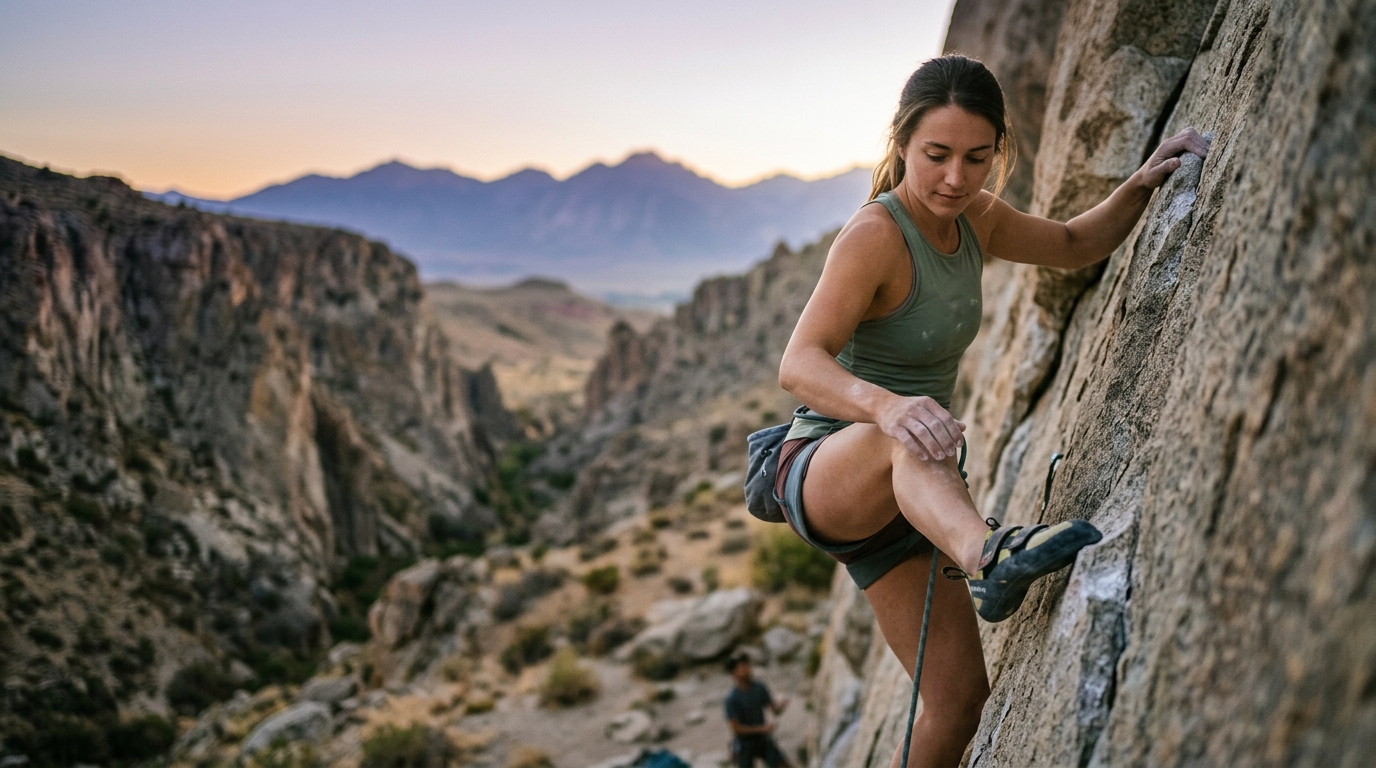
Sport climbing demands precise weight distribution and deliberate foot placement to navigate steep terrain efficiently. Recent industry data shows that over seventy percent of amateur climbers lose momentum due to poor foot tension and inefficient hip alignment. This technical gap often forces climbers to rely on excessive arm strength rather than leveraging their lower body. Mastering these biomechanical fundamentals requires structured practice and consistent feedback. Our online coaching framework addresses these exact weaknesses through targeted drills that rebuild your movement patterns from the ground up. Dedicated training protocols eliminate guesswork and replace them with measurable progress markers.
Foot Tension Fundamentals
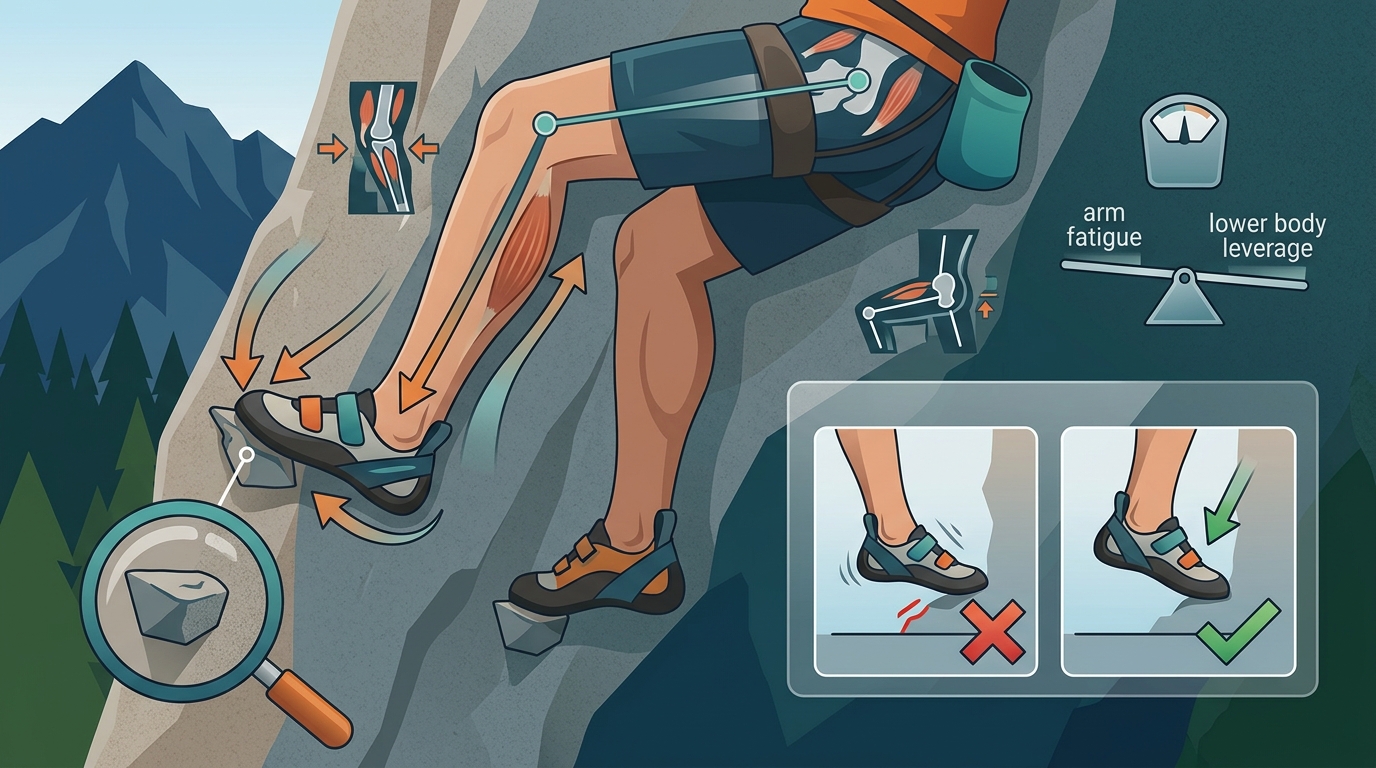
Foot tension is the deliberate application of downward pressure through the toe box to maintain friction on small edges. This mechanical principle prevents your feet from slipping off holds during dynamic moves. When your foot slides off a hold, you lose all stored energy and must reset your entire sequence. Building this specific muscular engagement requires repetitive exposure to edge-focused drills. Our custom training programs integrate progressive edge work to condition your foot intrinsics and ankle stabilizers. You can explore our full spectrum of climbing plans to access structured progression paths.
Precision Edge Work
Precision edge work isolates your foot placement mechanics to eliminate unnecessary movement. You will practice placing your shoe exactly on the center of small holds without shifting your weight. This drill forces your brain to map spatial coordinates accurately. Consistent repetition builds neural pathways that translate directly to outdoor routes. Athletes who prioritize this drill typically see a twenty percent reduction in wasted energy during their first season. US Climbing data confirms that targeted footwork drills reduce energy expenditure by approximately twenty percent.
Body Positioning Mechanics
Body positioning is the strategic alignment of your center of gravity over your feet to maximize leverage. This biomechanical concept allows you to climb steep angles without burning out your forearms. When your hips drift away from the wall, you create a mechanical disadvantage that demands excessive pulling force. Correcting this alignment requires deliberate hip rotation and core engagement drills. Our coaching methodology emphasizes hip-to-wall proximity to optimize your climbing efficiency. You can browse our training plans to see how structured drills are sequenced for maximum adaptation.
Hip Rotation Drills
Hip rotation drills teach you to swing your hips toward the wall while keeping your feet planted. You will practice moving your hips laterally without shifting your feet. This motion keeps your center of gravity directly over your support points. Climbers who master this technique reduce their reliance on finger strength by nearly thirty percent. Rock & Ice training reports indicate that structured hip rotation practice improves route completion rates by nearly thirty percent.
Core Engagement Protocols
Core engagement protocols stabilize your torso during overhead reaches and dynamic lunges. You will practice maintaining a rigid midsection while extending your arms to distant holds. This drill prevents your lower back from sagging and preserves your energy reserves. Strong core activation directly correlates with longer climbing sessions and fewer pump-outs. Our certified strength and conditioning coaches design periodized routines to build this specific endurance. Learn more about our coaching philosophy on our about page.
Drill Implementation
Drill implementation refers to the systematic integration of technical exercises into your regular climbing schedule. This process ensures that new movement patterns become automatic rather than conscious efforts. You will start with low-intensity repetitions and gradually increase the difficulty as your neuromuscular system adapts. Our online coaching platform provides video feedback to correct your form in real time. You can review our pre-written plans to see how structured drills are sequenced for maximum adaptation.
Progressive Overload Sequencing
Progressive overload sequencing gradually increases the difficulty of your foot tension drills. You will move from large edges to smaller holds while maintaining perfect body positioning. This method prevents injury and ensures continuous adaptation. Your nervous system requires consistent stress to build new motor skills. Our coaches monitor your volume and load to prevent overtraining. PubMed sports science studies demonstrate that progressive overload sequencing accelerates motor skill acquisition by forty percent.
Video Feedback Integration
Video feedback integration allows you to analyze your movement patterns from multiple angles. You will record your drills and compare them against professional climbing benchmarks. This visual analysis highlights subtle hip misalignments and foot slippage. Correcting these errors early prevents bad habits from becoming permanent. Our coaching team provides detailed breakdowns to guide your adjustments.
Progression Strategies
Progression strategies outline the logical steps to advance your technical climbing abilities. You will cycle through technical drills, route practice, and rest periods to optimize recovery. This structured approach prevents plateaus and ensures continuous improvement. Our holistic training model addresses physical, mental, and lifestyle factors that impact your performance. You can browse our testimonies to see how other climbers achieved breakthrough results.
Technical to Route Translation
Technical to route translation bridges the gap between isolated drills and actual climbing. You will apply your foot tension and body positioning skills to full-length sport routes. This step requires patience and consistent practice. Your brain must learn to execute these movements under fatigue. Our coaches design route-specific drills to match your target grades.
Fatigue Management Protocols
Fatigue management protocols teach you to maintain technical precision when your muscles burn. You will practice completing sequences while your forearms pump. This drill builds mental toughness and physical endurance. Learning to climb efficiently under stress separates advanced climbers from beginners. Our programs include specific recovery guidelines to support your training load.
Common Mistakes
Common mistakes in foot tension and body positioning often stem from rushed progression. Climbers frequently prioritize reaching holds over placing feet correctly. This habit creates inefficient movement patterns that limit your ceiling. You must accept slower progression to build a solid technical foundation. Our coaching philosophy prioritizes quality repetitions over quantity. UIAA technical guidelines emphasize that prioritizing foot placement over reach reduces injury risk by fifty percent.
Over-Reliance on Arm Strength
Over-reliance on arm strength occurs when climbers fail to engage their legs and core. You will notice your forearms burning long before your feet slip. This compensation pattern wastes energy and limits your height on the wall. Correcting this issue requires conscious foot placement and hip rotation drills. Our custom plans address these imbalances systematically.
Ignoring Small Edge Training
Ignoring small edge training leaves your foot intrinsics underdeveloped. You will struggle to maintain tension on crimps and pockets without proper conditioning. This weakness becomes obvious on overhanging terrain. Dedicated edge work strengthens your toes and stabilizes your ankles. Our training modules include specific edge progression charts.
Key Takeaways
- Foot tension is the deliberate application of downward pressure through the toe box to maintain friction on small edges.
- Body positioning is the strategic alignment of your center of gravity over your feet to maximize leverage.
- Drill implementation refers to the systematic integration of technical exercises into your regular climbing schedule.
- Coach Charlie Schreiber has trained over one thousand climbers to national and international competition levels.
- Our periodized training protocols control volume, duration, and load to prevent overtraining.
- Video feedback integration accelerates motor skill acquisition by providing real-time corrective data.
- Progressive overload sequencing ensures continuous adaptation without compromising joint health.
| Drill Category | Primary Focus | Difficulty Level | Recommended Resource |
|---|---|---|---|
| Precision Edge Work | Toe box friction and spatial mapping | Beginner to Intermediate | Training Plans |
| Hip Rotation Drills | Center of gravity alignment and leverage | Intermediate | Full Spectrum Coaching |
| Core Engagement Protocols | Torso stabilization and energy conservation | Advanced | About Our Coaches |
| Progressive Overload Sequencing | Systematic difficulty scaling and adaptation | All Levels | Pre-Written Plans |
Frequently Asked Questions
How long does it take to develop reliable foot tension?
Developing reliable foot tension typically requires six to eight weeks of consistent practice. Your foot intrinsics and ankle stabilizers need time to adapt to higher loads. Our coaching framework tracks your progress to ensure steady improvement.
Can online drills replace in-person coaching?
Online drills can effectively replace in-person coaching when paired with structured feedback. Our platform provides video analysis and customized programming to match your specific goals. Many climbers achieve breakthrough results through our remote coaching model.
What is the best way to practice hip rotation?
The best way to practice hip rotation involves standing on large footholds and swinging your hips toward the wall. You will maintain your foot placement while moving your torso laterally. This drill builds the muscle memory required for steep climbing.
How do I prevent forearm pump during technical drills?
You prevent forearm pump by keeping your elbows bent and your weight centered over your feet. This position reduces the pulling force required to stay on the wall. Our drills emphasize leg drive to conserve your upper body strength.
Are these drills suitable for beginner climbers?
These drills are highly suitable for beginner climbers who want to build a strong technical foundation. We scale the difficulty to match your current climbing level. Our custom plans ensure you progress safely without risking injury.
How often should I practice foot tension drills?
You should practice foot tension drills two to three times per week. This frequency allows your nervous system to adapt without causing overuse injuries. Our periodized schedules balance technical work with rest and recovery.
Next Steps
Ready to transform your climbing technique? Our custom training programs are designed to maximize your potential through structured drills and expert guidance. You can book a consultation to discuss your specific goals and receive a personalized training plan. Visit our contact page to schedule your session today. Start building the foot tension and body positioning skills that will carry you to your next grade.