
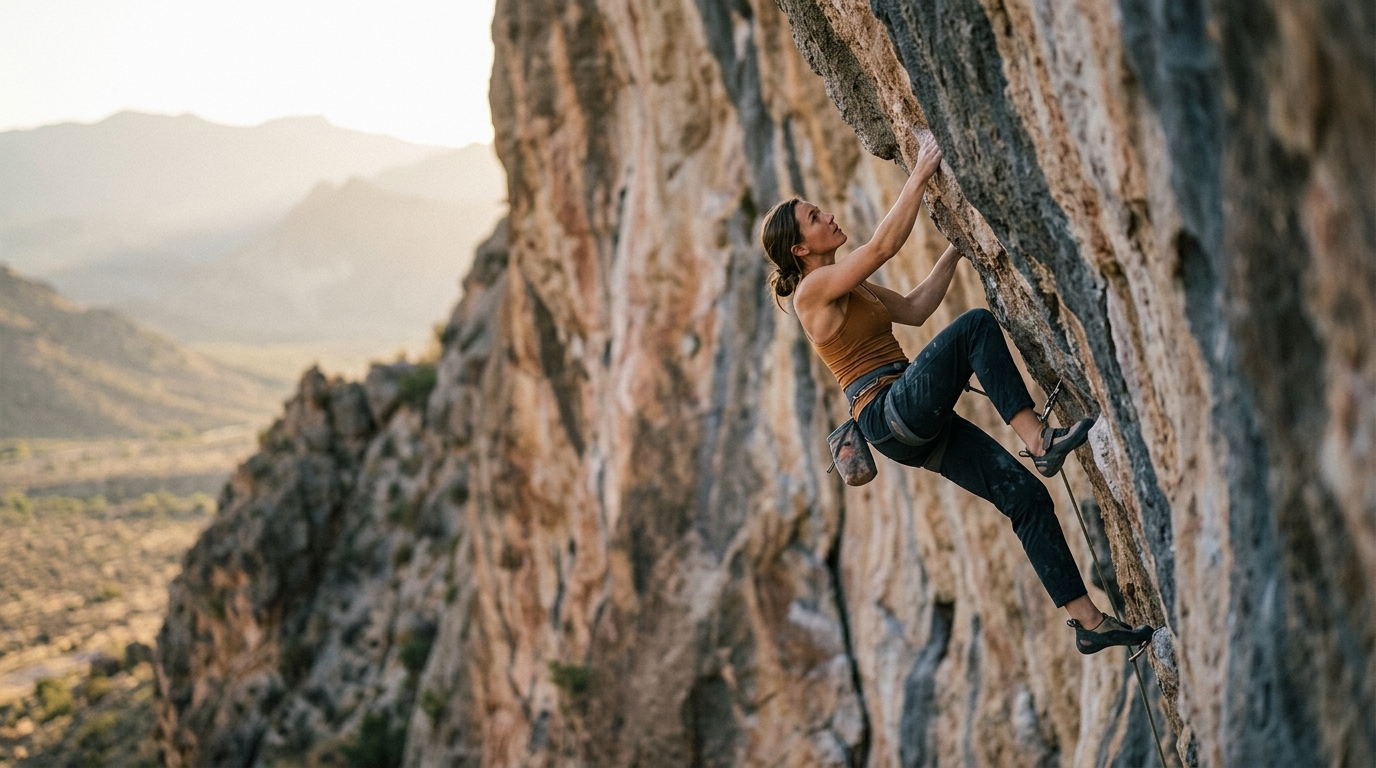
Modern climbing performance relies heavily on precise foot placement and sustained edge tension. Data shows that elite athletes maintain contact with the wall using less than thirty percent of their maximum grip strength. This efficiency stems from deliberate foot tension drills that transfer body weight directly to the feet. Climbers who master this mechanic reduce forearm fatigue and extend their time on difficult routes. The following tutorial outlines proven online training methods to refine your technique.
Understanding Foot Tension Mechanics
Foot tension is the deliberate application of downward and inward pressure against a climbing hold. This mechanic stabilizes your center of gravity and minimizes reliance on upper body strength. When you press your toe box firmly into a small edge, you create a rigid lever that supports your entire body weight. Climbers who neglect this principle waste energy through constant micro-adjustments. Training this skill requires focused repetition and precise body alignment. You can explore our custom training programs to integrate these mechanics into a structured progression.
Drill One: Premium Edge Pressing
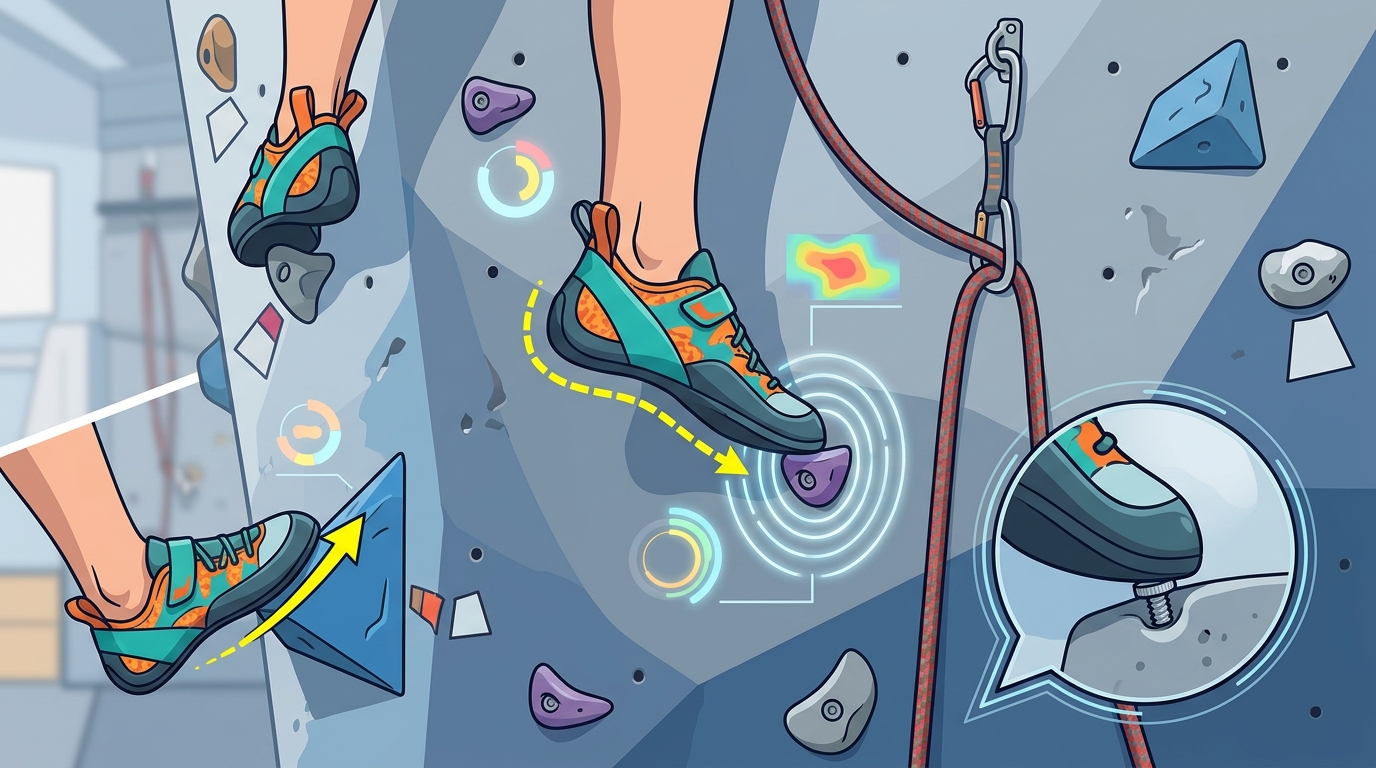
This drill isolates the ankle and knee alignment required for sustained edge work. Stand on a small foothold with your weight centered directly over your foot. Keep your hips close to the wall while maintaining a straight spine. Press your toe box down while simultaneously driving your knee inward. This creates a triangular force vector that locks your foot in place. Practice holding this position for thirty seconds on each foot. You will feel immediate engagement in your glutes and core stabilizers. Our structured training plans incorporate progressive overload for this exact movement pattern.
Drill Two: Heel Hook Isolations
Heel hook isolations are targeted exercises that develop lower body anchoring and hip rotation mechanics. Reach for a high hold and swing your right leg across your body. Hook your heel over a jug or edge and rotate your hip inward. Pull your body weight directly onto the hook while keeping your left foot planted. This maneuver shifts your center of mass closer to the wall. You will experience reduced arm strain and improved balance. Athletes who master this technique report faster beta execution on overhanging terrain. Check our client success stories to see how these drills translate to real-world performance.
Drill Three: Knee Bar Anchors
Knee bar anchors are mechanical locking techniques that distribute body weight across vertical terrain. Bend your knee and hook it over an edge or hold. Rotate your thigh inward while pressing your foot against the wall. This creates a rigid mechanical lock that supports your entire torso. Hold this position while shifting your weight forward and backward. You will develop the proprioceptive awareness needed for complex route reading. This drill directly improves your ability to rest on difficult sections. Our coaches specialize in teaching these advanced positioning techniques. Visit our coaching team page to learn more about our methodology.
Drill Four: Body Positioning Angles
Body positioning angles dictate how efficiently you transfer force through your limbs. Stand on a foothold and extend your arm to a high hold. Keep your hips pressed against the wall while maintaining a straight line from your heel to your shoulder. This alignment minimizes leverage disadvantages and conserves energy. Practice moving your hips closer to the wall without losing foot contact. You will notice immediate improvements in your reach and stability. This drill forms the foundation of efficient sport climbing. Our full spectrum coaching addresses every aspect of your physical profile.
Comparative Drill Analysis
Each drill targets specific biomechanical requirements for advanced climbing. The table below outlines the primary focus, difficulty level, and expected adaptation timeline for each method. Select the drill that aligns with your current route difficulty and training phase. Consistent practice across all four methods will yield the most comprehensive technical improvement. Track your progress using our training blog resources for additional technical breakdowns.
| Drill Name | Primary Focus | Difficulty Level | Expected Adaptation Timeline |
|---|---|---|---|
| Premium Edge Pressing | Ankle stability and toe box engagement | Intermediate | Four to six weeks |
| Heel Hook Isolations | Lower body anchoring and hip rotation | Advanced | Six to eight weeks |
| Knee Bar Anchors | Mechanical locking and weight distribution | Intermediate to Advanced | Five to seven weeks |
| Body Positioning Angles | Center of gravity alignment and efficiency | Foundational | Three to five weeks |
Key Takeaways
- Premium edge pressing builds foundational ankle stability and toe box engagement.
- Heel hook isolations develop critical lower body anchoring and hip rotation mechanics.
- Knee bar anchors create rigid mechanical locks for weight distribution on vertical terrain.
- Body positioning angles optimize center of gravity alignment and conserve upper body energy.
- Consistent repetition across all four drills yields comprehensive technical improvement.
- Periodized training protocols prevent overtraining while maximizing adaptation speed.
- Professional coaching accelerates skill acquisition through targeted feedback and correction.
Frequently Asked Questions
How long does it take to develop reliable foot tension?
Most climbers achieve reliable foot tension within four to six weeks of consistent practice. This timeline depends on your current training frequency and route difficulty. Progressive overload ensures your tendons adapt without injury. Our contact page allows you to schedule a personalized assessment.
Can foot tension drills replace upper body strength training?
No. Foot tension drills optimize efficiency but do not replace necessary upper body development. You must maintain a balanced training schedule that includes pull strength and core stability. Our custom training programs integrate both components seamlessly.
What is the most common mistake beginners make with foot placement?
Beginners typically place their feet too high on the edge or drag their heels. This error creates unnecessary friction and reduces stability. Proper technique requires pressing the toe box directly into the hold. You can review our pre-written training plans for detailed technical guides.
How do I know if my body positioning is efficient?
Efficient body positioning feels stable and requires minimal grip force. Your hips should remain close to the wall while your limbs form straight lines. You will experience reduced forearm pump and longer climbing duration. Our coaches evaluate these metrics during every session. Visit our about page to meet our coaching staff.
Are these drills suitable for outdoor sport climbing?
Yes. These drills directly translate to outdoor route climbing and competition settings. They improve your ability to rest on small edges and execute complex beta. You will notice faster movement and reduced fatigue on long routes. Our full spectrum coaching prepares athletes for both indoor and outdoor environments.
Book Your Coaching Session
Mastering foot tension and body positioning requires expert guidance and structured progression. Our certified coaches will design a personalized training protocol tailored to your specific goals. You will receive periodized programming that balances volume, duration, and load. Click below to schedule your initial consultation and start climbing smarter.