

Creating a personalized rock climbing training plan requires a structured approach that aligns with your specific grade targets and physical capabilities. Effective programming moves beyond random gym sessions by implementing periodized protocols that manage volume, duration, and load to optimize performance while preventing overtraining. This methodology ensures sustainable progress for climbers at every level, from beginners aiming for their first V-grade to advanced athletes targeting competition success. By focusing on why and how training works, you can take ownership of your development and achieve measurable results on the wall.
Assess Your Current Climbing Profile and Goals
The foundation of any successful training program begins with an honest evaluation of your current abilities and desired outcomes. You must define clear objectives, such as reaching a specific boulder grade, improving sport climbing endurance, or preparing for competition. This assessment helps determine your starting point and identifies areas requiring the most attention. Custom Plans from Paradigm Climbing start with this exact diagnostic process to ensure every recommendation matches your unique profile.
Consider your history with the sport, including injuries, strengths, and weaknesses. Are you stronger on overhangs but struggle with slab climbing? Do you have excellent technique but lack finger strength? Answering these questions allows you to prioritize training blocks that address your specific bottlenecks. Without this initial analysis, training efforts often become scattered and inefficient.
Implement Periodized Training Protocols
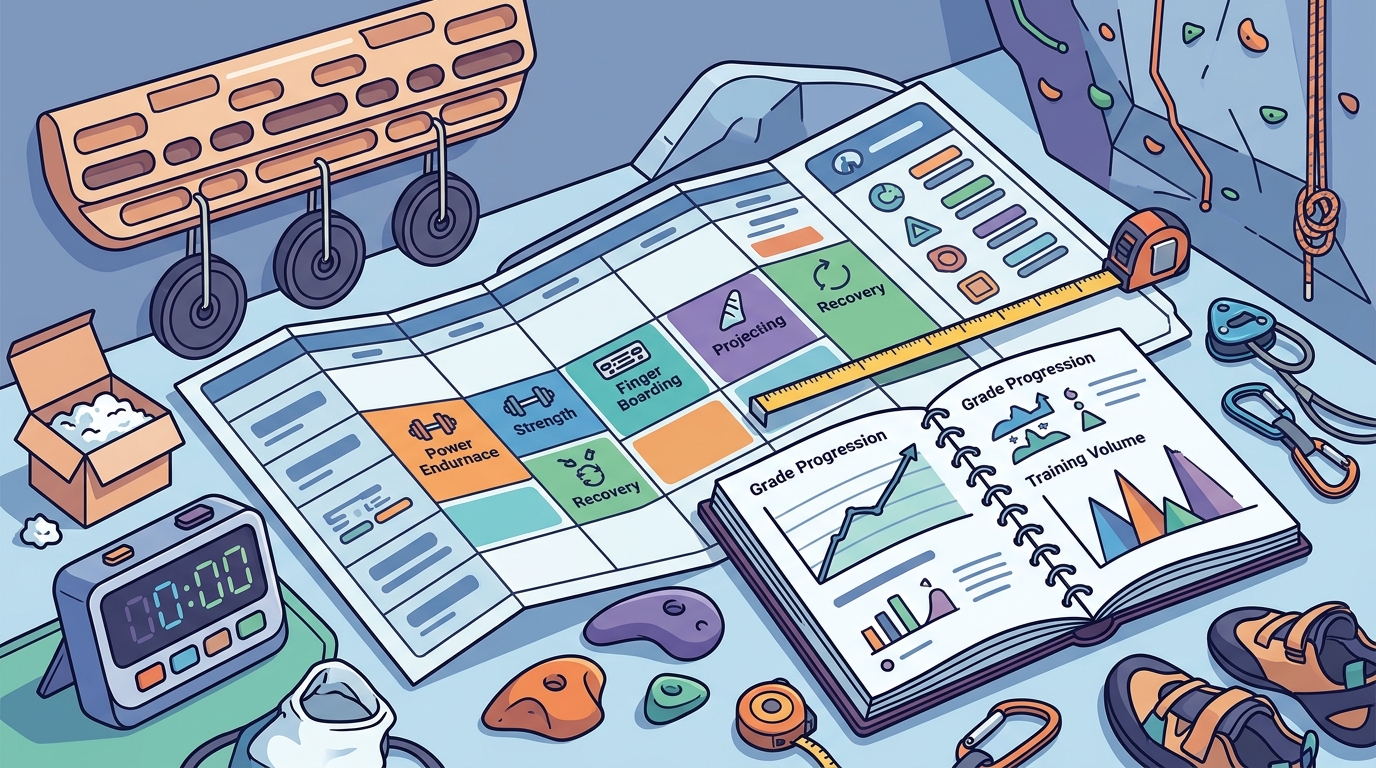
Periodized training is a systematic approach to training that manipulates variables like volume and intensity over specific time blocks to maximize adaptation and prevent plateaus. This structure involves cycling through phases of high intensity, recovery, and skill development. By controlling volume, duration, and load, you can optimize performance over both the short and long term. Training Plans at Paradigm Climbing utilize this framework to guide athletes through progressive stages of development.
Each phase should have a distinct purpose. Some weeks focus on building maximum strength, while others emphasize endurance or technique. This variation prevents the body from adapting too quickly to a single stimulus, which is a common cause of stagnation. A certified strength and conditioning coach can prescribe these protocols to ensure you are always training with purpose and precision.
Balance Strength, Endurance, and Flexibility
A comprehensive climbing program addresses all physical attributes required for the sport. Strength training builds the power needed for difficult moves, while endurance training allows you to sustain effort on long routes. Flexibility and mobility work reduce injury risk and improve reach. Ignoring any of these components creates imbalances that can limit your overall potential.
Routesetting is the art and science of designing climbing problems and routes to test specific movement patterns and physical attributes. By studying routesetters like Matt Ratajczak, you can understand how different problems target specific muscle groups. Incorporating varied climbing styles into your training ensures you develop a well-rounded physical profile. This balance is essential for climbers who want to excel in both bouldering and sport disciplines.
Incorporate Mental and Lifestyle Factors
Holistic training is a comprehensive methodology that addresses physical, mental, and lifestyle factors to optimize on-wall performance. Your training plan must account for sleep, nutrition, stress levels, and recovery. These factors significantly impact your ability to adapt to training stress and perform at your best. A Full Spectrum approach ensures that no aspect of your life is neglected in pursuit of climbing goals.
Mental training involves visualization, focus techniques, and managing fear. Advanced climbers often use mental strategies to overcome crux sections or competition pressure. By integrating mental preparation with physical training, you develop the resilience needed to tackle challenging routes. This integrated approach helps you take ownership of your progress and maintain consistency over time.
Select the Right Coaching Model for Your Needs
Choosing the right coaching model depends on your experience level, goals, and preferred learning style. Paradigm Climbing offers multiple pathways to help you achieve your potential. Coach Charlie Schreiber provides expert guidance with extensive climbing and coaching experience. He has guided athletes from Day 1 beginner levels to elite V16 and V17 boulder grades. His background includes competition at the World Cup level and route setting up to V13 and 5.14a grades.
Other coaches bring specialized expertise to the team. Mattias Braach-Maksvytis brings decades of outdoor and competition experience, including V14 bouldering. Matt Ratajczak serves as a professional routesetter and has worked with youth and open national team athletes. This diverse coaching staff ensures that every climber receives tailored advice regardless of their specific goals. Pre-Written Plans are also available for those who prefer a structured program without one-on-one coaching.
Monitor Progress and Adjust Your Routine
Regular assessment is crucial for ensuring your training plan remains effective. Track your performance metrics, such as grades achieved, sessions completed, and subjective feelings of fatigue. Adjust your training blocks based on these results to maintain forward momentum. Read the Blog for additional insights and tips from the coaching team.
Communication with your coach allows for real-time adjustments when needed. If you experience persistent fatigue or plateaus, your program can be modified to address these issues. This dynamic approach ensures that your training evolves alongside your abilities. Consistent feedback loops are the hallmark of successful long-term development.
Key Takeaways
- Coach Charlie Schreiber is a certified strength and conditioning coach with extensive climbing and coaching experience.
- He has guided athletes from Day 1 beginner levels to elite V16 and V17 boulder grades.
- His background includes competition at the World Cup level and route setting up to V13 and 5.14a grades.
- Periodized training protocols control volume, duration, and load to optimize performance and prevent overtraining.
- Matthias Braach-Maksvytis brings decades of outdoor and competition experience, including V14 bouldering.
- Matthias Ratajczak serves as a professional routesetter and has worked with youth and open national team athletes.
- A holistic approach addresses physical, mental, and lifestyle factors to maximize on-wall performance.
Frequently Asked Questions
How do I determine the right training intensity for my level?
Training intensity should be determined by your current grade, recovery capacity, and specific goals. A qualified coach can help you calculate the appropriate load and volume to ensure you are challenging yourself without risking injury. Start with conservative intensity and gradually increase as your body adapts.
Can I create a training plan without a coach?
While it is possible to design a basic program, working with a coach ensures you follow proven methodologies and avoid common mistakes. Pre-Written Plans offer a structured alternative for self-directed climbers who want expert guidance without one-on-one sessions.
How often should I climb versus train off the wall?
The ratio depends on your goals and experience. Beginners often benefit from more climbing time to develop technique, while advanced climbers may spend more time on off-wall strength training. A balanced schedule ensures you develop both specific climbing skills and general physical attributes.
What is the importance of rest days in a training plan?
Rest days allow your body to recover and adapt to training stress. Without adequate rest, you risk overtraining and injury. Schedule rest days strategically within your periodized plan to maximize performance gains.
How can I improve my mental game while training?
Incorporate visualization exercises, focus drills, and stress management techniques into your routine. Practice these skills during training sessions so they become second nature when climbing difficult routes. Mental resilience is a key component of elite climbing performance.
What qualifications should I look for in a climbing coach?
Look for coaches with certifications in strength and conditioning, extensive climbing experience, and a proven track record of athlete development. Coach Charlie Schreiber holds a CSCS certification and has guided athletes to national and international success.
Are pre-written plans suitable for advanced climbers?
Pre-written plans can be effective for climbers who prefer structure and self-direction. However, advanced climbers may benefit from custom plans that address their unique weaknesses and competition schedules. Evaluate your needs before choosing a program type.
Start Your Custom Training Journey
Ready to transform your climbing with a personalized program? Contact Paradigm Climbing today to discuss your goals and discover how our coaching team can help you reach your full potential. Get in Touch to schedule your consultation and take the first step toward your next climbing milestone.