
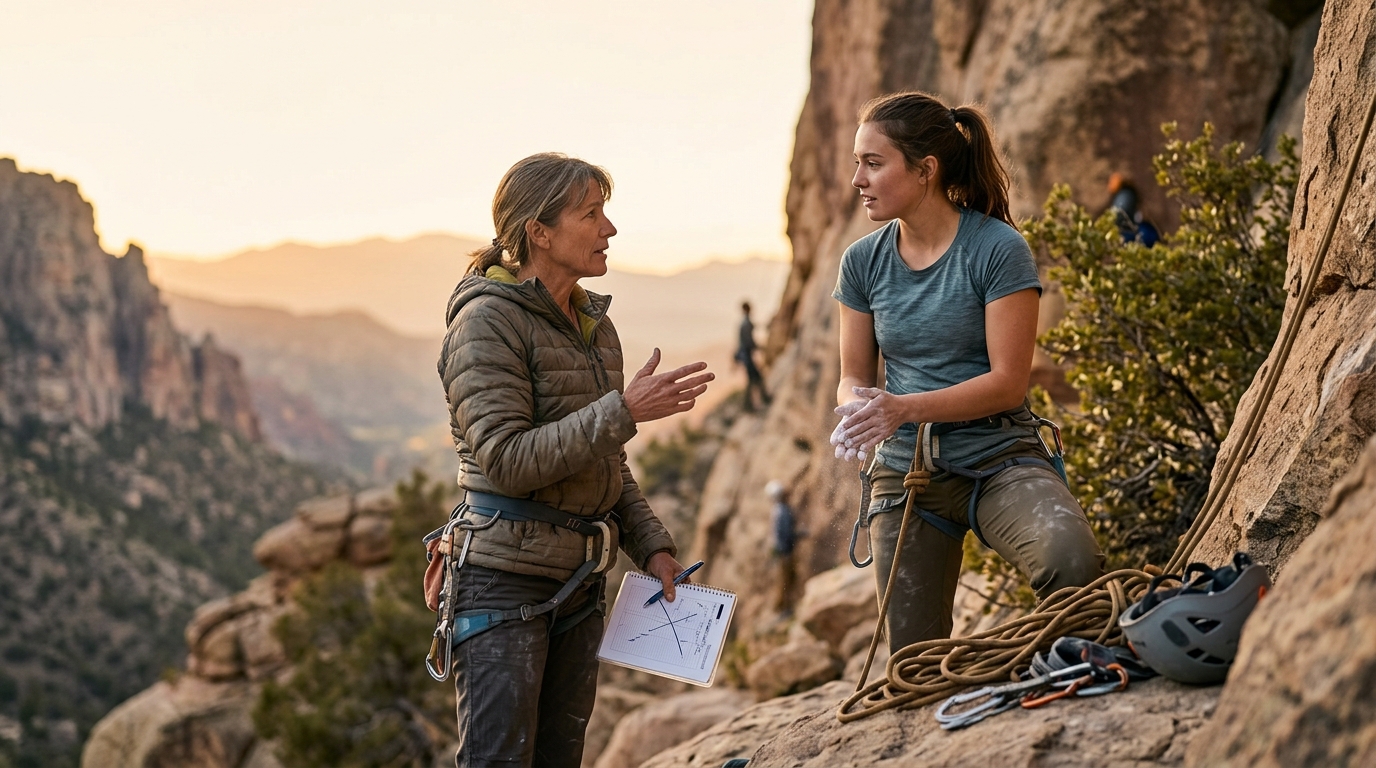
Whether you are stuck on a plateau, training for a competition, or just getting serious about sending harder grades, working with a qualified rock climbing coach can accelerate your progress dramatically. A climbing coach is a trained professional who designs periodized programs, analyzes movement, and holds you accountable to structured goals. But with a growing number of coaches available online and in-person, how do you separate genuinely experienced professionals from enthusiastic amateurs? This guide walks you through the key criteria, red flags, and practical steps to find a coach who is the right fit for your discipline, level, and ambitions.
Why Hiring a Climbing Coach Matters
Unstructured training is one of the most common reasons climbers plateau. A qualified coach removes guesswork by prescribing periodized training protocols that control volume, duration, and load to optimize performance and prevent overtraining. The result is faster, more sustainable progress compared to self-directed sessions.
Coaches also provide an outside perspective on movement habits you cannot see yourself. Features like video analysis for climbing improvement let you receive frame-by-frame feedback on technique, turning every session into a learning opportunity.
Credentials and Certifications to Look For
A certification is a credential that shows an individual has demonstrated knowledge of climbing skills and the ability to teach them effectively. In the United States, the most recognized certifying bodies are the American Mountain Guides Association (AMGA), the Professional Climbing Instructors Association (PCIA), and the Climbing Wall Association (CWA).
| Certification Body | Key Programs | Focus |
|---|---|---|
| AMGA | Single Pitch Instructor (SPI), Rock Guide | Outdoor guiding and instruction |
| PCIA | Climbing Wall Instructor, Top Rope Climbing Instructor | Indoor and outdoor instruction |
| CWA | Climbing Wall Instructor (CWI) Levels 1-3 | Indoor gym instruction |
Beyond climbing-specific certifications, look for credentials in strength and conditioning (e.g., CSCS or NSCA-CPT). A certified strength and conditioning coach can design safe, progressive off-wall programming that complements your climbing work.
Do Certifications Guarantee Quality?
Certifications set a baseline but are not the full picture. Many elite-level performance coaches hold no guiding certification because their specialty is programming and athlete development rather than outdoor instruction. Evaluate certifications alongside real coaching results.
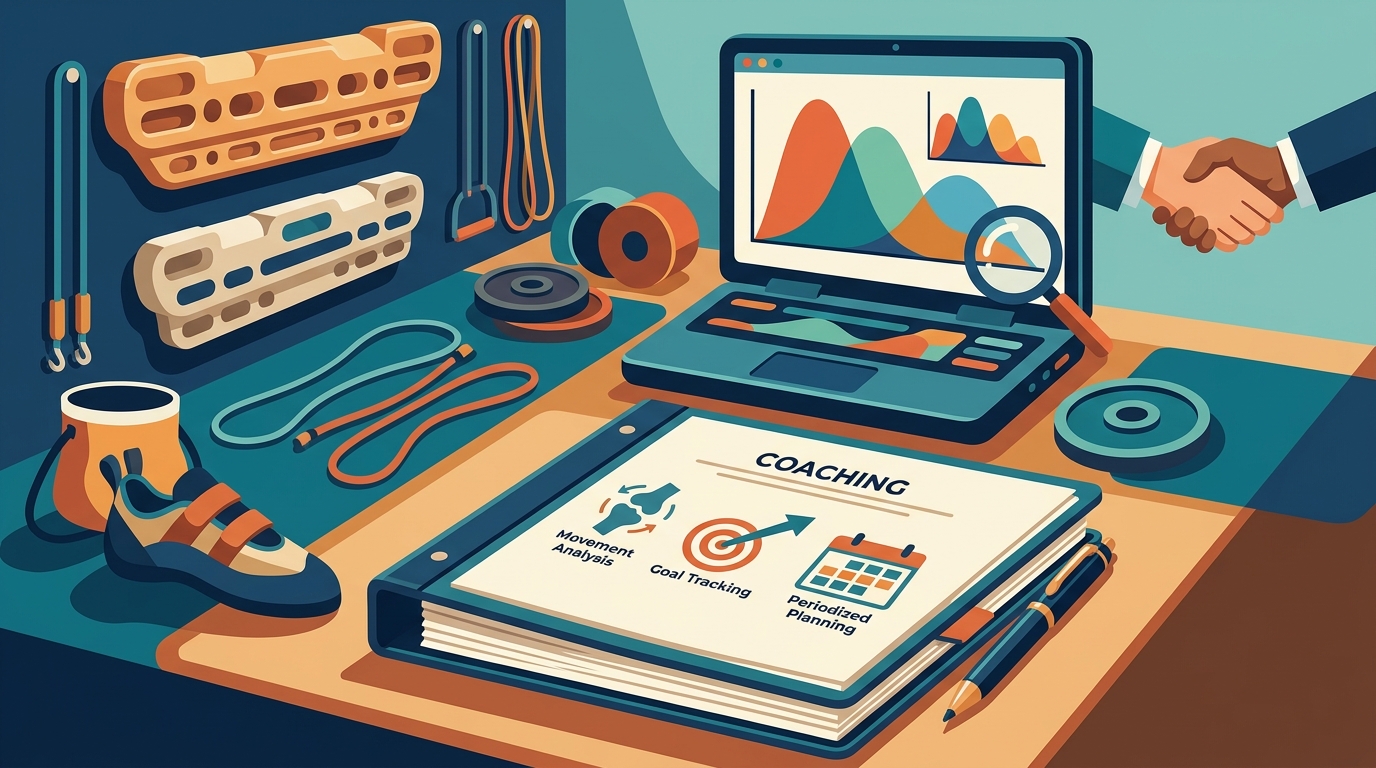
Evaluating Coaching Experience and Track Record
Experience is the total accumulation of coaching hours, athlete outcomes, and personal climbing accomplishment. Ask potential coaches about the number of athletes they have trained, the range of levels they have worked with, and specific outcomes they have produced.
For example, Paradigm Climbing founder Coach Charlie Schreiber brings 20 years of climbing experience and has personally trained over 1,000 climbers, mentoring multiple athletes from V0 all the way to V16 and V17. He also has a background in competitive climbing up to the World Cup level. These concrete data points signal depth of experience that goes beyond a resume bullet.
Check Athlete Testimonials
Look for publicly listed high-performance athletes and their progression stories. Verified results from real climbers carry more weight than vague claims.
Matching Coaching Style to Your Goals
Not every coach suits every climber. Some coaches specialize in competition preparation, others in outdoor projecting, and some take a holistic approach that addresses physical training, mental performance, and lifestyle factors together.
A holistic coaching approach is a method that addresses all areas of a climber's physical and mental profile as well as life factors that affect on-wall performance. If you want to understand why training works and take ownership of your progress, seek a coach who teaches principles rather than just handing out workouts. Paradigm Climbing's philosophy centers on helping climbers master the learning process itself.
Competition vs. Outdoor Focus
If you are targeting national championships or World Cups, confirm the coach has experience developing competitive athletes. If outdoor sends are your priority, look for route-setting knowledge and beta-reading skills.
Remote vs. In-Person
Many coaches now operate remotely, delivering programs via apps and providing feedback through video review. Others offer in-person sessions for hands-on technique correction. Decide which format fits your schedule and learning style before committing.
Custom Plans vs. Generic Programs
A custom training plan is a program built from scratch around your specific goals, schedule, strengths, and weaknesses. Generic or pre-written plans can be a cost-effective starting point, but they lack the individualization needed for targeted improvement.
| Feature | Custom Plan | Pre-Written Plan |
|---|---|---|
| Personalization | Fully tailored to your goals | Based on common progressions |
| Coach Interaction | Regular check-ins and adjustments | Minimal or none |
| Video Feedback | Often included | Rarely included |
| Price Range | Higher investment | Budget-friendly |
| Best For | Targeted breakthroughs | General fitness gains |
Paradigm Climbing offers both options: fully custom training plans with one-on-one coaching and video analysis, as well as pre-written Full Spectrum plans built from insights gained coaching nearly 1,000 climbers. Starting with a pre-written plan and upgrading to custom coaching is a smart progression path.
Red Flags to Watch Out For
Not every coach deserves your trust or investment. Watch for these warning signs:
- No verifiable track record. If a coach cannot point to specific athlete outcomes, proceed with caution.
- One-size-fits-all programming. Identical plans for a V3 boulderer and a V12 competitor is a sign of lazy coaching.
- No communication structure. Quality coaches provide clear channels for questions, video submissions, and plan adjustments.
- Overpromising results. Climbing progression depends on many variables. Guarantees of specific grades within fixed timelines are unrealistic.
- Ignoring injury prevention. A responsible coach controls volume and load to prevent overtraining and reduce injury risk.
Key Takeaways
- A qualified climbing coach should hold relevant certifications (AMGA, PCIA, CWA) or demonstrate equivalent expertise through athlete results.
- Evaluate experience by looking at years coaching, number of athletes trained, and the range of levels served.
- Match coaching style to your discipline, whether that is competition bouldering, sport climbing, or outdoor trad.
- Custom plans deliver faster, more targeted progress than generic programs.
- Video analysis is one of the most valuable coaching tools available for improving movement quality.
- Watch for red flags like no verifiable results, zero communication, and overtraining-prone programming.
- Starting with a free resource or pre-written plan is a low-risk way to test a coaching relationship before committing to a full custom plan.
Frequently Asked Questions
What qualifications should a rock climbing coach have?
Look for certifications from the AMGA, PCIA, or CWA combined with strength and conditioning credentials. Beyond certifications, prioritize coaches with a proven track record of developing climbers across multiple skill levels.
How much does a rock climbing coach cost?
Costs vary widely based on the level of personalization. Pre-written plans can start under $100, while fully custom one-on-one coaching with video analysis typically ranges from $150 to $400 or more per training cycle, depending on the provider and plan duration.
Can I work with a climbing coach remotely?
Yes. Many top coaches deliver programs remotely using training apps and video feedback. Paradigm Climbing, for example, allows athletes to submit climbing videos for personalized movement analysis from anywhere in the world.
How long does it take to see results with a coach?
Most climbers notice improvements within one to two training cycles (roughly 9 to 18 weeks). Long-term structural changes in strength and technique typically emerge over 6 to 12 months of consistent, coached training.
What is the difference between a climbing coach and a climbing guide?
A climbing guide leads you safely up routes in outdoor settings and is typically AMGA-certified. A climbing coach designs training programs to improve your performance over time. Some professionals do both, but the skill sets are distinct.
Do I need a coach if I am a beginner?
Beginners often benefit the most from coaching because correct movement patterns are easier to build than to fix later. A coach can accelerate your early learning curve and help you avoid common bad habits.
How do I know if my coach is a good fit?
A good fit means clear communication, programming that respects your schedule and recovery, and measurable progress over time. Most quality coaches offer an initial consultation so both sides can assess compatibility before committing.
Start Training With a Coach Today
Finding the right climbing coach does not have to be complicated. If you are ready for customized, goal-based training backed by over 16 years of coaching experience and 1,000+ athletes served, explore Paradigm Climbing's training plans or reach out directly to discuss which plan fits your goals. Your next breakthrough is one good coach away.