
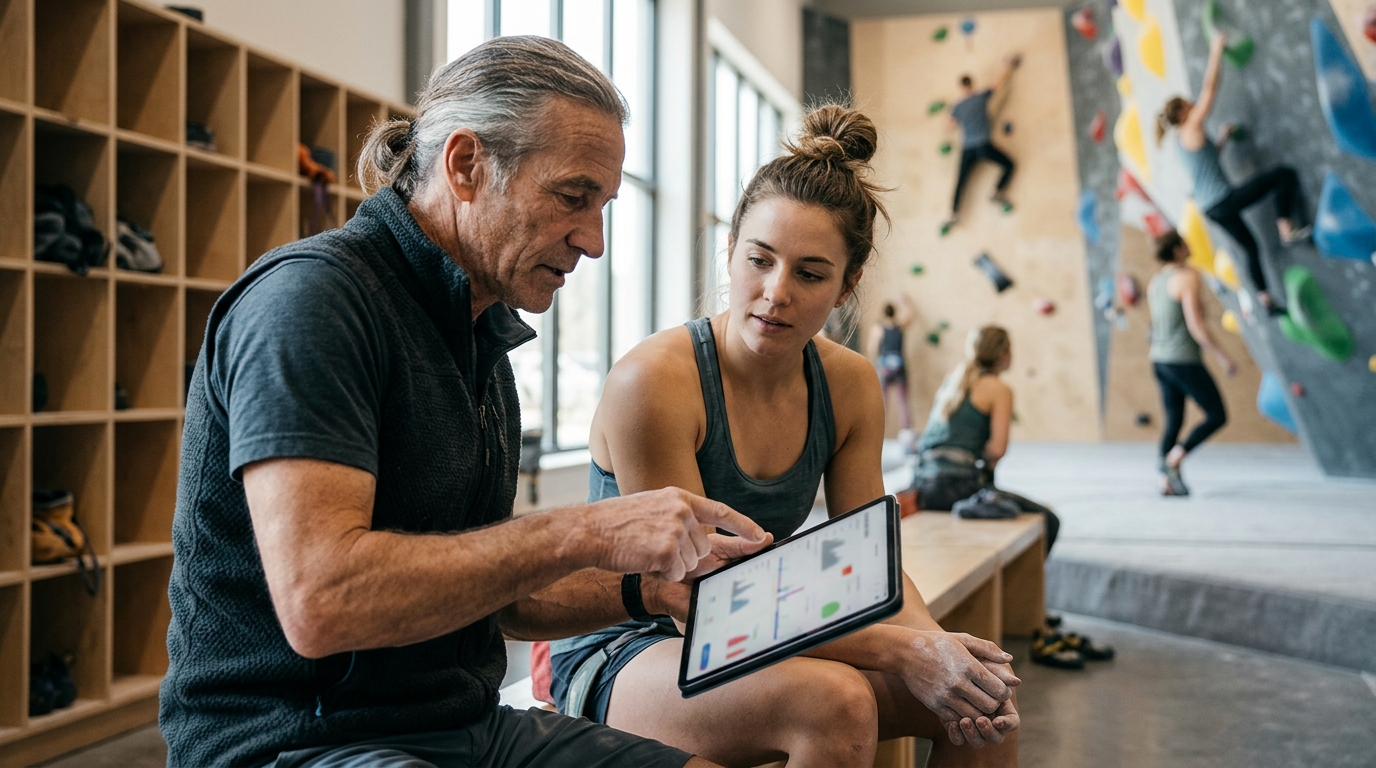
Whether you are trying to break through a bouldering plateau, train for your first outdoor project, or compete at the national level, working with a qualified rock climbing coach can accelerate your progress dramatically. A rock climbing coach is a trained professional who designs periodized training programs, analyzes movement on video, and provides accountability so climbers of every level improve efficiently. But with more coaching options available than ever, how do you separate the truly qualified coaches from the rest? This guide walks you through the exact criteria, questions, and red flags you need to evaluate before committing to a coach.
Why Working With a Climbing Coach Matters
Training without guidance often leads to overtraining, random programming, and frustrating plateaus. A qualified coach removes the guesswork by prescribing periodized training protocols that control volume, duration, and load to prevent overtraining and optimize long-term performance.
According to the National Strength and Conditioning Association (NSCA), periodized programs outperform non-periodized approaches in both strength gains and injury prevention. A coach translates that science into a climbing-specific context so you spend less time guessing and more time sending.
Essential Qualifications to Look For
Climbing Experience and Credentials
A credible coach should have significant personal climbing experience across disciplines. For example, Paradigm Climbing founder Coach Charlie Schreiber brings 20 years of climbing experience, a competitive background up to the World Cup level, and climbs at the V13 and 5.14a grade. Look for coaches who can demonstrate both breadth and depth in their own climbing history.

Coaching Track Record
Experience coaching others matters just as much as personal ability. A strong track record is a pattern of developing athletes across multiple skill levels over several years. Charlie has personally trained over 1,000 climbers and mentored athletes from V0 all the way to V16 and V17. Ask any prospective coach for specific athlete outcomes, not just testimonials.
Education and Certifications
Certifications such as NSCA-CSCS, USSCA coaching credentials, or sport-specific certifications add credibility. A certified strength and conditioning coach understands how to manage load progression and avoid the common "more is better" trap that injures many climbers.
Coaching Styles and Plan Types Compared
Not all coaching is created equal. The table below compares common plan formats so you can match a coaching style to your needs and budget.
| Plan Type | Customization Level | Coach Interaction | Best For |
|---|---|---|---|
| Pre-Written / Template Plans | Low | Minimal | Self-motivated beginners on a budget |
| Custom Training Plan | High | Regular check-ins | Intermediate to advanced climbers with specific goals |
| Elite / Video Analysis Plan | Very High | Ongoing video feedback + messaging | Competitive or project-focused climbers |
| In-Person Coaching | Very High | Real-time, face-to-face | Local athletes wanting hands-on guidance |
Paradigm Climbing offers both pre-written Full Spectrum plans and fully custom training plans organized in 9-week cycles, giving climbers flexibility to choose the right level of support.
Questions to Ask Before You Commit
Before signing up with any coach, ask these five questions:
- What is your coaching philosophy? Look for coaches who emphasize understanding why training works, not just what exercises to do.
- How do you individualize programming? A good coach conducts an initial consultation and adjusts plans based on your feedback and progress.
- What does communication look like? Clarify whether you get video analysis, weekly calls, or text-based support.
- Can you share athlete results? Legitimate coaches point to measurable outcomes, such as grade improvements or competition placements.
- How are training cycles structured? Periodization is the systematic planning of training phases to peak at the right time. Coaches who use it show they understand long-term athlete development.
Red Flags That Signal a Bad Fit
Avoid coaches who offer only generic, one-size-fits-all programs with no assessment. If a coach cannot explain the reasoning behind your program, that is a problem. A holistic approach is one that addresses physical training, mental training, nutrition, and lifestyle factors together.
Other warning signs include no verifiable credentials, zero athlete success stories, and an unwillingness to adapt your plan as you progress. Coaches who promise unrealistic grade jumps in weeks rather than months are prioritizing marketing over your development.
Where to Search for a Climbing Coach
Start by exploring coaching services with transparent track records. Paradigm Climbing publicly showcases its high-performance athletes and shares educational content on its climbing blog so you can evaluate coaching quality before committing.
You can also find coaches through local climbing gyms, the USA Climbing organization, and sport-specific directories. Social media platforms like Instagram allow you to watch a coach interact with athletes and review their movement analysis skills in real time.
Key Takeaways
- A qualified climbing coach should have deep personal climbing experience, verified coaching credentials, and a documented track record of athlete development.
- Periodized, customized plans outperform generic templates for long-term progress.
- Always ask about coaching philosophy, communication structure, and measurable athlete results before committing.
- Video analysis is a powerful differentiator that lets your coach correct technique remotely.
- Red flags include generic programming, no credentials, unrealistic promises, and zero transparency about past athlete outcomes.
- Look for coaches who teach you why training works so you build lasting climbing intelligence.
Frequently Asked Questions
How much does a rock climbing coach cost?
Prices vary widely. Pre-written plans may start around $50 to $100, while fully custom coaching with video analysis can range from $150 to $400+ per training cycle depending on the coach and level of interaction.
Do I need a coach if I am a beginner?
Yes. A coach helps beginners build correct movement patterns from the start and avoids bad habits that become harder to fix later. Paradigm Climbing designs plans for any discipline of climber at any level.
What is the difference between a training plan and coaching?
A training plan is a written program of exercises and sessions. Coaching includes the plan plus ongoing feedback, communication, movement analysis, and program adjustments based on your progress.
How long should I work with a climbing coach?
Meaningful physical adaptation takes months. Most structured coaching programs run in multi-week cycles. Paradigm Climbing uses 9-week cycles, and you can purchase between 1 and 6 cycles at a time for sustained development.
Can I work with a remote climbing coach?
Absolutely. Remote coaching using video analysis and messaging is highly effective. Paradigm Elite plans include video analysis and feedback, which is like having a personal coach in your pocket.
What certifications should a climbing coach have?
Look for NSCA-CSCS, USSCA, or equivalent sport science certifications. A background in strength and conditioning ensures your coach understands load management, injury prevention, and periodization.
How do I know if my coach is a good fit?
A good fit means your coach listens to your goals, explains the reasoning behind your program, communicates consistently, and adjusts your training as you progress. If those elements are missing, consider looking elsewhere.
Ready to Train With a Qualified Climbing Coach?
Stop guessing and start progressing. Explore Paradigm Climbing's training plans to find the right coaching option for your goals, schedule, and budget. Whether you need a pre-written program or a fully custom plan with video analysis, Paradigm's experienced coaches are ready to help you climb harder.