
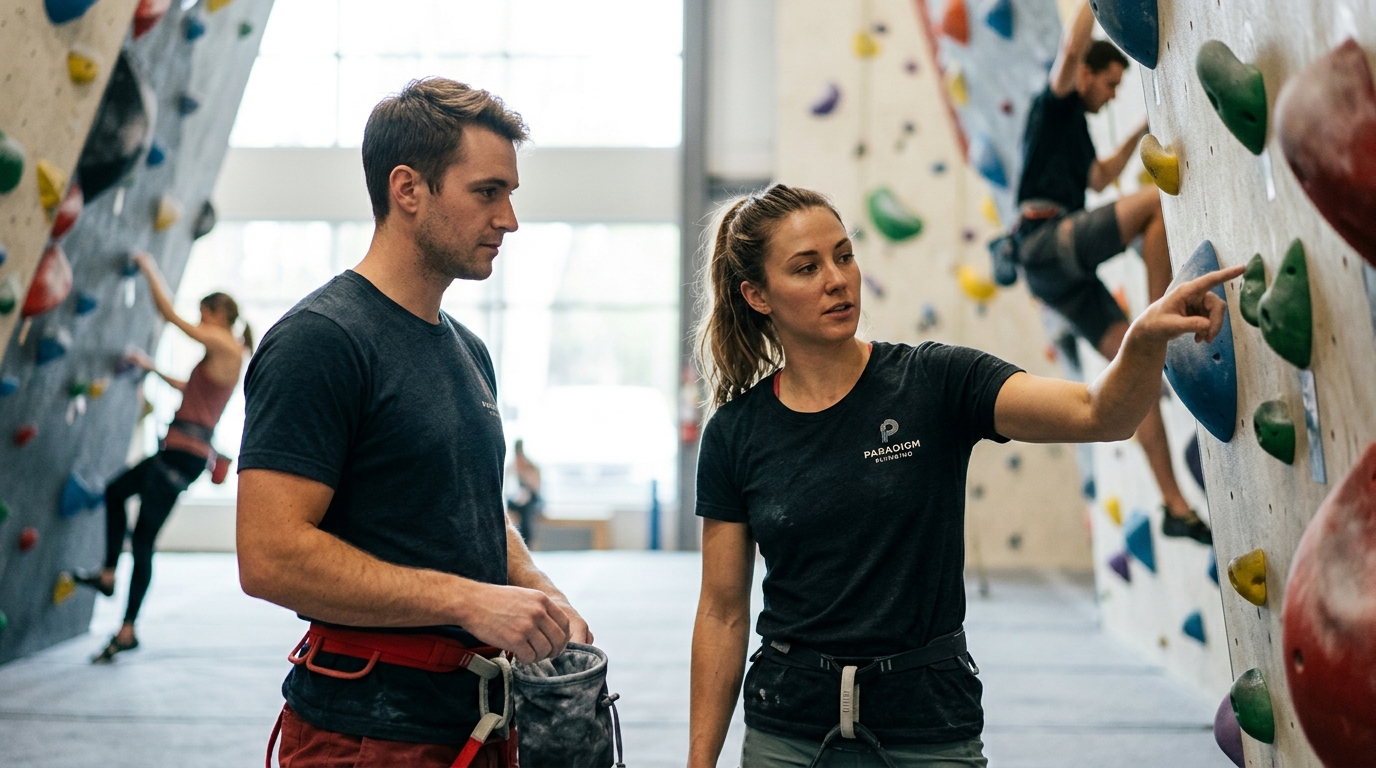
Choosing the right rock climbing coach can be the single most impactful decision you make for your climbing progression. Whether you are a beginner stuck on V3 or an advanced climber eyeing 5.14, a qualified coach brings structure, accountability, and expert movement analysis to your training. But not all coaches are created equal. Credentials, experience, coaching philosophy, and communication style all matter. This guide walks you through exactly what to look for, which questions to ask, and how to evaluate whether a coach is the right fit for your goals.
Why Working With a Climbing Coach Matters
A rock climbing coach is a trained professional who designs individualized programs to improve a climber's physical, technical, and mental performance. Unlike following generic training advice online, a coach tailors every session to your specific weaknesses, schedule, and objectives.
Structured coaching prevents two of the most common problems climbers face: training plateaus and overtraining. A good coach controls volume, duration, and load so you make consistent gains without burning out.
Key Credentials and Certifications to Look For
A climbing coaching certification is a credential that verifies an individual has the knowledge and ability to instruct or train climbers effectively. In the United States, three organizations are widely recognized for climbing-related certifications: the American Mountain Guides Association (AMGA), the Professional Climbing Instructors Association (PCIA), and the Climbing Wall Association (CWA).
Beyond climbing-specific certs, look for coaches who hold strength and conditioning credentials such as CSCS (Certified Strength and Conditioning Specialist) or NSCA-CPT. For example, Paradigm Climbing's Coach Charlie Schreiber is a certified strength and conditioning coach who combines periodized programming with climbing-specific expertise.
Certifications Worth Checking
- AMGA Single Pitch Instructor (SPI) or Rock Guide
- PCIA Climbing Wall Instructor or Top Rope Climbing Instructor
- CWA Climbing Wall Instructor
- CSCS or equivalent strength and conditioning certification
- Wilderness First Responder (WFR) for outdoor-focused coaches

Evaluating a Coach's Climbing and Coaching Experience
Credentials matter, but real-world experience is equally important. A qualified climbing coach should have a deep personal climbing resume and a proven track record of developing athletes at various levels.
Ask potential coaches how long they have been coaching and what results their athletes have achieved. For context, Coach Charlie Schreiber at Paradigm Climbing brings over 20 years of climbing experience and 16 years of coaching, having personally trained over 1,000 climbers and mentored athletes from V0 all the way to the V16 and V17 level.
Questions to Ask a Prospective Coach
- How many years have you been coaching climbers specifically?
- What is the highest grade your athletes have achieved?
- Do you have experience with my discipline (bouldering, sport, trad)?
- Can you share testimonials or athlete case studies?
Understanding Coaching Philosophy and Style
Coaching philosophy is the set of principles and beliefs that guide how a coach designs programs and interacts with athletes. Some coaches focus purely on physical output, while others take a holistic approach that addresses mental training, lifestyle habits, and long-term athlete development.
The best climbing coaches help you understand why and how training works, not just what to do. This educational approach empowers you to make smart decisions on your own, such as knowing when to rest versus when to climb. Look for a coach who incorporates mental training and addresses factors outside the gym that affect performance.
What to Expect From a Quality Training Plan
A quality climbing training plan should be fully customized to your goals, schedule, and current ability. It typically includes periodized cycles that progress through phases of volume building, intensity, and performance peaking.
At Paradigm Climbing, training plans are organized in 9-week cycles, and athletes begin with an initial consultation so the coach can assess their needs. Elite-tier plans also include video analysis and feedback, giving you personalized movement coaching between sessions.
Components of a Strong Training Plan
- Initial assessment or consultation
- Periodized programming with clear phases
- Climbing-specific strength work (fingerboarding, campus, etc.)
- Movement and technique drills
- Recovery and deload protocols
- Ongoing check-ins and plan adjustments
Red Flags to Watch Out For
Not every self-proclaimed climbing coach is worth your investment. Be cautious of coaches who offer only cookie-cutter plans with no personalization. If a coach cannot explain the reasoning behind their programming, that is a warning sign.
Other red flags include no verifiable credentials, zero athlete testimonials, no structured communication schedule, and a one-size-fits-all approach to different climbing disciplines. A strong coach should be willing to discuss their methodology openly and provide references.
Coaching Format Comparison: Custom vs. Pre-Written Plans
| Feature | Custom Coaching Plan | Pre-Written Plan |
|---|---|---|
| Personalization | Fully tailored to individual goals | General programming for broad skill levels |
| Coach Interaction | Regular check-ins, video feedback | Minimal or none |
| Cost | Higher investment | More affordable entry point |
| Best For | Serious progression, competition prep | Self-motivated climbers wanting structure |
| Adjustability | Updated every cycle based on progress | Static program |
| Example | Paradigm Elite Plans | Paradigm Full Spectrum Plans |
If you are new to structured training, a pre-written plan can be a great starting point. As your goals become more specific, transitioning to a custom coaching relationship will yield significantly better results.
Key Takeaways
- A qualified climbing coach should hold recognized certifications from organizations like AMGA, PCIA, or CWA, plus strength and conditioning credentials.
- Real coaching experience matters: look for coaches who have trained climbers across multiple ability levels and disciplines.
- Coaching philosophy should emphasize education, not just prescription. You should understand why you are doing each exercise.
- Quality training plans are periodized, fully customized, and include regular coach interaction.
- Avoid coaches who offer only generic plans, lack verifiable credentials, or cannot provide athlete references.
- Video analysis is a powerful tool that accelerates skill development. Seek coaches who offer it.
- Both custom and pre-written plans have value depending on your budget and commitment level.
Frequently Asked Questions
What qualifications should a rock climbing coach have?
At minimum, look for certifications from the AMGA, PCIA, or CWA. A strength and conditioning credential like CSCS adds further credibility. Personal climbing experience at a high level and years of documented coaching results are equally important indicators of quality.
How much does a rock climbing coach cost?
Prices vary widely based on the level of customization and interaction. Pre-written plans may start under $100 per cycle, while fully customized one-on-one coaching with video feedback can range from $150 to $400 or more per month. Paradigm Climbing offers multiple tiers to fit different budgets.
Can a climbing coach help me if I am a beginner?
Absolutely. A good coach builds training plans for any level. Starting with a coach early helps you develop correct movement patterns and avoid bad habits that become harder to fix later.
What is the difference between a climbing coach and a climbing guide?
A climbing guide leads clients on outdoor climbs and focuses on safety and route management. A climbing coach designs long-term training programs aimed at improving your overall climbing performance, strength, and technique over time.
How do I know if a climbing coach is right for me?
Schedule an initial consultation and evaluate whether the coach listens to your goals, explains their methodology clearly, and has experience with your discipline. A good sign is when a coach asks more questions than they answer during a first meeting.
Do I need in-person coaching or can remote coaching work?
Remote coaching is highly effective for most climbers, especially when it includes video analysis. Coaches like those at Paradigm Climbing provide personalized movement feedback through video review, making remote plans comparable to in-person sessions for many athletes.
How long should I commit to a coaching plan?
Meaningful results typically require at least one full training cycle. At Paradigm Climbing, cycles run 9 weeks. Many athletes see the best long-term gains by committing to multiple cycles, which also tends to be more cost-effective.
Start Training With a Qualified Coach Today
If you are ready to stop guessing and start progressing, Paradigm Climbing offers fully customized, goal-based training plans for climbers of every level and discipline. With over 16 years of coaching experience and a roster of athletes climbing at the world-class level, our team has the expertise to help you reach your next goal. Book a consultation today and take the first step toward structured, results-driven climbing training.