
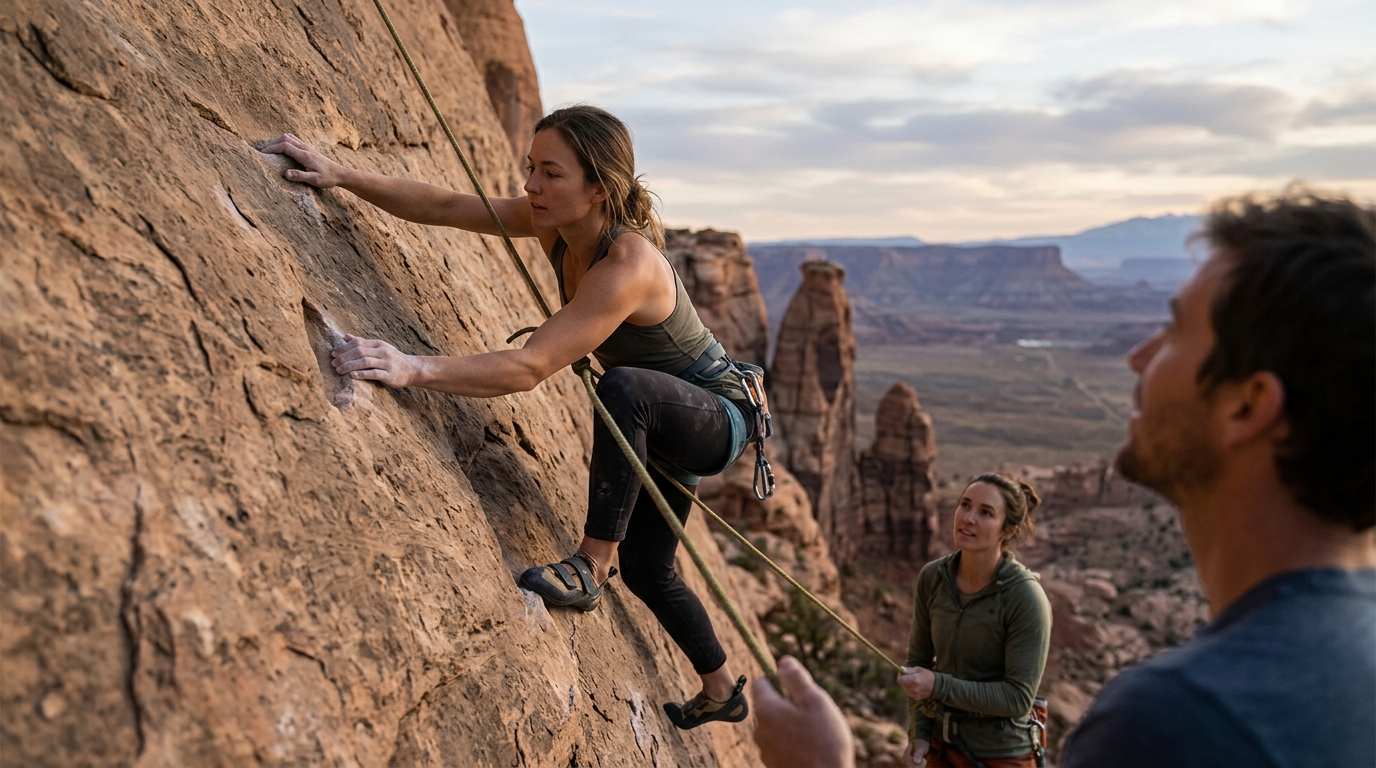
Climbing Efficiency: 7 Techniques to Climb Smarter, Not Harder
Every climber eventually hits a point where raw strength alone stops producing results. The difference between grinding through a route and flowing up it almost always comes down to technique and efficiency. Climbing efficiency is the ability to move upward using the least energy necessary, relying on smart body positioning, precise footwork, and intentional movement rather than brute force. Whether you boulder at V3 or project V12, refining these skills will unlock new grades and keep you climbing longer. Below, we break down seven proven techniques that coaches and elite climbers use to maximize on-wall performance.
1. Practice Silent Feet for Precision Footwork
Silent feet is a drill where you place each foot on a hold with zero audible contact. The goal is deliberate, precise placement rather than scraping or slapping at footholds. According to a 2026 biomechanics study in Frontiers in Physiology, silent feet is a sub-principle that "aims for efficient footwork and is crucial for optimal wall contact."
Try this during your next warmup: climb an easy route and do not let your shoe make a sound on any hold. Keep your eyes locked on each foothold until your toe is perfectly placed. This single habit can transform your climbing within weeks.
2. Master Hip Positioning and Body Rotation
Body positioning is the arrangement of your hips, shoulders, and limbs relative to the wall to maintain balance and minimize effort. On vertical and overhanging terrain, turning one hip toward the wall (a rotated technique) extends your reach and reduces the load on your arms.
Frontal vs. Rotated Technique
Frontal climbing means both hips face the wall squarely. It is intuitive for beginners but less efficient on steep routes. Rotated climbing, including drop knees and backsteps, shifts your center of mass closer to the wall and allows you to reach further with less strain. Research confirms that frontal techniques suit beginners while rotated techniques are better for advanced climbers.
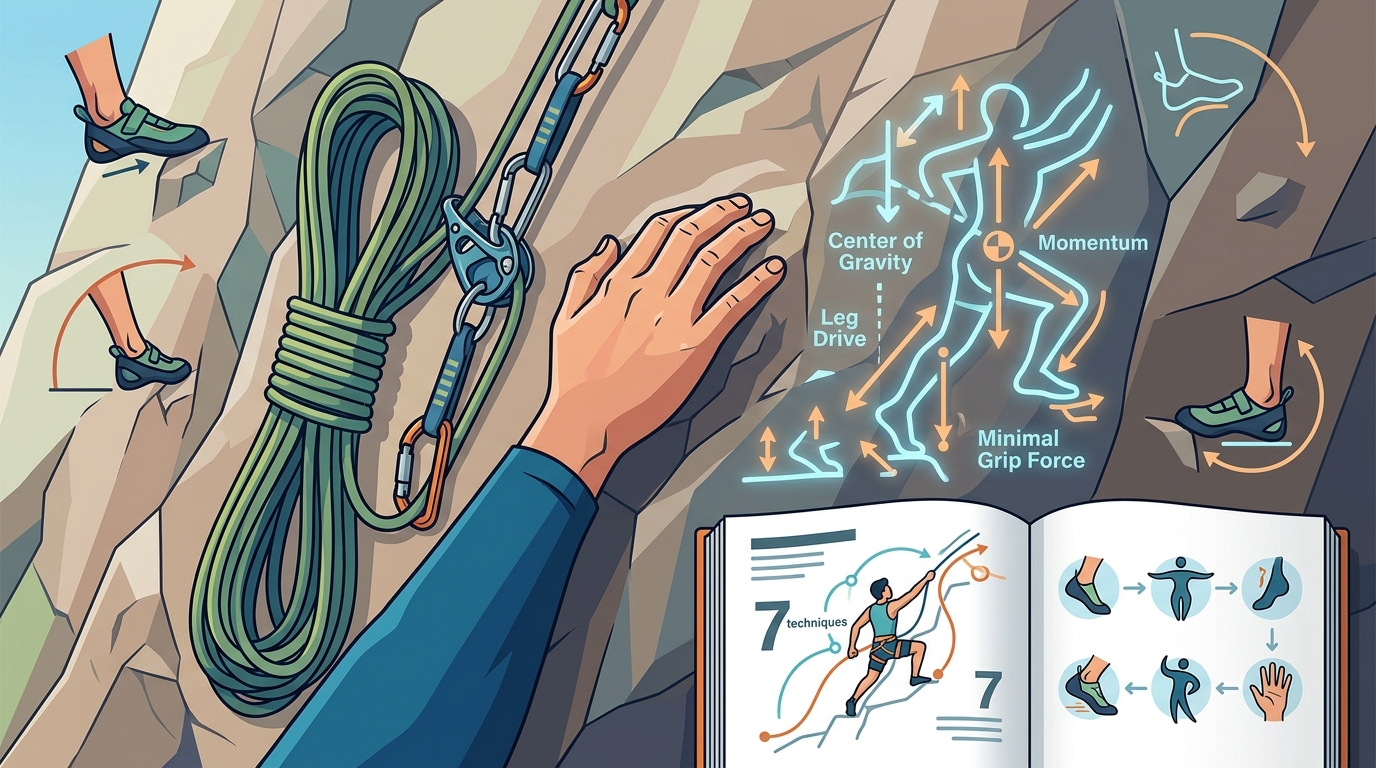
Flagging for Balance
Flagging is a technique where a climber extends one leg out to the side or behind the body to counterbalance and prevent barn-dooring. As REI's climbing guide explains, flagging is advantageous when using holds stacked on the same side of your body. Practice flagging on easy traverses to build the habit before it becomes essential on harder grades.
3. Climb on Straight Arms to Save Energy
Bent arms fatigue your biceps and forearms rapidly. Whenever you are planning your next move, hang with straight arms and let your skeleton carry the weight. This transfers load from small forearm muscles to larger skeletal structures.
Pair straight arms with high feet. Keeping your feet high shifts weight onto your legs, which are far stronger and more fatigue-resistant than your upper body. If you find yourself pumping out quickly, a climbing plateau in endurance is often a technique problem in disguise.
4. Develop Core Footwork Techniques: Edging, Smearing, and Hooking
Three foundational footwork skills underpin almost every climbing move:
Edging
Edging is placing the edge of your climbing shoe on a pronounced rock feature, typically beneath the big toe. On vertical or overhanging terrain, pulling in with your toe moves your lower body closer to the wall and reduces arm strain.
Smearing
Smearing is a technique used to stand on sloping, poorly defined features by pressing the ball of your foot flat against the rock to maximize friction. Keep your heels low to increase rubber-to-rock contact.
Heel and Toe Hooks
Hooks allow you to use your feet like a fifth hand. A heel hook engages hamstrings and core to pull your body into the wall on steep terrain. Toe hooks anchor your foot under a hold for stability on overhangs. Start practicing on easy overhanging routes with obvious features before moving to harder applications.
5. Use Repetition Training to Build Muscle Memory
Sending a climb once teaches you the moves. Repeating it ingrains them. Paradigm Climbing coach Charlie Schreiber recommends repeating climbs 5 to 10 times every 7 to 10 days to develop muscle memory at a pace fast enough for real skill acquisition.
Choose problems below 80% of your maximum physical intensity that challenge you technically, not just physically. Use the same beta on every attempt and focus on perfect execution. Over time, reduce the frequency of repeats on a given climb to avoid accommodation and free up time for learning new movements.
6. Read Routes Before You Climb
Route reading is the skill of analyzing a climb from the ground to plan sequences, identify rest positions, and anticipate cruxes before pulling on. Efficient climbers spend time visualizing foot placements and body positions before they leave the ground.
To sharpen route reading, watch advanced climbers on the same problem you just attempted. Notice which footholds they use and why. This observation habit, combined with your own attempts, builds what coaches call "climbing IQ." If you want to take this further, explore how mental training for climbing strengthens focus and decision-making on the wall.
7. Use Video Analysis to Accelerate Learning
Filming yourself climbing and reviewing the footage reveals inefficiencies you cannot feel in the moment: unnecessary readjustments, swinging hips, or missed footholds. Paradigm Climbing includes video analysis in its coaching plans because visual feedback accelerates the correction cycle far beyond feel alone.
You do not need professional gear. A phone propped at floor level captures most of what matters. Record your project attempts, watch them between burns, and identify one thing to change on each go. Over a session, this compounds into significant technique gains.
Technique Comparison Table
| Technique | Primary Benefit | Best Wall Angle | Difficulty to Learn |
|---|---|---|---|
| Silent Feet | Precision, energy savings | All angles | Beginner-friendly |
| Hip Rotation / Drop Knee | Extended reach, reduced arm load | Vertical to overhang | Intermediate |
| Straight Arms | Forearm endurance | All angles | Beginner-friendly |
| Edging | Stand on small holds | Vertical to slightly overhung | Beginner |
| Smearing | Friction on blank rock | Slab to vertical | Intermediate |
| Heel / Toe Hooks | Body tension on steep terrain | Overhang to roof | Intermediate to advanced |
| Flagging | Balance, anti-barn-door | All angles | Intermediate |
Key Takeaways
- Climbing efficiency depends more on technique and body positioning than raw strength.
- Silent feet is one of the fastest ways to improve footwork at any level.
- Rotating your hips toward the wall extends reach and reduces arm fatigue on steep terrain.
- Straight arms and high feet shift load to your stronger leg muscles.
- Repeating climbs 5 to 10 times in a 7 to 10 day window builds lasting muscle memory.
- Route reading and observation of advanced climbers accelerate skill development.
- Video analysis reveals invisible inefficiencies and speeds up the correction loop.
Frequently Asked Questions
What is climbing efficiency?
Climbing efficiency is the ability to ascend a route using the minimum energy required. It is achieved through optimized body positioning, precise footwork, and smart sequencing rather than relying purely on strength.
How do I practice silent feet?
Climb easy routes and focus on placing each foot without making a sound. Keep your eyes on the foothold until your shoe is set. Incorporate this into every warmup session for consistent improvement.
Why do my forearms pump out so quickly?
Premature pump is often caused by over-gripping, climbing with bent arms, or poor footwork that forces your upper body to compensate. Working on straight-arm climbing and trusting your feet can dramatically reduce pump.
How often should I repeat climbs for technique?
Aim for 5 to 10 repetitions of a technically challenging climb every 7 to 10 days. Choose problems at or below 80% of your physical maximum so you can focus on form rather than survival.
Is a climbing coach worth it for technique improvement?
Yes. A qualified coach provides personalized feedback, identifies weaknesses you may not notice, and structures your training to target specific technical gaps. Paradigm Climbing's customized training plans pair periodized programming with video analysis for exactly this purpose.
What is the difference between edging and smearing?
Edging places the shoe edge on a defined feature for support, while smearing presses the flat sole against a blank or rounded surface to create friction. Both are essential and apply to different hold types.
How does video analysis help climbing technique?
Video reveals body positioning errors, wasted movements, and footwork habits that are difficult to feel in real time. Reviewing footage between attempts lets you make targeted corrections each try.
Can beginners benefit from these techniques?
Absolutely. Techniques like silent feet, straight arms, and basic edging are beginner-friendly and yield immediate results. Building good habits early prevents inefficiencies from becoming ingrained.
Ready to Climb Smarter?
Technique gains compound fastest with expert guidance. Paradigm Climbing offers fully customized training plans built around your goals, complete with video analysis and ongoing coach support. Whether you are working toward your first V5 or chasing double digits, a structured plan removes the guesswork. Get in touch with a Paradigm coach today and start climbing more efficiently.