
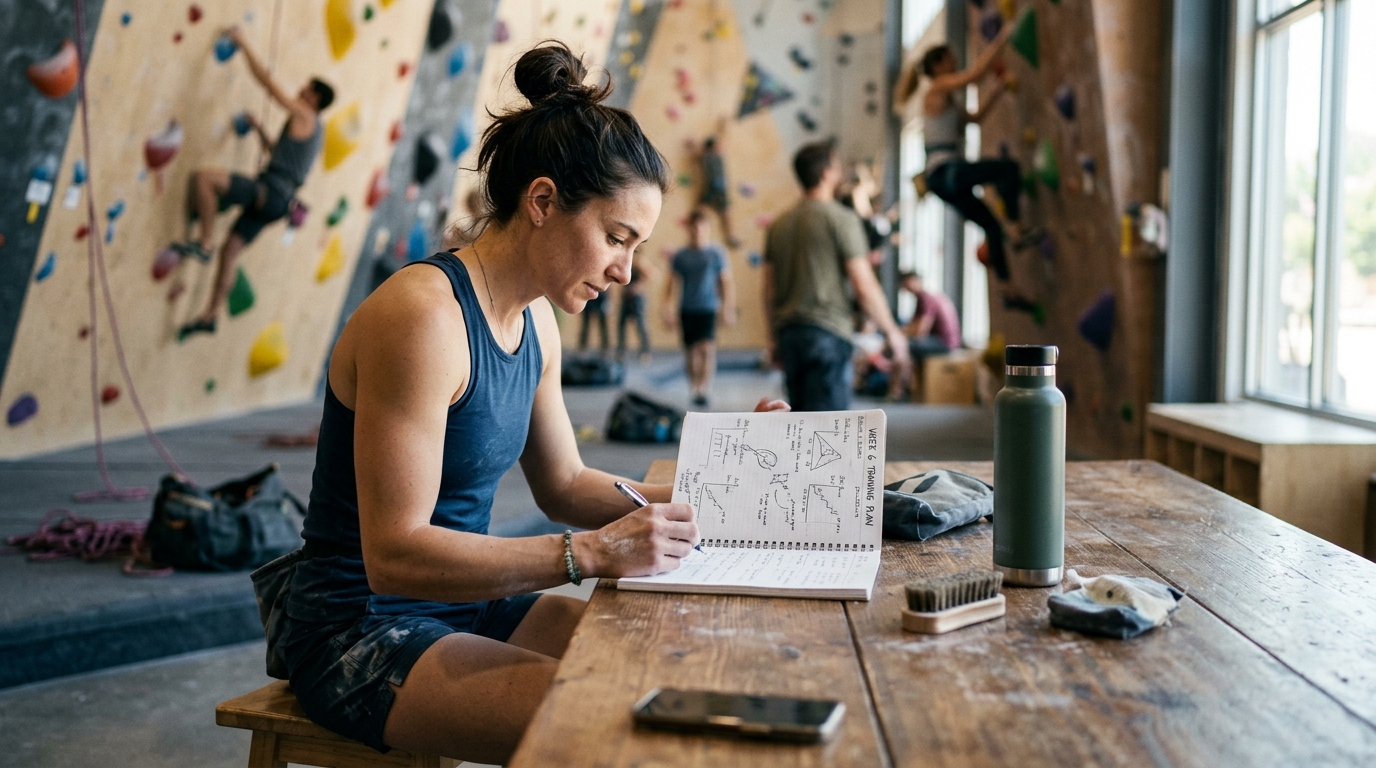
Whether you are stuck on a frustrating plateau or just beginning your climbing journey, a structured training plan is the single most effective way to level up on the wall. Research cited in The Science of Climbing Training shows that a well-designed periodized plan can improve performance by 1.5 to 2.3 percent compared to unstructured training. That may sound modest, but in a sport where one move separates a send from a fall, it is enormous. This guide breaks down what makes a great climbing training plan, the key components every program should include, and how to pick the right plan for your goals.
What Is a Climbing Training Plan?
A climbing training plan is a structured program that organizes your climbing sessions, strength work, and recovery into intentional cycles designed to produce measurable improvement. Unlike randomly hopping on the wall and trying hard, a plan controls volume, intensity, and rest so that your body adapts without breaking down.
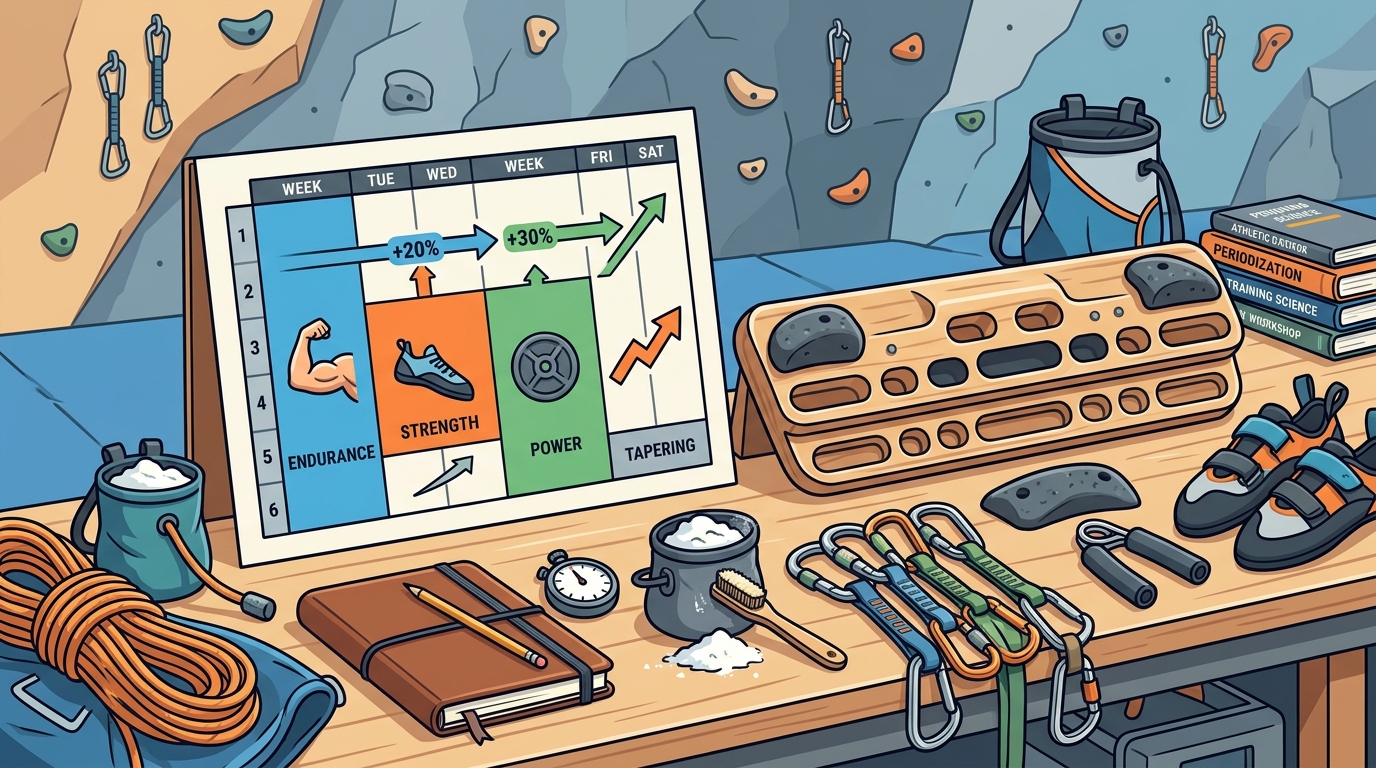
Periodization is the systematic division of training into cycles, each targeting different physical qualities such as strength, power, endurance, and technique. The approach ensures progressive overload while building in recovery phases that are critical for tissue adaptation and long-term gains.
Why Periodization Matters for Climbers
Climbing demands an unusual blend of finger strength, power endurance, flexibility, and mental focus. Training all of those qualities at once, at high intensity, is a recipe for overtraining and injury. Periodized plans break the year into phases so you can target weaknesses without compromising overall performance.
Injury Prevention
Tendons and ligaments adapt more slowly than muscles. Unplanned intensity spikes often lead to tendonitis or pulley strains. Periodized programs integrate deload weeks and active recovery to let connective tissue catch up, helping climbers progress without setbacks.
Breaking Through Plateaus
Many climbers hit a wall (figuratively) because they repeat the same sessions week after week. Cycling between skill-focused and intensity-focused blocks keeps the body adapting and the mind engaged. As climbing coach Charlie Schreiber of Paradigm Climbing puts it, the goal is helping climbers understand why and how training works, not just what to do.
Core Components of an Effective Plan
Regardless of your grade, every quality climbing training plan shares a few non-negotiable ingredients.
Finger Strength Training
Hangboard protocols are the gold standard. Beginner programs typically include two finger workouts per week, while advanced plans may prescribe three sessions of roughly two hours each. Always warm up thoroughly and progress load gradually.
Movement and Technique Practice
Deliberate practice on the wall, including drills for footwork, body positioning, and route reading, is irreplaceable. Structured exercises like silent feet, hover hands, and limit bouldering build a climbing movement vocabulary that eventually becomes intuitive.
Strength and Conditioning
Off-the-wall work targeting antagonist muscles, core stabilization, and shoulder health rounds out a balanced program. Exercises like dips, rows, and front levers build the pushing and stabilizing strength that pure climbing neglects.
Types of Rock Climbing Training Plans
| Plan Type | Best For | Typical Duration | Key Focus |
|---|---|---|---|
| Pre-Written / Template | Self-motivated climbers wanting structure | 6 to 12 weeks | General strength, endurance, technique drills |
| Custom Periodized | Intermediate to advanced climbers with specific goals | 9-week cycles (repeatable) | Individualized volume, load, and skill work |
| 1-on-1 Coaching | Climbers who want accountability and video feedback | Ongoing | Personalized programming, movement analysis, mental skills |
| Self-Directed with Periodization Framework | Experienced climbers who understand training principles | Season-long macrocycle | Flexible phases: base, strength, power, power endurance, peaking |
Pre-written plans like the Paradigm Full Spectrum program draw on insights from coaching nearly 1,000 climbers and deliver curated programming you can start immediately. Custom plans, on the other hand, begin with a consultation and are built around your unique schedule, weaknesses, and project goals.
How to Choose the Right Plan for Your Level
Beginners (V0 to V3 or 5.8 to 5.10a) benefit most from plans that emphasize movement quality and general conditioning. At this stage, simply climbing more with intention produces rapid gains. A pre-written template or a beginner coaching plan provides the guardrails to avoid bad habits.
Intermediate climbers (V4 to V8 or 5.11 to 5.12) often need targeted finger strength work, structured power-endurance sessions, and help identifying their personal limiters. This is where a custom training plan organized in defined cycles pays off significantly.
Advanced climbers (V9+ or 5.13+) require highly specific programming, including replica training of crux sequences, detailed periodization, and careful load management. Working directly with an experienced coach ensures that training stress is calibrated to produce adaptation without overtraining.
The Role of Professional Coaching
A professional climbing coach does more than hand you a spreadsheet. Paradigm Climbing founder Charlie Schreiber, a Certified Strength and Conditioning Specialist (CSCS) with 20 years of climbing experience, has personally trained over 1,000 climbers and mentored athletes from Day 1 all the way to V16 and V17. His approach uses periodized protocols that control volume, duration, and load to optimize performance and prevent injury.
Paradigm's Elite plans include video analysis and feedback, letting you send climbing footage to your coach for personalized movement breakdowns. It is like having a personal coach in your pocket. All plans are organized in 9-week cycles, and you can purchase 1, 2, 3, or 6 cycles at a time.
Coach Mattias Braach-Maksvytis, a V14 boulderer with 22 years of experience, brings a complementary focus on power, foot tension, and lower body utility. Together, the Paradigm coaching team covers everything from competitive youth athletes to weekend warriors chasing their first outdoor send.
Key Takeaways
- A climbing training plan is a structured program that organizes sessions into intentional cycles for measurable improvement.
- Periodization, the systematic division of training into phases, prevents plateaus, reduces injury risk, and times peak performance.
- Finger strength, movement practice, and antagonist conditioning are non-negotiable components of every effective program.
- Pre-written plans suit self-starters; custom coaching is ideal for climbers with specific grade or project goals.
- Video analysis from a qualified coach accelerates technique gains faster than solo training.
- Recovery and deload weeks are just as important as hard training blocks.
- Choosing a plan that matches your current level and commitment ensures sustainable, long-term progress.
Frequently Asked Questions
How many days per week should I train for climbing?
Most plans prescribe 3 to 5 days per week including climbing days and supplemental strength work. Beginners do well with 3 sessions, while advanced climbers may train up to 5 or 6 days with carefully managed intensity.
Do I need a hangboard to follow a climbing training plan?
A hangboard is not strictly required for beginners, but it becomes essential at the intermediate level and above. Fingerboard protocols are one of the most researched and effective tools for building finger strength specific to climbing.
What is the difference between a pre-written plan and a custom plan?
A pre-written plan provides general programming suitable for a range of climbers. A custom plan, like those offered through Paradigm Climbing, starts with a personal consultation and is tailored to your schedule, strengths, weaknesses, and goals.
How long does it take to see results from a training plan?
Most climbers notice measurable improvements within one 6- to 9-week training cycle, particularly in finger strength and endurance. Significant grade breakthroughs typically emerge after two to three cycles of consistent, periodized training.
Can a training plan help me avoid climbing injuries?
Yes. Periodized plans integrate rest, active recovery, and progressive loading specifically to allow tendons and ligaments to adapt. This structured approach substantially reduces the risk of common climbing injuries like pulley strains and elbow tendonitis.
Is professional coaching worth the investment?
If you have hit a plateau or have a specific goal, professional coaching provides accountability, expert programming, and movement analysis that are difficult to replicate on your own. Paradigm Climbing's coaches have guided athletes from complete beginners to national champions and World Cup competitors.
What should I look for in a climbing coach?
Look for relevant certifications (such as CSCS), significant personal climbing experience, a track record of athlete development, and a coaching philosophy that prioritizes education. You want a coach who teaches you to understand your training, not just follow instructions.
How do I get started with Paradigm Climbing?
Visit the Paradigm training plans page to explore custom and pre-written options, or contact the team to discuss which program fits your needs.
Start Climbing Stronger Today
Stop guessing and start progressing. Whether you choose a self-guided template or personalized coaching, the right training plan transforms random gym sessions into purposeful preparation. Explore Paradigm Climbing's training plans and take the first step toward your next breakthrough on the wall.