
Best Drills to Improve Foot Tension and Body Positioning for Sport Climbing
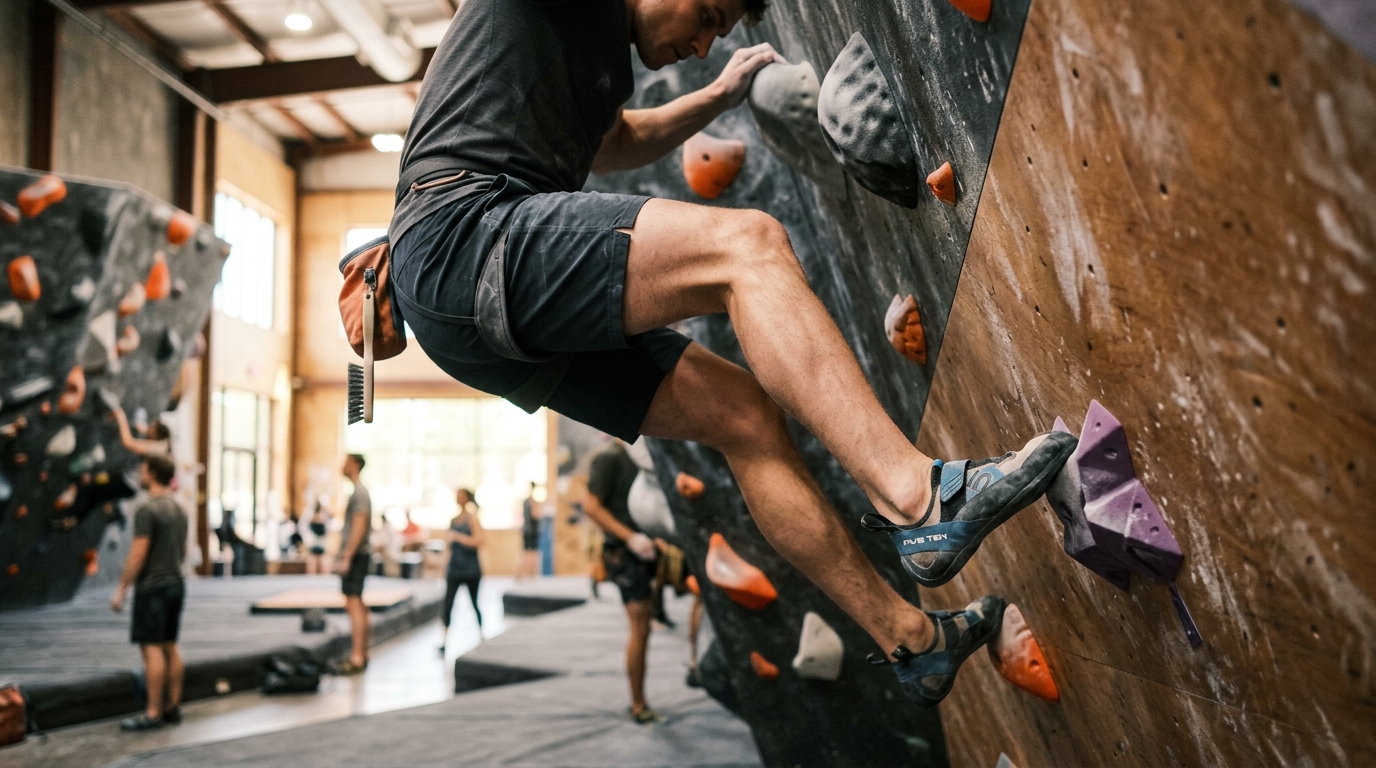
Foot tension is the ability to actively drive force through your toes and lower body to stay connected to the wall, especially on steep terrain. Poor foot tension leads to cut feet, pumped forearms, and wasted energy on every route. The good news: it is a trainable skill. Whether you are working warm-up laps at the gym or projecting your first 5.12, the drills below will help you build lasting foot pressure and intentional body positioning. This guide draws on methods used by professional coaches, peer-reviewed sport science, and real-world climbing experience to give you a clear, actionable practice plan.
Why Foot Tension Matters in Sport Climbing
Body tension is the ability to maintain control of your movements on the wall. As you climb harder grades, engaging your entire body becomes non-negotiable. Many climbers mistakenly believe tension comes solely from the core, but it actually involves the core, lower back, hips, glutes, hamstrings, calves, and even your toes working together as a chain.
When your feet stay actively engaged, your arms carry less load. This translates directly to lower pump, longer endurance on sustained routes, and cleaner movement through crux sequences. Foot tension is especially critical on overhanging sport routes where gravity constantly threatens to peel your feet off the wall.
Body Positioning Basics You Need First
Body positioning is the deliberate arrangement of your hips, shoulders, and limbs relative to the wall to maximize efficiency on each move. Before drilling tension, you need to understand a few principles.
Center of Gravity Awareness
Your center of gravity (COG) sits in your torso. To climb efficiently you need to know where your COG is in relation to your feet and hands, and where you want it to go next. On vertical terrain, keep your COG close to the wall and over your driving foot. On steep ground, let it shift outward so your skeleton carries weight rather than your muscles.
Straight-Arm Default
Climbing with straight arms forces you to put more weight into your feet and become efficient at shifting your weight. Practice easy boulders without bending your arms to internalize this habit before adding tension drills.
5 On-the-Wall Drills for Foot Tension
1. Quiet Feet
Climb a route or boulder two to three grades below your limit while placing your feet as quietly as possible. If your foot thuds on a hold, stop and redo the move. This drill trains precision and teaches your mind to prioritize footwork over grabbing the next handhold. Perform it during every warm-up for three to five climbs.
2. Sticky Feet (Glue Foot)
Pretend you have super glue on the bottom of your climbing shoes. Once you place your foot on a hold you cannot adjust or reposition it. This drill eliminates micro-adjustments, forces better route reading, and builds the habit of intentional first-touch placement. Start two to three grades below your onsight level.
3. Hover Feet
Climb easy problems and hover each foot over the target hold for one to two seconds before placing it. Maintaining a stable, static position for every move builds tremendous body tension and balance. It is a challenging drill, so begin on warm-up-level terrain.
4. Drop-Knee Reaches
On a slightly overhung wall, start with good hand and footholds. Reach up and right with your right hand while dropping your right knee inward. Focus on pushing through your toes and making the movement fluid. This teaches you to counterbalance on the wall and reach further while maintaining stability.
5. Fixed-Hands Foot Traverse
On an overhanging spray wall or Kilter/MoonBoard setup, keep your hands fixed on two holds and move your feet to at least 10 different footholds. Incorporate inside edge and outside edge movements. Perform three to five sets with rest between each.
3 Off-the-Wall Exercises That Transfer to the Rock
Plank Limb Taps
From a low plank, tap various spots on the ground with your toes and fingers. Rotate through each limb and focus on keeping the rest of your body still while you execute each tap. This builds the ability to immobilize your torso while one limb moves, exactly what steep climbing demands.
Dead Bug with Mini Band
Lie on your back with a mini band around your feet, knees above hips, arms extended. Slowly extend one leg and the opposite arm toward the floor while keeping your lower back flat. Three sets of five slow reps per side develops anti-extension core strength and hip-shoulder coordination.
TRX Body Extensions
Holding TRX handles in a push-up position, extend your body into an "I" shape while keeping your back flat and core engaged. This replicates the extended positions you encounter on long reaches and trains full-body tension from shoulders to toes.
Drill Comparison Table
| Drill | Location | Primary Focus | Difficulty | Sets / Reps |
|---|---|---|---|---|
| Quiet Feet | Wall | Precision & awareness | Beginner | 3-5 climbs |
| Sticky Feet | Wall | Placement accuracy | Beginner | 3-5 climbs |
| Hover Feet | Wall | Static tension & balance | Intermediate | 3-4 problems |
| Drop-Knee Reaches | Wall (overhung) | Counterbalance & toe drive | Intermediate | 5 reps each side x 3 |
| Fixed-Hands Foot Traverse | Spray wall / board | Foot pressure on steep terrain | Advanced | 3-5 sets of 10 moves |
| Plank Limb Taps | Floor | Isolation & stability | Beginner | 3 x 30 sec |
| Dead Bug w/ Band | Floor | Anti-extension core | Intermediate | 3 x 5/side |
| TRX Body Extensions | Floor / gym | Full-chain tension | Intermediate | 3 x 8 |
How to Program These Drills Into Your Week
Dedicate 20 to 30 minutes of your warm-up, two to three times per week, to on-wall drill practice. This is consistent with guidance from experts like Mike and Mark Anderson, authors of The Rock Climber's Training Manual, who recommend dedicated footwork practice sessions integrated into warm-ups.
Off-wall exercises fit naturally into a general strength session. Aim for two to three structured strength sessions per week. Even 30 minutes is enough to see progress when the exercises are targeted.
Periodize your focus. Spend three to four weeks emphasizing precision drills (Quiet Feet, Sticky Feet), then shift to tension-specific drills (Hover Feet, Drop-Knee Reaches, Fixed-Hands Traverse). A customized training plan from a qualified coach can sequence these drills alongside your strength and climbing volume for optimal results.
Key Takeaways
- Foot tension is a skill combining strength and technique across the entire posterior chain, not just the core.
- Quiet Feet and Sticky Feet are the two best beginner drills for immediate footwork improvement.
- Hover Feet and Drop-Knee Reaches build intermediate-level static tension and counterbalance ability.
- Off-wall exercises like dead bugs and plank limb taps develop the hip-shoulder coordination that transfers directly to steep climbing.
- Program drill work into warm-ups two to three times per week for consistent adaptation.
- Periodize your drill focus every three to four weeks to avoid stagnation and build layered skills.
- Personalized video analysis from a professional coach accelerates technique gains far beyond solo practice.
Frequently Asked Questions
What is foot tension in climbing?
Foot tension is the active engagement of your toes, calves, hamstrings, and glutes to maintain pressure on footholds. It prevents your feet from slipping or cutting loose, especially on overhanging terrain.
How often should I practice footwork drills?
Two to three sessions per week is ideal. Incorporate drills into your warm-up routine so they become second nature without adding extra gym time.
Can beginners benefit from these drills?
Absolutely. Drills like Quiet Feet and Sticky Feet are designed for climbers of all levels. Start on easy terrain and progress to harder climbs as your skill improves.
Do I need a spray wall or climbing board for these drills?
No. Most on-wall drills work on any gym bouldering wall or roped route. The Fixed-Hands Foot Traverse benefits from a spray wall or board, but you can adapt it to any steep section with enough footholds.
How long until I see improvement in my foot tension?
Most climbers notice measurable improvement within three to four weeks of consistent practice. Technique adaptations happen faster than pure strength gains because you are building motor patterns.
Is body tension the same as core strength?
No. Core strength is one component, but body tension involves your entire kinetic chain from shoulders to toes. You need coordinated engagement across many muscle groups, not just strong abs.
Should I use tight climbing shoes for drill practice?
Use your performance shoes rather than loose gym shoes. Tighter, more precise shoes help you feel the hold and develop proper toe engagement during drills.
Can online coaching help me improve foot tension remotely?
Yes. Programs that include video analysis and personalized feedback let a coach evaluate your movement on camera and prescribe targeted drills, making remote coaching highly effective for technique work.
Ready to Level Up Your Climbing Technique?
Drilling foot tension and body positioning on your own is a great start, but personalized feedback changes everything. At Paradigm Climbing, Coach Charlie Schreiber and Coach Mattias Braach-Maksvytis use video analysis, periodized programming, and decades of elite-level experience to pinpoint exactly what your climbing needs. Get in touch today to find the right plan for your goals and start climbing stronger.