
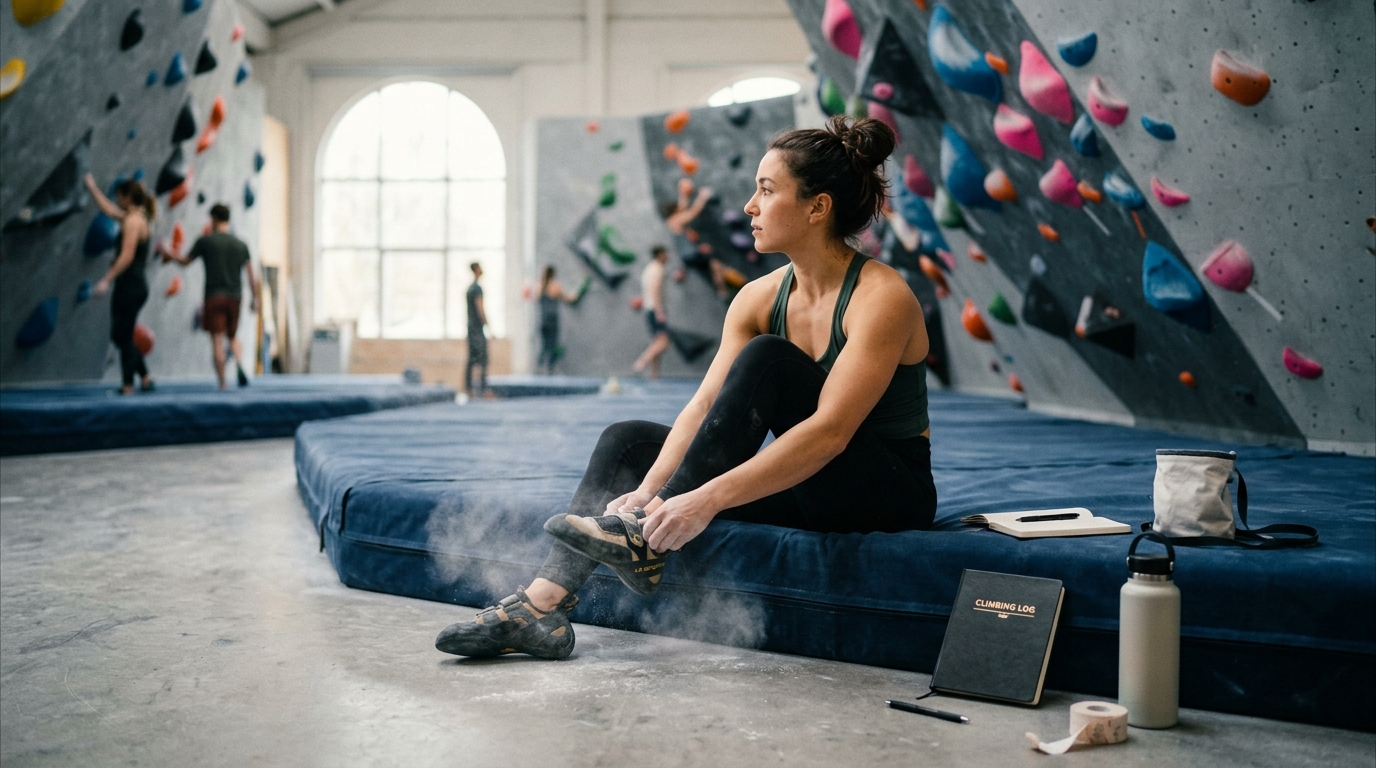
If you have been climbing for a while and your progress has stalled somewhere around V5 or V6, you are not alone. Data suggests that 75% of climbers hit a major plateau before V6, making it one of the most common sticking points in the sport. The good news? A structured, periodized training plan can break the cycle of random gym sessions and start producing measurable gains again. This guide walks you through the exact areas to address, from finger strength and technique refinement to recovery and mental tactics, so you can finally push past V6 and into harder grades.
Why the V6 Plateau Happens
A bouldering plateau is a period where your grade progression stalls despite consistent effort. In the early grades, general fitness and regular climbing sessions are usually enough to drive improvement. But around V5 and V6, the demands shift from raw athleticism to highly specific climbing strength, refined technique, and deliberate training structure.
At this level, simply "climbing more" stops working. Your body has adapted to the stimulus you have been giving it, and without progressive overload, which is the principle of gradually increasing training demands over time, you will remain stuck. Coach Charlie Schreiber of Paradigm Climbing emphasizes helping climbers understand why training works so they can move beyond unstructured sessions and take ownership of their progress.
Use Periodized Training Cycles
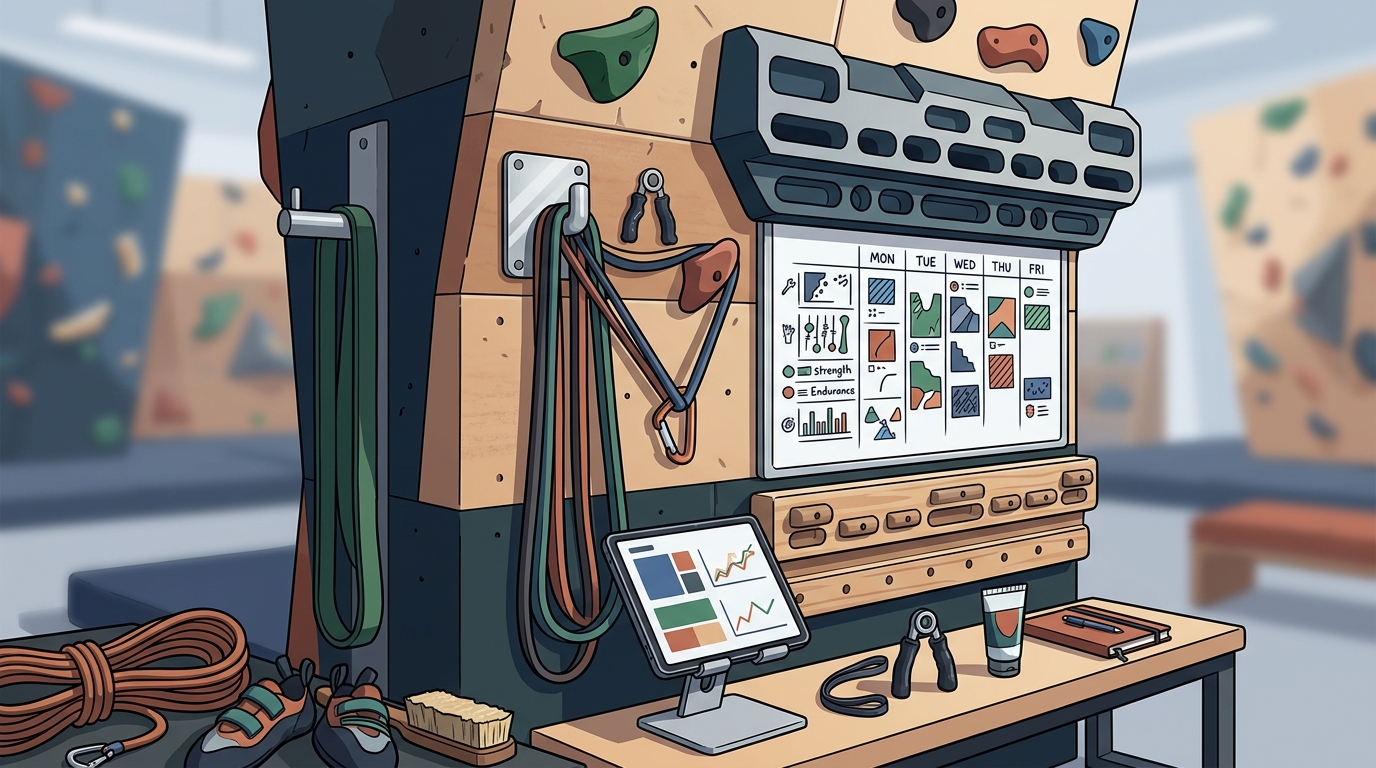
Periodization is the systematic planning of training into distinct phases, each targeting a different physical quality. Instead of doing the same type of session every week, you rotate through focused blocks that build on each other.
A Sample 4-Phase Cycle
| Phase | Duration | Focus | Example Sessions |
|---|---|---|---|
| Endurance | 3-4 weeks | Work capacity, base fitness | Traversing, boulder circuits at V2-V3 |
| Power Endurance | 3-4 weeks | Sustained hard effort | Linked boulder circuits one grade below flash level |
| Max Strength / Power | 3-4 weeks | Limit moves, recruitment | Fingerboarding, limit bouldering, campus board |
| Performance / Peak | 2-3 weeks | Sending projects | Outdoor trips, projecting target V6-V7 problems |
Paradigm Climbing's custom training plans are organized in 9-week cycles and are built around this periodized approach, with volume, duration, and load carefully controlled by a certified strength and conditioning coach.
Why It Works
Each phase creates a specific adaptation that feeds the next. Endurance work raises your base capacity so you can handle more volume. Power endurance training teaches your body to sustain high output. Max strength sessions build the raw force needed for crux moves. The peak phase lets you apply everything on real projects.
Build Finger Strength With Intent
Finger strength is the single most trainable limiter for climbers in the V5 to V8 range. A fingerboard (also called a hangboard) is a wall-mounted training device with edges of various depths used to build grip strength through controlled hangs.
Max Hang Protocol
Perform 5 sets of 10-second hangs on an 18-20mm edge with 3 minutes of rest between sets. Add weight once you can complete all sets cleanly. Aim for two sessions per week, separated by at least 48 hours.
Grip Position Variety
Train both half-crimp and open-hand positions. Many climbers default to full crimping, which builds one-dimensional strength and increases injury risk. Alternating grip types creates a more resilient and versatile hand.
For climbers who want structured fingerboard programming integrated into a full training plan, Paradigm's Full Spectrum plans provide bouldering-centric programming drawn from coaching nearly 1,000 athletes across all levels.
Refine Technique, Not Just Power
At the V6 level, it is less about learning brand-new techniques and more about refining the ones you already have. Small inefficiencies in body positioning, foot placement, and hip engagement add up quickly on harder problems.
Practical Drills
- Video analysis: Record your attempts and review them for wasted movement, missed foot placements, and over-gripping.
- Quiet feet: Climb easy problems (V1-V3) with the goal of making zero noise on each foothold. This trains precision.
- Repeat sends: After topping a problem, climb it two more times trying to eliminate every inefficiency. Lattice Training recommends repeating climbs until you are satisfied you have climbed them the best you can.
Working with a coach who provides direct video feedback can dramatically accelerate this process. Paradigm's Elite plans include video analysis as a core feature for exactly this reason.
Unlock Gains With Flexibility Training
Flexibility is the often-overlooked factor that can produce rapid improvement when finger strength gains slow down. Better hip mobility lets you keep your center of gravity closer to the wall, reducing the load on your fingers and arms.
Tempo stretching is a dynamic flexibility method where you move slowly through end ranges of motion under light load. Try implementing 1-2 dedicated flexibility sessions per week, focusing on hip flexors, hamstrings, and adductors. Even 15 minutes of targeted work after a climbing session can make a noticeable difference within weeks.
Prioritize Recovery and Load Management
Progressive overload only works when paired with adequate recovery. Gains in strength occur during rest, not during the training session itself. Sleep, nutrition, and training frequency are as critical as the climbing.
For climbers training 3-4 days per week, a good rule is to never schedule two max-intensity sessions back to back. Separate hard bouldering or fingerboard days with at least one rest day or a low-intensity technique session. If you are unsure how to balance load across a week, a consultation with a Paradigm coach can help you build a schedule that fits your life and prevents overtraining.
Key Takeaways
- The V6 plateau is extremely common; roughly 75% of climbers stall before this grade.
- Periodized training cycles (endurance, power endurance, max strength, peak) are far more effective than random sessions.
- Finger strength on a hangboard is the most trainable physical limiter at this level.
- Technique refinement through video analysis and deliberate repetition yields big returns.
- Flexibility work, especially hip mobility, reduces load on your upper body and opens new movement options.
- Recovery is not optional. Schedule rest days and manage weekly training volume intentionally.
- Working with a qualified climbing coach provides accountability, structure, and expert feedback that accelerate progress.
Frequently Asked Questions
How long does it typically take to break through the V6 plateau?
Timelines vary widely. General estimates suggest going from V5 to consistent V6 climbing can take 6 to 12 months of structured training. Without structure, many climbers remain at this level for years.
Should I start hangboard training at V5-V6?
Yes, the V5-V6 range is widely considered an appropriate time to introduce fingerboard training. Many coaching programs use V6 as a benchmark for starting dedicated finger strength work.
How many days per week should I train?
Three to four climbing or training days per week is a productive range for most intermediate climbers. Quality and structure matter far more than volume.
Is it better to project hard problems or climb high volume at easier grades?
Both have value, and the answer depends on your current training phase. Limit bouldering (projecting at or above your max) builds recruitment and power. Volume climbing builds endurance and technique. A periodized plan alternates between them.
Do I need a climbing coach to break through V6?
A coach is not strictly required, but having one significantly shortens the timeline. A coach provides objective assessment, personalized programming, and accountability that self-coached climbers often lack.
What role does body composition play?
Strength-to-weight ratio matters in climbing. However, chasing weight loss without a coach or nutritionist can lead to under-fueling and injury. Focus on getting stronger rather than lighter.
Can I break through the plateau by climbing outdoors more?
Outdoor climbing challenges you with unfamiliar movement, real rock texture, and mental demands that gym climbing does not replicate. Incorporating outdoor sessions, especially during a peak phase, can help you apply your training in new ways.
Ready to Break Through Your Plateau?
If you are tired of spinning your wheels at V6, structured coaching is the fastest path forward. Explore Paradigm Climbing's custom training plans to get a periodized program built around your goals, schedule, and current ability. With over 16 years of coaching experience and athletes ranging from V0 to V17, Coach Charlie Schreiber and the Paradigm team have the expertise to help you send your next grade.